

Home > Blog > House Sitting With Chickens or Ducks
Quick Facts
| Our current sit | 6-month sit in Portugal with 4 chickens and 1 cat |
| Eggs per day | 3 from 4 chickens — one older hen no longer lays |
| Daily time commitment | Under 10 minutes per session, 3 times a day |
| Hardest part | Morning coop clean — takes less than 1 minute |
| Rooster warning | Avoid sits with roosters if you value your sleep |
| Duck difference | Similar to chickens but messier and need water access for swimming |
| Would we do it again | Yes — Caro was worried at first and now it is a daily highlight |
| What new sitters fear vs reality | New sitters fear it. Reality is it's one of the most enjoyable parts of the sit |
Chickens are easier than new sitters fear: three feeds a day, a coop clean that takes under a minute, and under 30 minutes of work daily for a small flock. We arrived uncertain and now look forward to the coop. A rooster is our one deal-breaker.
We are a week into a sit in Portugal looking after four chickens and a cat. Before this sit, chickens were not something either of us had spent much time thinking about. Caro was truly uncertain when we accepted. A week later, the daily trip down to the coop is one of the highlights of the day. For both of us.
This article covers exactly what looking after chickens involves on a house sit, how ducks compare, what the real challenges are versus what new sitters worry about, and the one deal-breaker that should make any sitter think twice before accepting.
If you are interested in getting into house sitting, our book Travel More for Less puts the whole process in one place: clear, step by step guidance from your first questions to your first confirmed sit, and the reviews that open the door to the next one.
Use our 25% discount when joining. Our house sitting with farm animals guide covers the broader picture of agricultural sits.
The Daily Chicken Routine
Looking after chickens on a house sit is truly not difficult, but it does require consistency. Chickens are routine animals. They function best when feeding and care happen at predictable times each day. The homeowner's instructions are the definitive guide. Read the welcome guide carefully for the specific routine, and confirm everything in the pre-sit video call.
Our Portugal routine runs three times a day.
Morning. Around 8am. The first visit opens the day. We give them their main feed: various seeds and a protein source, typically meal worms. The meal worms are not just a treat. The protein is necessary for shell development and egg quality. This is also when we clean the coop, collect the eggs, and check everyone is healthy and mobile.
Midday. A smaller feed, focused on variety and enrichment. Chickens love leafy greens and fruit. Lettuce is a favourite. Watermelon. Particularly on hot Portuguese afternoons. Goes down extremely well. This is also the visit where we spend a bit of time just being present in the space. Chickens are more interactive than most people expect.
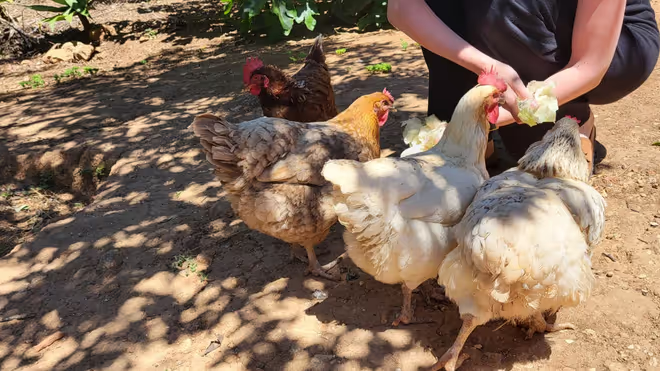
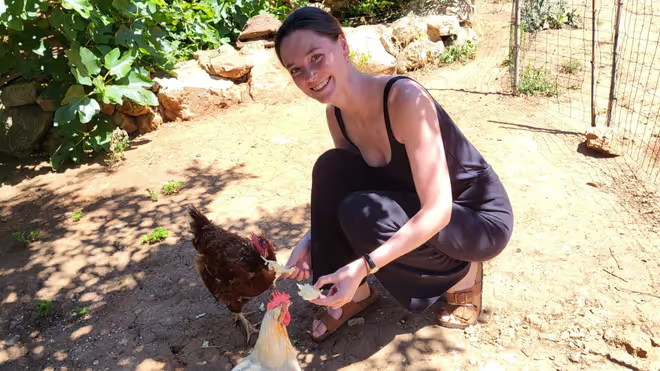
Evening. A handful of germinated sunflower seeds or cooked rice to end the day. We were specifically asked by the homeowners to hand-feed the chickens as much as possible, to help them stay comfortable with human contact. Hand feeding chickens is exactly as entertaining as it sounds. Some chickens are gentle. Some are not. Kiwi in particular has a precision peck that is more startling than painful, though gloves are worth considering if you are sensitive to the occasional over-enthusiastic grab.
The Egg Collection
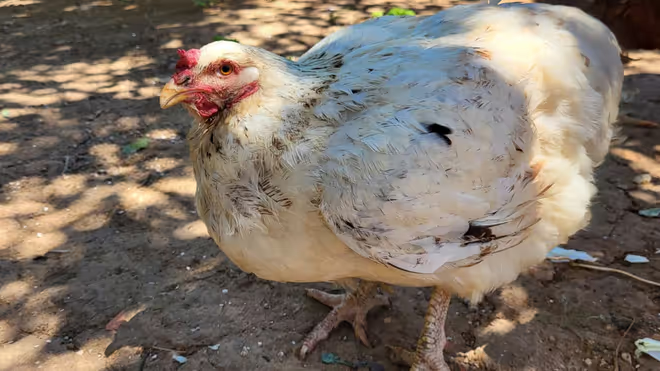
Four chickens, three eggs a day. The fourth hen, Clucky, is an older bird who no longer lays. The homeowners specifically rescued chickens that would otherwise have been discarded. Kiwi has balance issues and topples over occasionally while walking, and another hen has an incomplete upper beak. They are all healthy, eating well, and clearly loved. They are just living their best life on a substantial plot of Portuguese land.
The eggs are not identical. Each chicken lays eggs with their own distinctive character. Kiwi's eggs, are covered in small speckled dots. Freckled, essentially. The others are perfectly proportioned but subtly different from each other, one noticeably more pointed than the rest. Collecting three different eggs in the morning and knowing which chicken laid which is a small, specific pleasure that we did not anticipate before this sit.
Eggs are usually in the coop or in the nesting boxes, which are checked during the morning routine. If you find an egg in an unexpected spot, it is worth noting the location so you know to check there in future.
Meet the Flock
We have given the chickens unofficial names to protect the identity of the chickens
Snowy (the white hen) is the most sociable. She will walk directly between your legs while you are feeding, eat from your hand without hesitation, and accept a scratch on the back of the head with apparent appreciation. She is also the one most likely to peck at Kiwi, which appears to be low-level dominance behaviour rather than aggression.
Clucky (the oldest brown hen) is the boss of the coop. She eats first. Nobody disputes this. When she is satisfied she walks away from the food, finds a comfortable spot, and sits down. She is entirely unbothered by everything.
Coocoo (the fluffy brown hen) is the most vocal and the most competitive. Even when there is a full bowl of food available, if Snowy is eating from a different bowl, Coocoo will leave her own bowl to peck Snowy out of the way. She is not short of food. She is short of patience for Snowy. It is funny every time.
Kiwi waddles, topples occasionally, has freckled eggs, and appears completely unperturbed by her balance issues. She is an absolute character.
Understanding the individual personalities in a flock is something that happens naturally over a few days of regular feeding. After a week, you will know exactly who is who and what each bird's normal behaviour looks like. Which makes it much easier to notice if something is off.
Coop Cleaning: The Job That Sounds Worse Than It Is
The morning coop clean is the part of chicken sitting that most new sitters worry about. The reality is almost comically easy.
Pick up a small hand shovel. Remove any droppings from the floor and nesting areas. Fluff up the straw. Collect the eggs. Done. The whole process takes under a minute for a small coop with four birds. The straw absorbs waste effectively and if you stay on top of the daily clean, it never gets unpleasant.
For larger flocks or deeper coop cleaning. Which might be scheduled every few weeks on a longer sit. The homeowner's welcome guide will specify what is needed and how often. Confirm this in the video call before the sit starts. If the cleaning routine is more intensive than expected, that is worth knowing before you confirm rather than after you arrive. Our guide on what to do if the home is filthy when you arrive applies to unexpected animal care situations too.
Predator Risk and Outdoor Safety
Our Portugal chickens have an enviable setup. The entire garden is enclosed with a tall fence. Trees overhead provide natural cover from aerial predators. The chickens roam freely throughout the day and night without needing to be locked into the coop at dusk. We have never had to worry about a fox or other predator.
Not all sits will be this relaxed. Many chicken sits require locking the coop at dusk and opening it again at dawn. A non-negotiable routine in areas where foxes, hawks, or other predators are present. If you are sitting a property with chickens, confirm explicitly with the homeowner: do the chickens need to be locked in at night? What time does dusk happen at the property during your sit dates? Has a predator ever been a concern?
Missing a single coop lockup can be catastrophic. Ask the question before you arrive rather than discovering the expectation exists on your first evening.
What to Do If a Chicken Gets Sick
Chickens are generally hardy animals but illness and injury happen. On our Portugal sit, the protocol is layered: first contact the TrustedHouseSitters 24/7 vet helpline (available on Standard and Premium plans. See our THS plans guide for the breakdown), then contact a specialist the homeowners have connected us with who has specific knowledge of the flock. If neither resolves the situation, the homeowner has the final say on any medical decision.
Vet access for chickens varies significantly by country and region. In many areas, finding a vet who treats poultry specifically is not trivial. This is why having the homeowner's preferred contact for animal health issues. Not just an emergency vet number. Is important to establish before the sit starts. Our pet emergency guide covers the full escalation process for any animal health situation during a sit.
What to Observe Daily
A healthy chicken is active, eating, and vocalising normally. Red flags worth noting and reporting to the homeowner include: If an instruction about any of this looks wrong to you, disagreeing with a homeowner about pet care sets out when it is worth saying something and when it is not.
A bird that is not eating or is isolating herself from the flock. Any bird that is unusually still or reluctant to move. Changes in droppings. Watery, discoloured, or bloody droppings are signs of illness. A hen that stops laying unexpectedly when she has been laying consistently. Visible injury, swelling, or discharge around the eyes or beak.
None of these require immediate panic, but all are worth photographing and messaging the homeowner about promptly. The homeowner knows their flock. They will recognise what is and is not normal for each individual bird. Your job is to observe accurately and communicate clearly. Our guide to when a homeowner stops responding covers what to do if you cannot reach them in a genuine concern situation.
Ducks: Similar, Messier, Wetter
I looked after ducks on a farm in Iceland before Caro and I started house sitting together. The daily care is broadly similar to chickens. Regular feeding, checking for health and behaviour changes, and keeping the living area reasonably clean. The differences are meaningful.
Ducks need access to water deep enough to submerge their heads and ideally to swim. They use water to clean their nostrils and eyes, which is a health requirement rather than a preference. A duck without adequate water access will develop eye and respiratory problems over time.
Ducks are considerably messier than chickens. They splash water throughout their living area, which combines with droppings to create a wet environment that requires more frequent cleaning than a dry chicken coop. The feeding routine is similar, though ducks tend to eat more messily and with more enthusiasm than most chickens.
Temperament-wise, ducks are generally calm and easy-going. They are less likely to establish a clear dominance hierarchy with conflict than a mixed flock of hens might, and they respond well to consistent handling. If you enjoyed chickens, ducks are worth taking on. Just expect to do more cleaning and provide a proper water feature.
The Rooster Question
One specific warning before accepting any poultry sit: if there is a rooster, read the listing very carefully before applying.
Roosters are not hens with louder personalities. They crow. They crow at dawn. They crow before dawn. They crow throughout the morning. They crow when they feel like it in the afternoon. In a rural setting this is part of the landscape. In a suburban garden or anywhere near neighbours, it is a significant noise factor that affects your sleep quality and potentially your relationship with the neighbourhood for the duration of the sit.
We would not personally accept a sit with a rooster. Sleep matters too much. If you are a light sleeper, share this concern, or are sitting in a location where the noise would carry, the rooster is worth flagging as a deal-breaker in the pre-sit conversation rather than discovering on your first morning.
Is Chicken Sitting Worth It?
One hundred percent. Caro was uncertain before this sit. She had never looked after chickens before and the responsibility felt unfamiliar. A week in, the daily trip to the coop is something we both look forward to. There is something truly restorative about spending ten minutes with chickens. Feeding them from your hand, watching the flock dynamics, finding the morning eggs, watching Kiwi wobble across the yard. The mind switches off completely. It is more relaxing than almost anything else in the day.
The practical workload is minimal for a small flock. Three feeding sessions, a quick morning coop clean, and attentive observation are the whole job. Our four chickens with one cat is the ideal poultry-inclusive sit for someone testing whether they enjoy this kind of care. The difficulty scales quickly with flock size, the presence of other farm animals, and the complexity of the care routine. As discussed in our full farm animal house sitting guide.
For homeowners writing listings that include chickens: be specific about flock size, the daily routine, any birds with special needs, the coop lockup requirement, and whether there is a rooster. This is the information that separates applications from non-applications. A sitter who knows exactly what the routine involves and still applies is the right sitter for your flock. Our guide on why homeowners are not getting applications covers the listing quality question in full.
Join TrustedHouseSitters with 25% off and DM us @housesittersguide on Instagram. We answer everyone.
Frequently Asked Questions
Is house sitting with chickens difficult?
No. For a small flock it is one of the most enjoyable aspects of any sit. Three feeding sessions per day and a quick morning coop clean are the core of the routine for a flock of three to six birds. The daily time commitment is under 30 minutes total across the whole day. Chicken personalities are distinct and entertaining, egg collection is a genuine pleasure, and the routine creates a calming rhythm to the day. The difficulty scales with flock size, rooster presence, and additional animals.
What do chickens eat on a house sit?
Seeds, protein (meal worms or similar), and fresh produce. A typical chicken feeding routine includes seeds and protein in the morning, leafy greens or fruit at midday, and a smaller seed portion in the evening. Meal worms are important for shell development, particularly for laying hens. Always follow the homeowner's specific feeding instructions. Every flock has its own established routine. Read the welcome guide carefully before the sit starts.
What is the difference between looking after chickens and ducks?
Ducks need swimming water, eat more messily, and require more frequent clean-up. Otherwise the daily care is broadly similar: regular feeding, daily health checks, and keeping the living space clean. Ducks are generally calm and easy-going but the water requirement and the mess it creates means duck sits take slightly more daily effort than equivalent chicken sits.
Should I worry about predators when sitting with chickens?
Yes. Confirm the coop lockup protocol with the homeowner before the sit starts. In many locations, locking chickens in the coop at dusk and releasing them at dawn is a non-negotiable routine. Missing even one lockup can be catastrophic if predators are present. Some properties have fully enclosed gardens with no predator risk, like our Portugal sit. Others require diligent daily lockups. Know which situation you are walking into.
What should I do if a chicken gets sick during a sit?
Contact the TrustedHouseSitters 24/7 vet helpline (Standard and Premium plans) as a first step, then escalate to the homeowner's preferred poultry contact if needed. The homeowner should provide a specific contact for flock health issues in the welcome guide. General vets may not treat poultry in all areas. When in doubt, contact the homeowner directly. Our pet emergency guide covers the full escalation process.


Responses
What are your thoughts on this post?