

Home > Blog > House Sitting Vancouver
Quick Facts
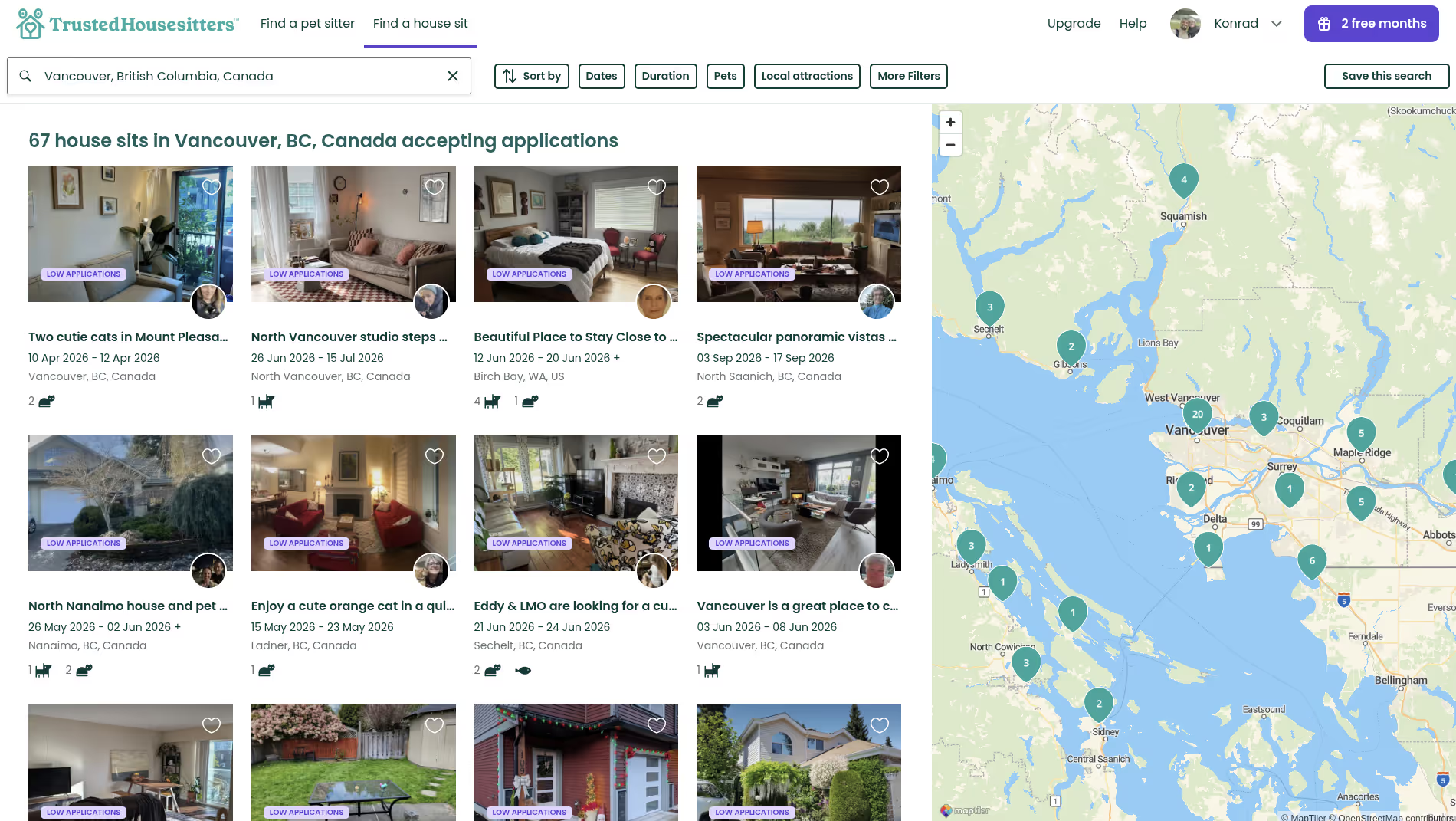
| Best platform for Vancouver | TrustedHouseSitters — ~67 Metro Vancouver listings, 25% off with our discount |
| Regional alternative | House Sitters Canada — 110+ listings, 15% off with HSG15 |
| Average Vancouver hotel rate | $200–$350 per night before tax (add ~17–18% for PST, GST and local levies at checkout) |
| Peak season for sits | October to April — snowbirds leave, listing supply spikes |
| Entry for most nationalities | eTA required — CAD $16 as of early 2026 |
| What to say at the border | You are travelling and visiting friends — not "house sitting" |
Metro Vancouver carries around 67 active TrustedHouseSitters listings, and with hotels at $200 to $280 a night before 17 to 18% in taxes, a two-week sit removes $2,100 to $4,900 in accommodation. October to April is the strongest season thanks to snowbird homeowners. Apply within 24 to 48 hours.
2026 FIFA World Cup warning: Vancouver is a host city for the FIFA World Cup 2026 (June and July). Hotel rates in the city are projected to double or triple during match windows. If you are targeting June or July 2026, securing a house sit during the World Cup window is the most effective way to be in the city without paying inflated rates. Sit availability in summer is typically good — apply 8 to 10 weeks ahead and be specific about your dates.
If you are interested in getting into house sitting, our book Travel More for Less puts the whole process in one place: clear, step by step guidance from your first questions to your first confirmed sit, and the reviews that open the door to the next one.
Why Vancouver Works So Well for House Sitting
Three things make Vancouver particularly effective as a house sitting destination.
The first is cost. Vancouver regularly ranks among the five most expensive cities in North America for short-term accommodation. Even modest options run $150 to $200 per night before taxes. A two-week sit eliminates $2,100 to $4,900 in accommodation costs, enough to cover a TrustedHouseSitters membership many times over.
The second is the snowbird culture. Between October and April, tens of thousands of BC homeowners leave for Arizona, Hawaii, Mexico, and Florida. They take themselves. They cannot take their homes or their pets. The result is a strong seasonal supply of sits concentrated in the months when travel to Vancouver is coldest and accommodation demand softens, which also means less competition from other sitters.
The third is pet ownership. Vancouver has one of the highest rates of pet ownership in Canada, and the culture around pet care is serious. Homeowners who leave dogs or cats behind want a sitter living in the property, not someone doing drop-in visits. That creates genuine demand for exchange sitting rather than paid pet care.
Platform Comparison: Vancouver and British Columbia
| Platform | Vancouver listings | Canadian listings | Annual sitter fee | Best use case |
|---|---|---|---|---|
| TrustedHouseSitters | ~67 | 356 | $129–$259 USD (25% off with our link) | Cities, international sitters |
| House Sitters Canada | 12 | 110+ | $59 CAD (15% off with HSG15) | Rural BC, Canada-focused sitters |
| Nomador | 1 | 19 | €34–€189 | Quebec and French-speaking regions |
| MindMyHouse | 0 | 7 | $29 USD | Long-term sits, budget sitters |
| House Carers | 2 | 7 | ~$50 USD | Global budget option |
TrustedHouseSitters is the essential platform for Vancouver sits. Metro Vancouver carries approximately 67 active THS listings at any given time, more than five times the next largest platform in the city. The 356 Canadian listing total covers the whole country; Vancouver is its largest single city cluster.
House Sitters Canada is worth adding for broader British Columbia coverage: rural BC, the Sunshine Coast, Vancouver Island, and the Interior. Lower competition per listing than THS, priced at $59 CAD per year. Use code HSG15 for 15% off.
MindMyHouse and House Carers each carry around seven Canadian listings total. At $29 and $50 per year they are low-cost additions, but meaningful Vancouver volume should not be expected from either.
Browse all platforms for free before joining. TrustedHouseSitters, House Sitters Canada, and MindMyHouse allow free browsing without registration. Find a sit you want to apply for, then sign up. Our house sitting sites guide covers every platform in detail.
The Cost Comparison: Sit vs Hotel vs Airbnb
A mid-range hotel in downtown Vancouver or Yaletown lists at $200 to $280 per night. Add provincial sales tax (8%), the federal goods and services tax (5%), and the Municipal and Regional District Tax levied on short-term accommodation in BC, and the effective checkout rate runs $234 to $330 for a room listed at $200 to $280. These are not optional extras. They are charged automatically on every booking. A week becomes $1,638 to $2,310.
Airbnb in Vancouver runs $150 to $250 per night for a decent one-bedroom in a central neighbourhood, with similar taxes and service fees. Longer stays attract discounts but rarely bring the nightly total below $100 to $120 for well-located apartments.
A house sit costs $0. No nightly rate, no taxes, no platform fees, no cleaning charges. The only cost is the annual TrustedHouseSitters membership, around $97 after our 25% discount, covering unlimited sits globally for a full year.
Vancouver Neighbourhoods for House Sitting
Understanding the neighbourhoods helps you assess what you are applying for and what daily life looks like during the sit.
West End and Yaletown are the densest parts of central Vancouver: high-rise apartments, excellent walkability, easy access to Stanley Park and the seawall. Sits here tend to involve cats or small dogs. High desirability means more competition per listing.
Kitsilano and Point Grey have a relaxed, residential feel with proximity to Jericho Beach and UBC. Sits in this area often involve larger homes, gardens, and medium to large dogs. See our dog sitting guide for what to expect. The neighbourhood attracts established families who travel regularly.
North Vancouver and West Vancouver offer mountain proximity and quiet suburban streets, with sits involving properties that have significant outdoor space and active dogs who need trail access. The trade-off is transit: the SeaBus or a bridge adds time for trips to the city centre.
Richmond and Burnaby are more affordable suburbs with good SkyTrain links. Sits here attract less competition than central Vancouver and tend to involve family homes rather than city apartments.
Vancouver Island and the Sunshine Coast, reached by BC Ferries, offer a completely different type of sit: quieter, often longer-term, lower competition. Victoria in particular has a strong house sitting culture with sits appearing regularly on both THS and House Sitters Canada.

Seasonal Demand
October through April is the strongest period for sit availability. This is when BC homeowners head south for warmth and the sits that come available tend to be longer (three to eight weeks) with properties that need active caretaking through winter.
Summer is a paradox: more homeowners travel, so listings increase, but sitter activity is also at its peak. Competition is higher in July and August than in November or February. The shoulder seasons of May, June, September, and October often offer the best combination of listing volume and moderate competition.
Vancouver winters are mild by Canadian standards, consistently above freezing in the city and rainy rather than snowy, and the city functions fully in January and February. A winter sit in Vancouver is a very different proposition to a winter sit in Calgary or Winnipeg.
How to Apply Competitively
Vancouver is a desirable city and popular sits attract multiple applicants. The five-application limit on TrustedHouseSitters means applying within the first 24 to 48 hours of a listing appearing is important. Our getting started guide covers the full application formula. Turn on location alerts for Vancouver so you are notified as soon as new sits post.
Address the specific animals in your first message. A Vancouver homeowner leaving a large dog for six weeks in Kitsilano wants to know you have experience with that type of dog, not that you love animals generally. Name the dog, reference the breed, and connect your experience to their specific situation. Our application guide covers what actually works.
Confirm the handover details on your video call with the homeowner. Vancouver homeowners catching flights often need precise handover windows. A sitter who makes that easy to arrange removes a practical obstacle that matters when someone is managing travel logistics.
For international sitters: mention your travel history and experience managing sits abroad. Vancouver homeowners on THS see international applicants regularly and are generally comfortable with it, but demonstrating you have navigated long-distance sits before reduces uncertainty.

Visa and Border Information
Most nationalities travelling to Canada enter on a tourist visa or an Electronic Travel Authorisation (eTA). The eTA fee increased to CAD $16 in early 2026 (up from $7). It is applied for online before travel and processed within minutes for most nationalities. US citizens do not need an eTA.
House sitting occupies a grey area at the Canadian border, the same legal grey area that exists at borders worldwide. The arrangement involves no payment, but Canadian border officials apply a broad definition of what constitutes work. Sitters who describe themselves as house sitting have been questioned and occasionally turned away.
The practical advice: do not volunteer that you are house sitting. If asked about your trip, say you are travelling and visiting friends. This is accurate. You are doing both, and this is the framing least likely to cause problems. Avoid terms like "exchange," "arrangement," or "sitting" at the border.
For longer stays, carry documentation of onward or return travel and be prepared to demonstrate that you have funds to support yourself independently. The standard tourist entry allows up to six months. Border officers have discretion, and long sits benefit from preparation.
Our customs guide covers this in full detail.
Conclusion
Vancouver makes a strong practical case for house sitting. The accommodation costs are high enough that a single two-week sit justifies years of platform membership. The snowbird culture creates reliable seasonal supply. The pet ownership culture creates genuine demand for sitters who will be present in the home. For the full financial picture of what house sitting saves, see our benefits guide.
Start with TrustedHouseSitters using our 25% discount and add House Sitters Canada for broader BC coverage. Browse before you join, apply early and specifically, and target the October to April window for the best listing supply.
DM us @housesittersguide on Instagram if you have questions about Vancouver or BC sits. We answer everyone.

Frequently Asked Questions
How many house sitting listings are there in Vancouver?
TrustedHouseSitters has approximately 67 active Metro Vancouver listings as of March 2026, making it the dominant platform for the city by a significant margin. House Sitters Canada adds 12 Vancouver listings. House Carers has 2, Nomador has 1, and MindMyHouse has none in Vancouver. Across all of Canada, THS carries 356 listings, House Sitters Canada 110+, and the others 7 or fewer.
When is the best time to find Vancouver house sits?
October to April is the strongest season for availability. BC homeowners head south for warmth during this period and sits tend to be longer and less competitive than in summer. The shoulder months of May, June, September, and October offer a good balance of listings and moderate competition. July and August have the most listings but also the most active sitters. In 2026 specifically, June and July coincide with the FIFA World Cup, which Vancouver is hosting. Hotel rates are projected to spike significantly during match windows, making house sits during this period especially valuable.
How much can I save by house sitting in Vancouver instead of booking a hotel?
A typical Vancouver hotel night runs $200 to $350 before the 17 to 18% in taxes added at checkout. A week costs $1,600 to $2,900 all-in. A month at those rates is out of reach for most travellers. A house sit costs nothing per night. The TrustedHouseSitters Standard plan is around $97 per year after our discount, recovered in the first night of saved accommodation.
Do I need a visa to house sit in Vancouver?
Most nationalities need an eTA (Electronic Travel Authorisation), which costs CAD $16 as of early 2026. US citizens do not need one. At the border, describe your trip as travelling and visiting friends rather than house sitting. The exchange model can be interpreted as work by border officials even though no money changes hands. Our customs guide covers the full picture.
Which Vancouver neighbourhoods have the most house sitting opportunities?
Kitsilano, Point Grey, the West End, and North Vancouver appear most frequently in Vancouver THS listings. Kitsilano and Point Grey tend to involve larger homes and dogs. The West End has apartments with cats or small dogs and strong walkability. North Vancouver involves outdoor space and trail-access dogs. Richmond and Burnaby offer lower competition with good transit links.


Responses
What are your thoughts on this post?