

Home > Blog > House Sitting Tax Guide 2026
Quick Facts
| Is free accommodation from house sitting taxable? | Technically a grey area in most countries — in practice rarely reported or enforced for informal arrangements |
| The barter question | The IRS and similar authorities treat service-for-accommodation exchanges as barter, which is technically reportable income |
| Bigger concern for full-time sitters | Tax residency — where you are legally required to file and pay tax |
| Platform membership fees | Potentially deductible as a business expense if you earn income alongside house sitting |
| Official US guidance | irs.gov |
| Official UK guidance | gov.uk/hmrc |
| Official Australia guidance | ato.gov.au |
| Official Canada guidance | canada.ca/cra |
| Official New Zealand guidance | ird.govt.nz |
| Disclaimer | This article is a general research compilation only — not tax advice |
In most countries the accommodation you receive is technically barter income, taxable at fair market value, though enforcement for informal sits is rare. The bigger question is tax residency: over 183 days in a country and you are likely resident there. Log every sit and ask an accountant.
Important disclaimer: We are house sitters, not tax professionals. Nothing in this article constitutes tax advice. The information below is a compilation of publicly available guidance, official government sources, and general principles as understood in April 2026. Tax law changes frequently, varies significantly between countries, and depends on individual circumstances. Before making any decisions about your tax obligations, please consult a qualified tax professional in your country of residence. Links to official tax authority websites for the US, UK, Australia, Canada, and New Zealand are provided throughout this article
If you are interested in getting into house sitting, our book Travel More for Less puts the whole process in one place: clear, step by step guidance from your first questions to your first confirmed sit, and the reviews that open the door to the next one.
We want to be clear from the start: neither of us are tax experts. This article is a research compilation drawing from official government sources, tax professional publications, and publicly available guidance. It is designed to give house sitters a map of the questions they need to ask a qualified accountant, not to replace that conversation. Every section links to the official authority where you can verify the current rules for your country.
The Core Question: Is Free Accommodation Taxable?
The question most house sitters never ask is whether the accommodation they receive in exchange for pet care is considered income.
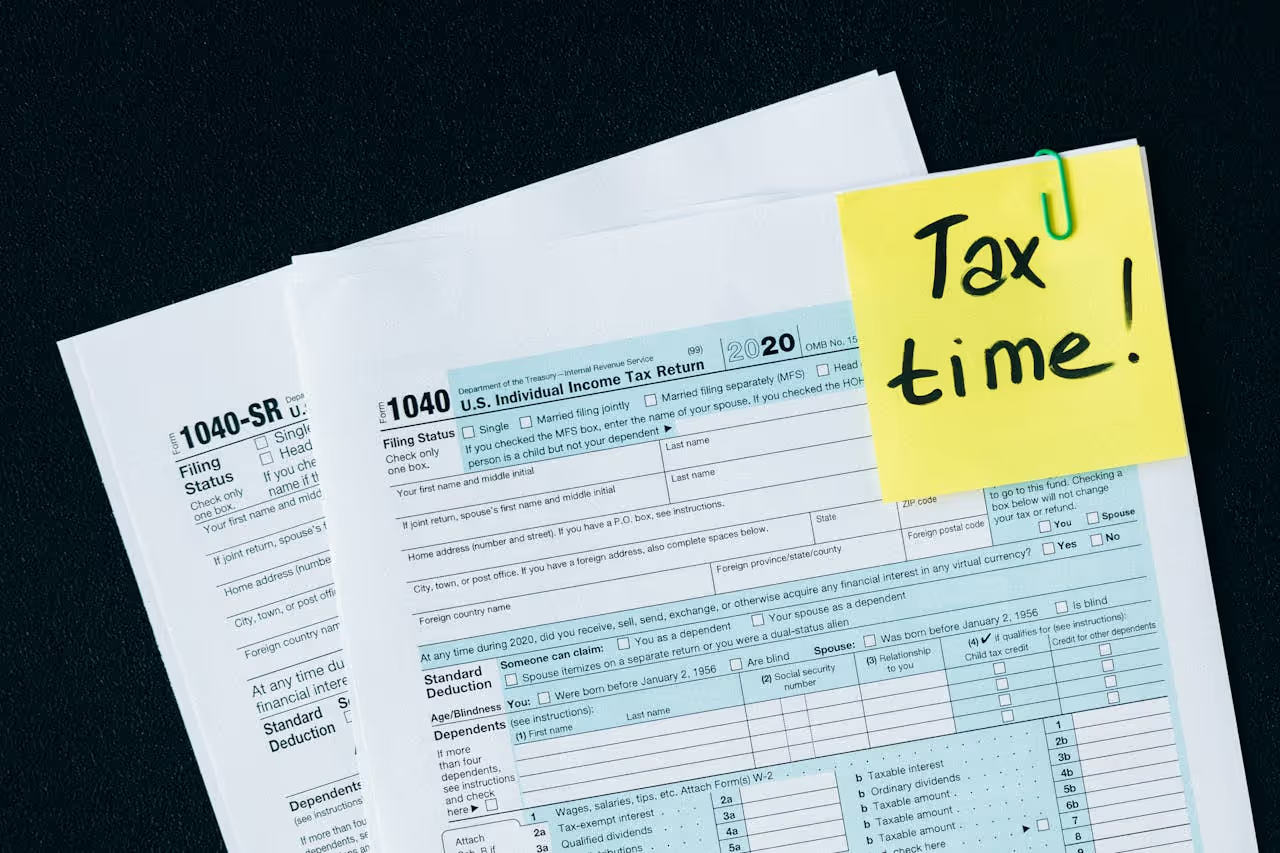
In most countries, a simple exchange of services for accommodation falls into a category known as bartering. The IRS in the United States is the most explicit about this: bartering income is taxable at fair market value. If you provide pet care services worth $X per week and receive accommodation worth $Y per week in return, both parties have technically received income that should be reported.
In practice, informal arrangements between private individuals are rarely audited or enforced at this level. The IRS has stated it does not specifically address house sitting, but its barter rules technically apply. The same general principle applies in the UK under HMRC rules, Australia under the ATO, and Canada under the CRA. Each jurisdiction has different thresholds, exemptions, and practical enforcement priorities.
The practical reality, based on community discussion and the nature of these arrangements: the vast majority of house sitters do not report the value of accommodation received, and tax authorities have not pursued enforcement in this area for informal non-commercial arrangements. That does not mean the obligation does not exist in theory. It means the gap between technical law and practical enforcement is wide.
What this means for you: If you are sitting casually alongside regular employment and receiving no payment, the tax risk from unreported barter income is low in practice. If you are a full-time professional house sitter earning income from other sources and sitting at high-value properties, the question is worth raising explicitly with an accountant.
The Bigger Question: Where Are You Tax Resident?
For full-time travelling house sitters, the more pressing tax question is usually not whether the accommodation is taxable. It is where you are legally required to file and pay tax at all.
Most countries use some version of the 183-day rule: if you spend more than 183 days in a country in a tax year, you are likely considered tax resident there and subject to that country's rules on worldwide income. But the 183-day test is a starting point, not the whole picture.
Additional factors most countries consider include: where your permanent home is located, where your immediate family lives, where your bank accounts and financial interests are held, where you are registered for social security or healthcare, and where your primary economic ties are. A person who leaves their home country but maintains a family home, local bank accounts, and ongoing ties may remain tax resident there regardless of days spent abroad.
Digital nomads and full-time house sitters who move continuously between countries face a specific risk: being tax resident nowhere formally, which does not mean paying no tax. It means uncertainty and potential liability in multiple jurisdictions simultaneously.
The safest approach: Establish clear tax residency somewhere, understand the rules of that country, and file accordingly. Assuming you are not required to file anywhere is not a tax strategy. It is deferred liability.
Country Overview
This table is a general summary only. Laws change and individual circumstances vary significantly. Click the official source link for each country before making any decisions.
| Country | Key rule for travellers | Barter / accommodation | Official source |
|---|---|---|---|
| United States | Citizenship-based taxation — US citizens file regardless of where they live. Foreign Earned Income Exclusion may apply above 330 days abroad. | IRS treats bartering as taxable income at fair market value — both parties should report. | irs.gov/barter |
| United Kingdom | Statutory Residence Test — under 16 days: automatically non-resident. Over 183 days: automatically resident. Between those: HMRC examines ties (family, home, work). | No specific house sitting guidance from HMRC. Benefit-in-kind rules apply to employer-employee relationships, not informal private arrangements. | gov.uk/tax-foreign-income |
| Australia | ATO applies multiple tests including the resides test and domicile test. Short visits can trigger residency. Strong emphasis on pattern of life over formal labels. | No specific ATO guidance on house sitting accommodation. General barter principles apply — the ATO can assess income based on market value of services. | ato.gov.au/residency |
| Canada | CRA uses residential ties test. Factual residents are taxed on worldwide income. Deemed residents and non-residents have different obligations. | CRA treats barter transactions as income at fair market value. No specific house sitting guidance published. | canada.ca/cra-residency |
| New Zealand | IRD 183-day rule for tax residency, plus permanent place of abode test. New residents have a four-year transitional period on foreign income. | No specific IRD guidance on house sitting. Barter principles apply. | ird.govt.nz/international |
Can You Deduct Your Platform Membership Fee?
For house sitters who also earn remote income (freelancers, remote employees, online business owners) the annual membership fee for house sitting platforms may be deductible as a business expense in some jurisdictions.
The general principle across most tax systems: a cost is deductible if it is ordinary, necessary, and directly related to earning income. If you work remotely and your house sitting membership directly enables you to access accommodation while working, there is a reasonable argument for deductibility.
In the United States, self-employed individuals can deduct ordinary and necessary business expenses on Schedule C. Whether a THS membership qualifies depends on whether house sitting is part of how you operate your business. A freelance writer who house sits to keep accommodation costs low while working is in a different position to someone who sits for purely personal reasons.
In the UK, HMRC allows self-employed people to deduct allowable business expenses: costs incurred wholly and exclusively for business purposes. The membership fee argument is weaker here because the accommodation benefit is not purely business-related.
In Australia, the ATO allows deductions for expenses incurred in earning assessable income. Similar analysis applies.
The honest answer: Whether your platform membership is deductible depends on your specific income structure, how you use house sitting, and the rules of your jurisdiction. This is exactly the kind of question to bring to an accountant with a clear explanation of how you work. The potential deduction for a THS Premium membership of around £259 per year is unlikely to drive the decision on its own, but it is worth noting.
Other expenses that may be deductible for self-employed sitters doing significant travel for work: travel costs to and from sits, home office costs if applicable, professional subscriptions, equipment used for remote work.
Record Keeping
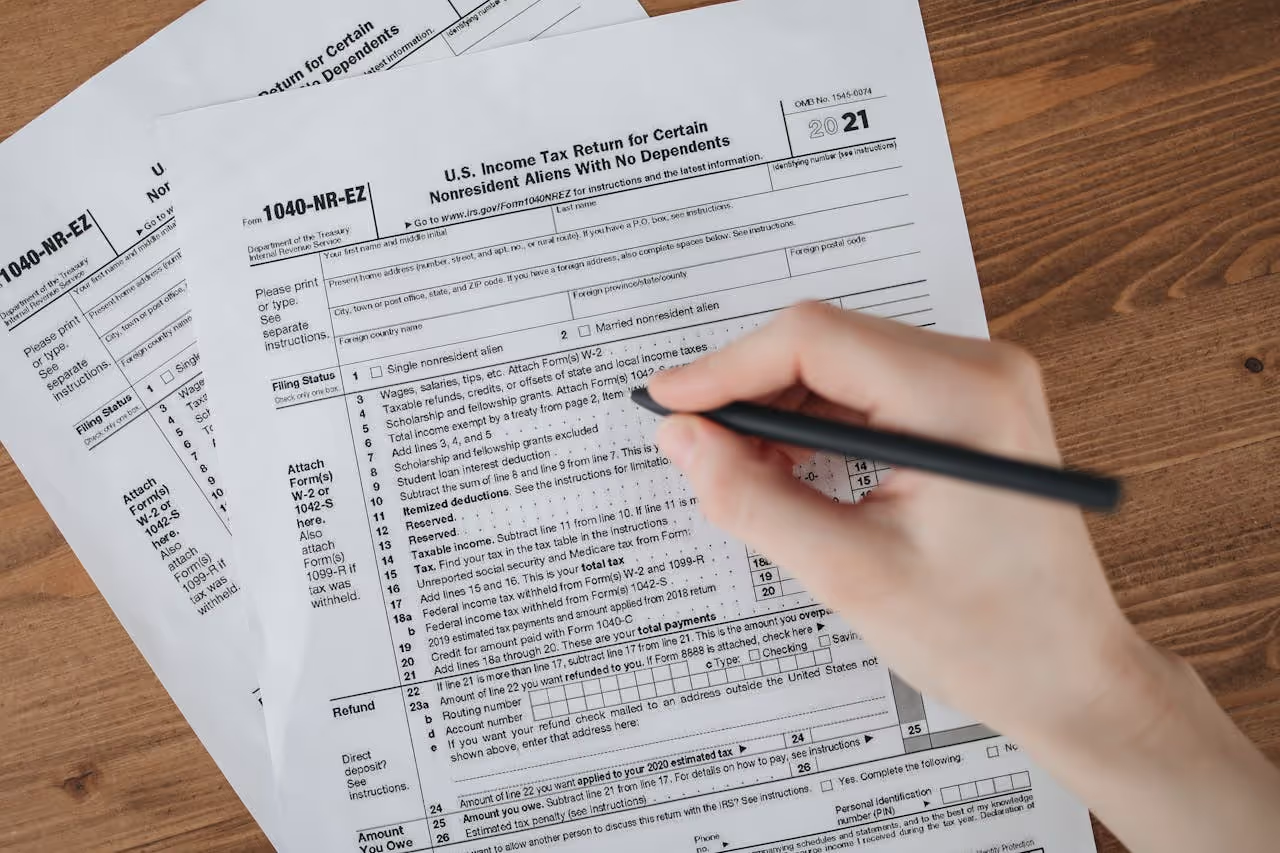
Whatever your tax situation, keeping clear records makes any professional consultation easier and any audit far less stressful. For house sitters, the records worth keeping include:
A log of every sit: dates, location, and homeowner. This documents your travel pattern, which matters for residency questions. It also records the accommodation you received, which is relevant if you ever need to assess the barter question.
Your platform costs: membership receipts for THS, Nomador, or other platforms, as these may be deductible.
Income records: if you earn remote income alongside sitting, keep clear records of what you earned, when, and from where. This is relevant for foreign income exclusions and residency arguments.
Travel costs: flights, transport, and any accommodation you paid for between sits.
The simplest system is a spreadsheet updated after each sit. Date in, date out, country, platform, and any costs incurred. This takes five minutes per sit and removes the need to reconstruct your travel history later from memory.
When to Get Professional Advice
Most casual sitters completing one or two sits a year alongside regular employment in a single country have minimal tax complexity from house sitting specifically. The accommodation is informal, the barter value is relatively small, and tax authorities are not actively pursuing enforcement in this area.
The cases where professional advice is truly worthwhile:
You are a full-time nomadic sitter who has left your home country and earns income remotely. Your tax residency situation may be truly unclear and the stakes of getting it wrong are significant.
You are a US citizen. US citizenship-based taxation applies regardless of where you live. The Foreign Earned Income Exclusion and Foreign Housing Exclusion may help, but they require proper documentation and filing. A US expat tax specialist is worth the cost.
You are sitting at high-value properties and believe the accommodation value could be meaningful. If a two-month sit in a property worth €3,000 per month is technically reportable barter income, the numbers start to matter.
You are unsure of your residency status after extended travel. Most developed countries can make a residency determination retroactively, and the penalties for missed filings compound over time.
Finding a good accountant who understands digital nomad and remote work tax situations is well worth the cost. Search for "expat tax specialist" or "digital nomad accountant" in your home country, or ask in house sitting and nomad communities for recommendations.
Conclusion
The tax picture for house sitters sits in a grey area that most people navigate by not thinking about it too carefully. For casual sitters that is probably fine. For full-time nomadic sitters earning remote income and accumulating years of continuous travel, the questions of residency and reporting deserve a proper answer from a professional.
We are not tax experts and nothing here should be treated as advice for your specific situation. What we have tried to do is map the questions, point to the official sources, and flag where professional guidance is truly worth the cost.
Use the official links in this article to check the current position in your country. If you are unsure about your residency status or whether your sitting income needs to be reported, speak to a qualified accountant before assuming the answer is no.
For everything else about the house sitting exchange itself, our guides below are a good next step. Join TrustedHouseSitters with 25% off using our discount link to get started.
Reminder: This article is a general research compilation only. It is not tax advice. Always consult a qualified tax professional in your jurisdiction before making decisions about your tax obligations.

Frequently Asked Questions
Is house sitting income taxable?
In most countries, an informal exchange of pet care for accommodation is technically a barter transaction, which tax authorities treat as income at fair market value for both parties. In practice, enforcement for small informal arrangements between private individuals is rare. However, the technical obligation may exist. Consult a tax professional in your country for guidance specific to your situation. The IRS barter guidance is at irs.gov.
Do I need to pay tax on free accommodation received during a house sit?
This depends on your country, your residency status, and how the arrangement is structured. No major tax authority has published specific guidance on house sitting. The general barter principles that apply in the US, UK, Australia, Canada, and New Zealand suggest the accommodation has theoretical taxable value, but practical enforcement is minimal for informal non-commercial arrangements. Check with your national tax authority or a professional for your specific situation.
Can I deduct my TrustedHouseSitters membership fee on my taxes?
Possibly, if you are self-employed and can demonstrate the membership is directly related to earning income. In the US, self-employed individuals may be able to deduct it on Schedule C. In the UK and Australia, the test is whether the expense is wholly and necessarily incurred in earning income. This is a question for an accountant who understands your specific income structure. Our full THS review covers what each membership tier includes and costs.
What is the 183-day rule for digital nomads?
The 183-day rule is a common threshold used by many countries to determine tax residency. If you spend more than 183 days in a country in a tax year, you are often considered tax resident there. However, this is a starting point, not the complete rule. Most countries also consider family ties, property ownership, financial connections, and other factors. Spending less than 183 days somewhere does not automatically make you non-resident. Check your home country's specific rules through their official tax authority website.


Responses
What are your thoughts on this post?