

Home > Blog > House Sitting Singapore 2026: Platforms, Visas and What to Know
Quick Facts
| Quick Facts | |
|---|---|
| THS Singapore listings | A small handful at any time, check before applying |
| Nomador Singapore listings | A small handful, check before applying |
| MindMyHouse and HouseCarers | No meaningful Singapore presence |
| Visa for Australians | Visa-free entry, social visit pass typically up to 30 days |
| Visa for EU citizens | Visa-free entry, typically up to 90 days |
| Mandatory entry requirement | SG Arrival Card, submit within 3 days before arrival |
| Climate | Hot and extremely humid year-round, air conditioning essential |
| Why it matters anyway | Major Asia travel hub, huge educated expat community |
Singapore sits are genuinely rare: THS and Nomador carry only a small handful, and the housing stock is overwhelmingly high-rise apartments. Set alerts on both and apply immediately. Australians get 30 days visa-free, EU passport holders up to 90, and everyone needs a free SG Arrival Card.
This is not immigration or legal advice. We are not immigration lawyers or licensed advisors. The information in this article is based on our own research and experience, and immigration and visa rules change frequently and vary by nationality, country, and individual circumstances. Always confirm current requirements directly with the relevant embassy, consulate, or a qualified immigration professional before you travel.
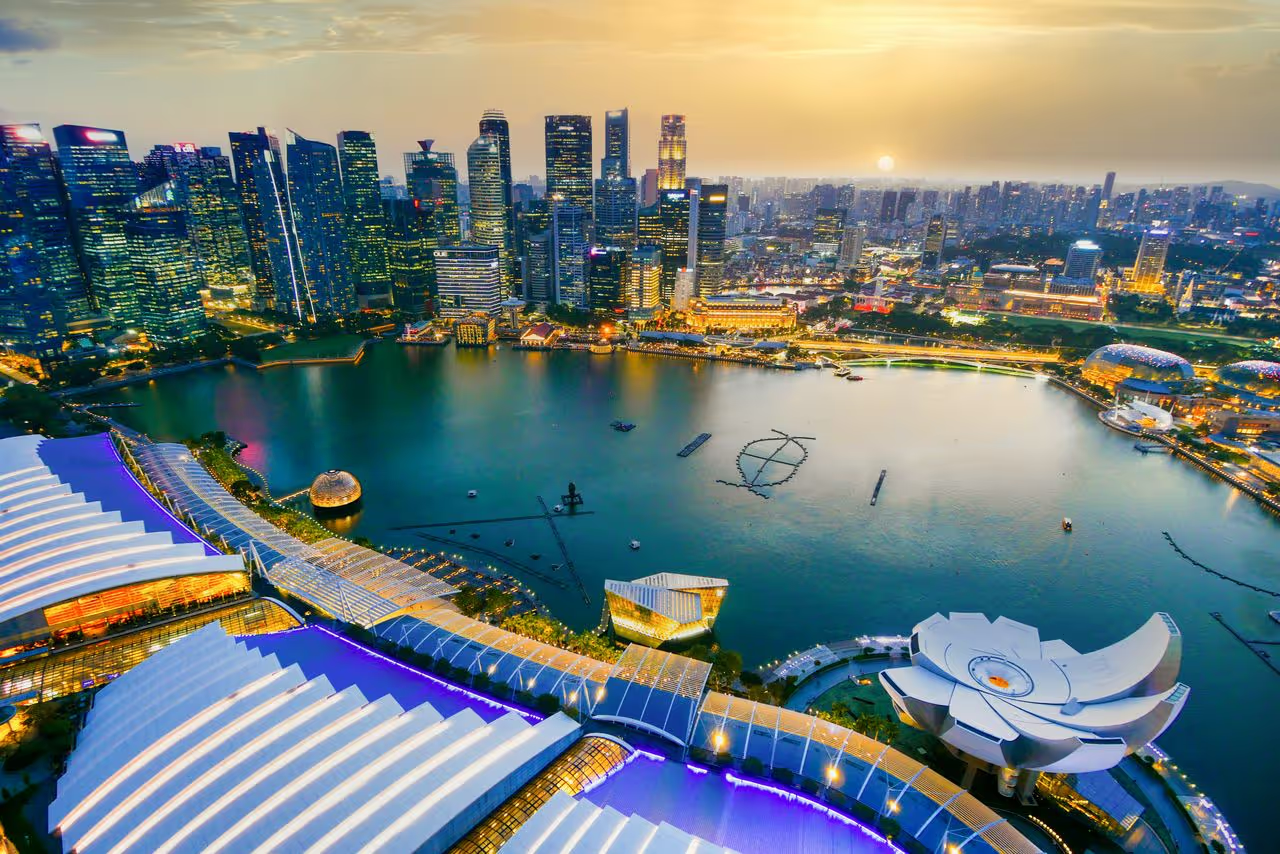
House sitting listings in Singapore are genuinely rare. The city-state is small, property is overwhelmingly high-density apartments rather than the standalone homes that typically generate sits, and the market has not developed the way it has in Australia, the UK, or France. That said, Singapore is worth understanding for two reasons: it has a substantial expat community that occasionally needs sitters, and it works exceptionally well as a hub for house sitting trips elsewhere in Asia.
I have not personally house sat in Singapore. I want to be upfront about that. But I have visited twice, spent meaningful time exploring the city, and have a clear picture of what living there would actually involve, which is worth sharing for anyone considering it. If you are weighing up a Singapore sit, or considering Singapore as a base for wider Asia travel, this guide covers the platform reality, the visa rules, and what the city itself is actually like to live in.
If you are interested in getting into house sitting, our book Travel More for Less puts the whole process in one place: clear, step by step guidance from your first questions to your first confirmed sit, and the reviews that open the door to the next one.
The Honest Listing Reality
This is the part most guides will not tell you plainly: Singapore has very few house sitting listings on any major platform.
| Platform | Singapore listings |
|---|---|
| TrustedHouseSitters | A small handful, verify before applying |
| Nomador | A small handful, verify before applying |
| MindMyHouse | None currently |
| HouseCarers | None currently |
This is not a reflection of demand or interest. It reflects the structure of Singapore itself. The country is one of the most densely populated places on earth, and the overwhelming majority of residential property is high-rise apartments, either government-built HDB flats or private condominiums. The detached or semi-detached homes with gardens and standalone character that typically generate house sitting listings elsewhere are a small minority of Singapore's housing stock, reserved for the wealthiest residents in specific landed property estates.
If you are serious about a Singapore sit, the only practical approach is to set alerts on both THS and Nomador and apply immediately when something appears. Given the rarity, competition for any listing that does surface will likely be high, and rare, high-demand listings are exactly the kind of situation where extra vigilance matters.
Our house sitting scams guide is worth a read before applying anywhere with unusually thin competition, since scarcity is something scammers occasionally exploit.
Our house sitting application guide covers how to have your application ready to send within minutes of a notification.
Why Singapore Is Still Worth Knowing About
Despite the thin listing volume, Singapore deserves attention for two practical reasons.
The first is the expat community. Singapore has one of the largest, most internationally connected expat populations in Asia, drawn by finance, technology, and a genuinely well-run city. That community skews highly educated and English-speaking, and a portion of it will be familiar with house sitting as a concept from time spent in Australia, the UK, or elsewhere.
As the broader house sitting market grows globally, the way it currently is in Germany, I would expect Singapore's listing volume to grow alongside it, even from this current low base. Our house sitting Europe guide covers a market at a more mature stage of that same growth curve, which gives a sense of where a market like Singapore's could eventually head.
The second reason is Singapore's position as a transit and travel hub for the rest of Asia. From Singapore, you can reach almost anywhere in Southeast Asia within a few hours by air, often at low cost on regional carriers. I have flown Singapore to Vietnam myself and it was smooth, affordable, and easy. If your house sitting plans include a wider Asia-Pacific route, basing a trip around a Singapore stopover, even a short paid stay rather than a sit, can make logistical sense in the same way Germany works as a hub for European house sitting.
Singapore vs Other Asia-Pacific House Sitting Markets
Singapore's thin listing volume looks different in context. The wider Asia-Pacific region generally has lower house sitting penetration than Europe, Australia, or North America, and Singapore is not an outlier so much as representative of the region.
Australia and New Zealand remain the dominant Asia-Pacific markets by a wide margin, both with mature platforms and consistent listing volume. If your trip allows flexibility, treating Singapore as a stopover on a route that includes Australia or New Zealand makes far more sense than trying to build an Asia-Pacific trip around Singapore sits specifically.
The contrast with Germany is useful here. Germany is also a country where house sitting is still relatively new and growing, similar to where Singapore likely sits today. The difference is that Germany has a housing stock, standalone or semi-detached homes with gardens, that naturally supports the kind of listings the platforms are built around. Singapore's apartment-dominant housing stock means even significant future growth in interest may not translate into listing volume the way it likely will in Germany over the next few years.
What Singapore Is Actually Like
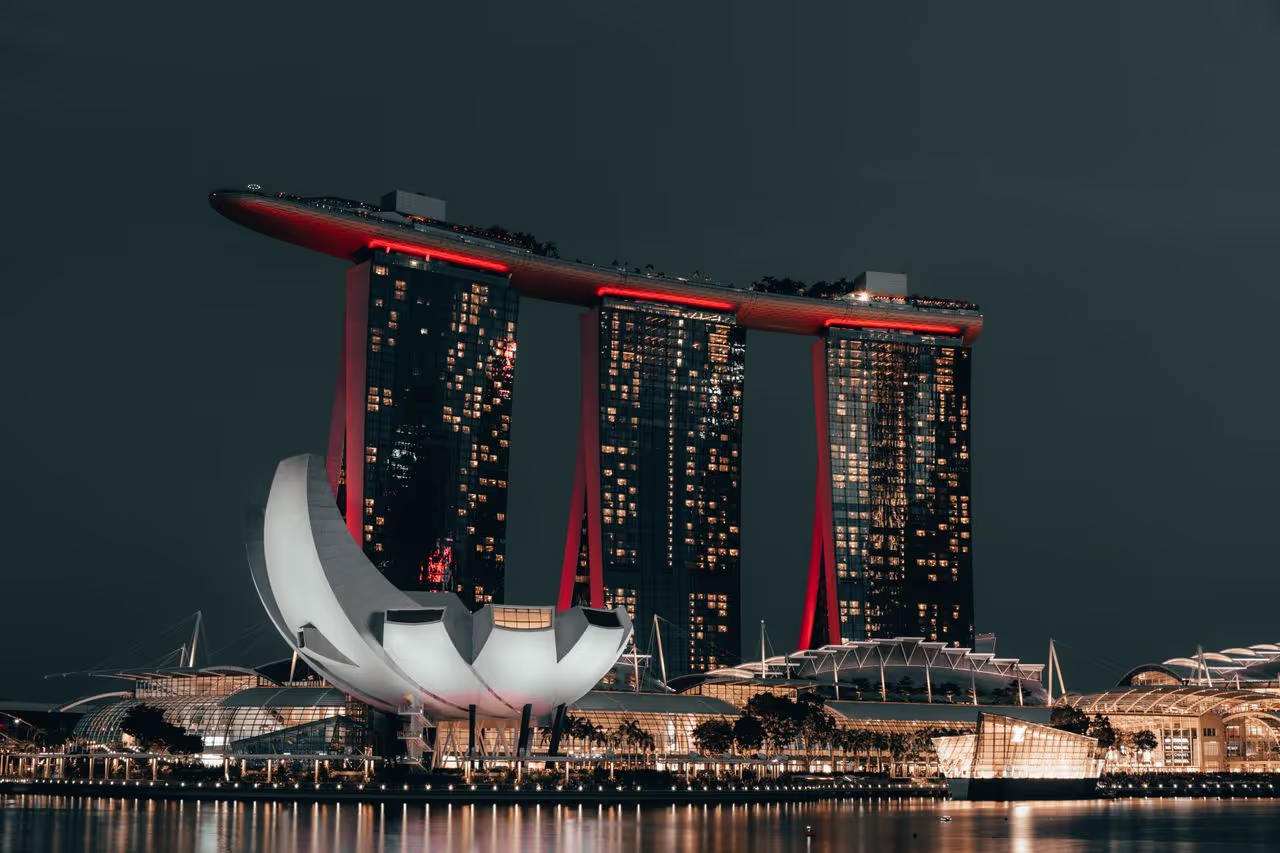
I have been to Singapore twice. The first time was a three or four day trip exploring the city properly. The second was for a family event, staying at Marina Bay Sands on the 52nd floor overlooking the harbour, which gave me a very different but equally memorable view of the place.
The heat and humidity are the first thing anyone needs to understand before considering a stay there. It is hot, but more specifically it is extraordinarily humid in a way that hits you the moment you step outside any air-conditioned space. Your breath genuinely catches. Every interior space, shops, transport, homes, is air-conditioned as a baseline necessity rather than a luxury, and if you are house sitting in Singapore, functioning air conditioning is not optional. It is the difference between a livable stay and an unbearable one.
The city itself is genuinely impressive in how well it is maintained, in a similar way to how German homeowners keep things spotless and organised before a sit begins, as covered in our house sitting Germany guide.
The rail system is clean, efficient, and easy to navigate, which makes getting around without a car entirely realistic, unlike most of the countries I write about on this site. Singapore is also far more culturally varied than its small size suggests. Distinct districts like Little India and Chinatown feel like stepping into completely different countries within the same short metro ride, and the food reflects that diversity. It is some of the best and most varied food I have had anywhere.
Changi Airport deserves a specific mention. It is genuinely one of the most remarkable airports in the world, with a butterfly garden and waterfalls built into the terminal itself. If your trip involves any kind of layover in Singapore, it is worth extending it deliberately.
Visa Rules for Short Stays
Singapore's entry rules are straightforward for most nationalities relevant to this site's readers, but the specifics matter.
Australian passport holders can enter Singapore without a visa, typically granted a 30-day stay on arrival for tourism purposes. Visa-free entry covers tourism and short-stay purposes only. Working, volunteering for pay, or conducting business activities during a visa-free stay is not permitted. New Zealand Geographic
European Union passport holders generally receive visa-free entry to Singapore as well, with stays commonly granted up to 90 days depending on nationality, though this varies and should always be checked against the specific country.
All visitors must submit a free SG Arrival Card through the official ICA website or the MyICA mobile app within 3 days before arrival, and passports must be valid for at least six months. This is a mandatory digital step, not optional, and should be completed before you fly. New Zealand Travel Tips
On the question of whether house sitting itself sits in a grey area under Singapore's immigration rules, I want to be honest that I do not have direct experience to draw on here, since I have not house sat there myself. Singapore is generally strict about work authorisation and what activities are permitted on a tourist or social visit pass. Given that explicit guidance describing house sitting specifically does not appear in any official Singapore immigration source, the safest approach is to treat the arrangement the same way you would treat any unpaid, voluntary activity: it should not resemble employment, and if your stay is genuinely about caring for a home and pets in exchange for accommodation with no cash changing hands, that generally aligns with how voluntary, non-paid activity is treated elsewhere.
Verify directly with Singapore's Immigration and Checkpoints Authority before committing to anything beyond a short visit. Our house sitting legal issues guide and what to tell customs when house sitting abroad cover the broader principles that apply across any country with ambiguous guidance on house sitting specifically.
Getting Around and Practical Notes
Singapore's MRT rail network is one of the best in the world and makes a car genuinely unnecessary, which is unusual for most of the destinations covered on this site. If you do find a Singapore sit, you will likely be able to manage daily life and pet walks without needing to arrange transport at all.
Air conditioning is the single most important practical consideration for any stay, the same way confirming heating works properly matters for a winter European sit. Our house sitting packing guide covers climate-specific packing if a Singapore sit or a wider Asia trip is on your radar.
Confirm during any video call with a homeowner that the unit functions properly and understand how to operate it, since improperly used air conditioning systems in Singapore can also affect electricity costs significantly, which may be a consideration the homeowner raises.
Singapore is consistently ranked among the safest cities in the world, which is reassuring context for anyone nervous about a first international sit. It is also one of the more expensive cities in Asia, so understanding what costs you are responsible for during any sit, groceries, transport, incidentals, is worth clarifying clearly upfront. Our house sitting profile guide covers how to position yourself as a strong applicant for any rare or competitive listing, which a Singapore sit would certainly be given how few exist.
Conclusion
Singapore is not, today, a meaningful house sitting destination by listing volume. The handful of sits available on THS and Nomador require genuine luck and fast application timing to land. But the country is worth understanding regardless, both because the market is likely to grow as house sitting becomes more familiar to its large expat community, and because Singapore works exceptionally well as a hub for a wider Asia-Pacific trip even when a sit itself is not on offer.
If a Singapore listing does appear, the heat, the humidity, the reliance on air conditioning, and the genuinely excellent public transport are the practical realities to walk in understanding.
The city itself, the food, the culture, the extraordinary airport, makes it worth the visit regardless of whether house sitting is part of the plan. Our full comparison of international house sitting platforms is the best starting point if Singapore is one stop on a much larger trip.
Have you found a Singapore house sit, or are you considering Singapore as a stopover for a wider Asia trip? Drop your experience or questions in the comments below. I read every one.
Caro and I have completed 20 house sits across 12 countries, driven 19,000km in Australia and 24,000km in our 1998 VW T4, and saved over $26,500 in accommodation costs over three years of house sitting. If you have questions about house sitting in Singapore or planning a wider Asia trip, send us a message on Instagram, we read every DM.

Frequently Asked Questions
Are there house sitting opportunities in Singapore?
Very few. TrustedHouseSitters and Nomador both carry only a small handful of Singapore listings at any given time, and other major platforms have no meaningful presence there. This reflects Singapore's housing stock, which is overwhelmingly high-density apartments rather than the standalone homes that typically generate house sitting listings. Set alerts on both platforms and apply immediately if something appears.
Do Australians need a visa for Singapore?
No. Australian passport holders can enter Singapore visa-free, typically granted a stay of up to 30 days for tourism purposes. All visitors, regardless of nationality, must submit a free SG Arrival Card online within 3 days before arrival.
Do EU citizens need a visa for Singapore?
Generally no. Most EU passport holders receive visa-free entry to Singapore, commonly for stays of up to 90 days, though the specific allowance varies by nationality and should be checked individually. The mandatory SG Arrival Card applies to all visitors regardless of nationality.
Is house sitting legal in Singapore?
There is no explicit guidance from Singapore's immigration authority specifically addressing house sitting. Singapore is generally strict about work authorisation. The safest approach is to ensure the arrangement is genuinely unpaid and voluntary, with no cash changing hands, and to verify directly with Singapore's Immigration and Checkpoints Authority before committing to anything beyond a short tourist stay. This is not legal advice.
Is Singapore a good base for house sitting elsewhere in Asia?
Yes, even without a Singapore sit itself. Singapore's airport connects to most of Southeast Asia within a few hours, often affordably on regional carriers, which makes it a practical hub for a wider Asia-Pacific house sitting trip in the same way Germany works as a hub for European sits.
What is the climate like for house sitting in Singapore?
Hot and extremely humid year-round, with little seasonal variation. Air conditioning is essential in every indoor space and should be confirmed as fully functional before committing to any sit. The humidity is intense enough that stepping outside an air-conditioned space is immediately noticeable.


Responses
What are your thoughts on this post?