

Home > Blog > House Sitting With a Rescue Dog
Quick Facts
| Quick Facts | |
|---|---|
| Are rescue dogs harder to sit? | Not always. Many are perfectly happy and well-adjusted. But some carry triggers the homeowner may not fully understand. |
| The biggest risk | The dog seems calm during the handover when the owner is present, then behaves completely differently once the owner leaves |
| Should "rescue dog" be in the listing? | Not necessarily. Specific behavioural issues should be disclosed regardless of whether the dog is a rescue or not. |
| What to ask during the video call | How does the dog react to strangers, particularly men? How does it behave when left alone? Any known triggers? |
| Our experience | We have not sat a confirmed rescue dog during our 20 sits, but I walked two rescue dogs before house sitting began, and both experiences taught me lessons I still use today |
Before Caro and I started house sitting, I was a dog walker. Two of the dogs I walked were rescues. One was from Bulgaria and was terrified of men, especially men in hats. I wore a cap every day that summer. The owner told me this upfront, so I removed the cap before arriving at the house. It made no difference. The dog hid under the bed, refused to come out, and the only way I could interact with it was when the owner was standing beside me. With the owner present, I could pat it, hold the leash, walk beside it. Everything seemed fine. The first time I was alone with the dog, it bolted into a forest.
That moment taught me something about rescue dogs that I have carried into every sit since: the safety a dog shows around its owner can be completely deceiving. A dog that seems calm, friendly, and manageable during the handover can become a different animal once the person it trusts most walks out the door. This is not the dog being dishonest. It is the dog losing its anchor.
If you are interested in getting into house sitting, our book Travel More for Less puts the whole process in one place: clear, step by step guidance from your first questions to your first confirmed sit, and the reviews that open the door to the next one.
Why Rescue Dogs Are Different
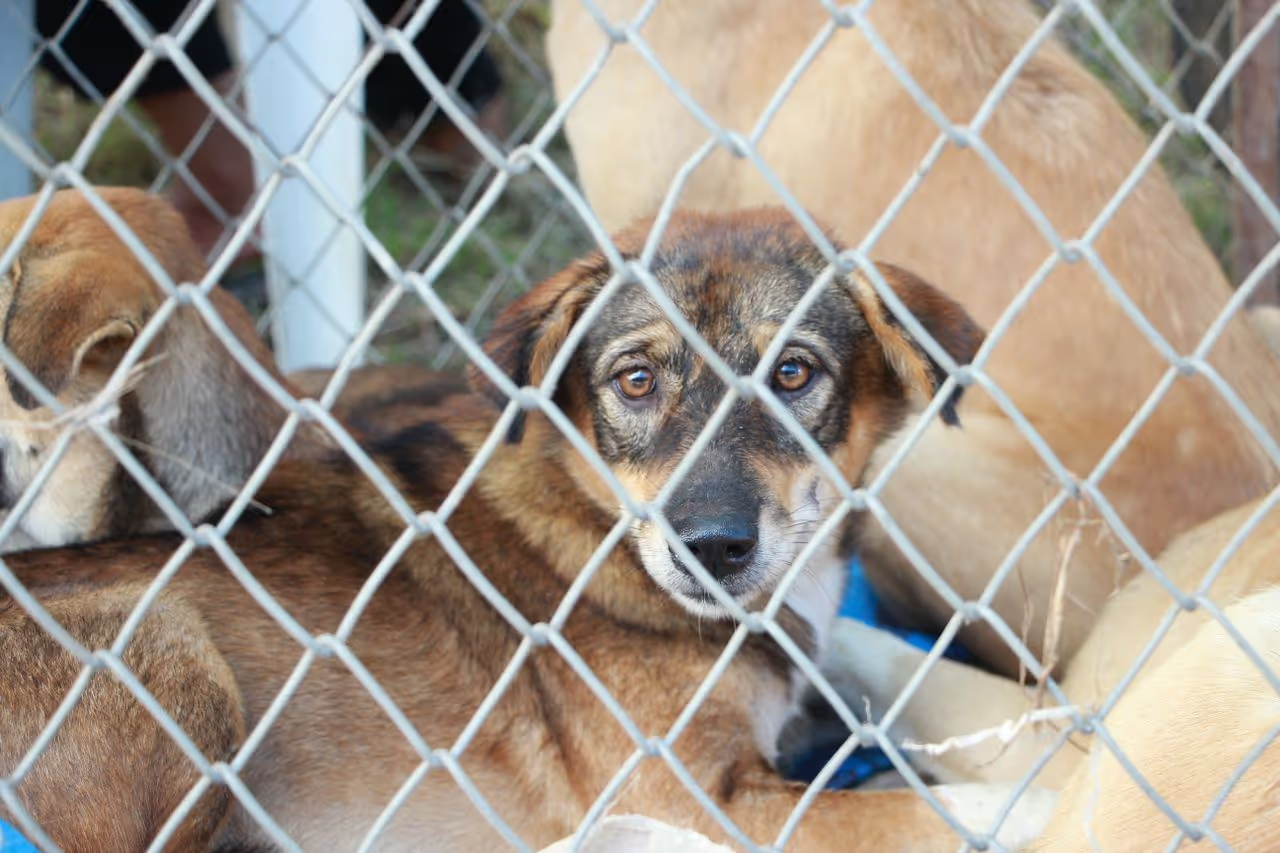
Not every rescue dog has issues. Many rescue dogs are the happiest, most affectionate animals you will ever meet. They have found their home, they have bonded with their owner, and they are completely adjusted. Noting that a dog is a rescue in a listing might give sitters the wrong impression that the sit will be harder, when in reality some non-rescue dogs have far worse behaviour than some rescue dogs.
The difference is not that rescue dogs are problematic. It is that rescue dogs are more likely to carry triggers that nobody fully understands, including the owner. A dog that was bought as a puppy and raised in one home has a known history. The owner can tell you exactly what the dog has experienced, what it is afraid of, and what it reacts to, because they were there for all of it.
A rescue dog's history has a gap. Sometimes a large one. The owner knows the dog from the day they adopted it forward, but everything before that, the trauma, the environment, the previous handling, is often unknown or only partially understood. Triggers can emerge months or years after adoption, in situations the owner has never seen because the specific combination of circumstances has never occurred before. A house sitter, a stranger, entering the home while the owner leaves, may be exactly that combination.
The Handover Problem
This is the part of the article that matters most practically, because it affects how sitters assess risk during the meeting and first day.
When the homeowner is present, the dog has its anchor. The person it trusts most is in the room. The dog's nervous system is regulated by that presence. A stranger (you, the sitter) is assessed through the lens of the owner's calm behaviour: the owner seems fine with this person, so the person is probably safe.
During the handover, the dog may approach you, accept pats, walk on the leash beside you, eat from your hand. All the signals suggest the dog is comfortable with you. The homeowner watches this and feels reassured. You watch this and feel confident. Everyone agrees the sit will go well.
Then the owner leaves. And the anchor goes with them.
What happens next depends entirely on the individual dog. Many rescue dogs handle this transition fine, particularly if they have been with the owner long enough to feel secure in the home itself rather than just in the owner's presence. But some dogs, particularly those with abandonment trauma or insufficient socialisation during their critical window, experience the owner's departure as a genuine crisis.
I learned this with the Bulgarian rescue. With the owner standing next to me, I could do everything. Hold the leash, pat the dog, walk beside it. The moment the owner closed the door and left me alone with the dog, the animal I had just been confidently handling became something completely different. It ran. It hid. When I eventually got it on the leash for a walk, it bolted into a forest.
From that day forward, I learned to always keep the door locked behind me until the dog had a leash on. That is not paranoia. It is a practical safety measure that protects the dog from going missing and the sitter from the guilt and responsibility of losing someone's pet on day one.
The Second Rescue Dog
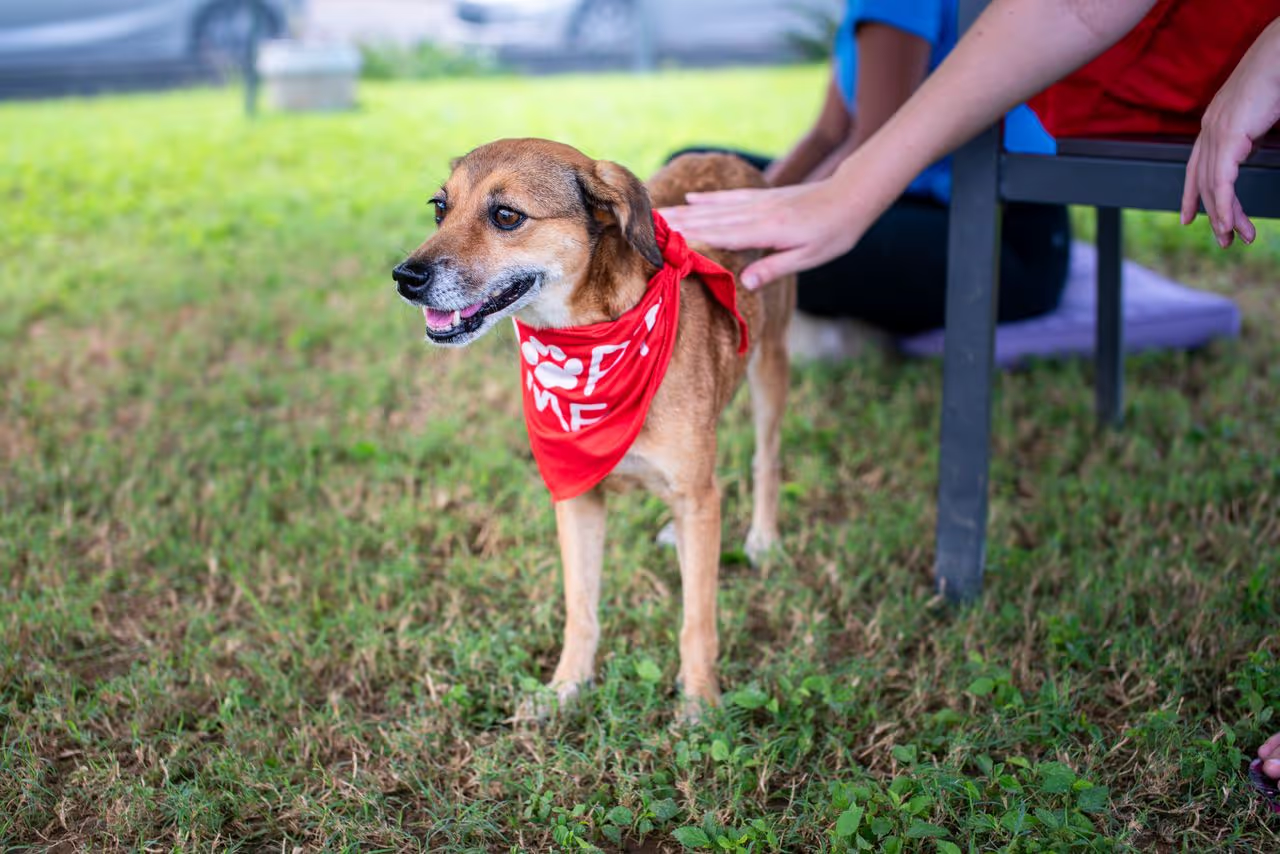
The other rescue dog I walked had a different set of issues but the same underlying pattern.
This dog was also afraid of men. If I moved closer, it would back away. Getting the leash on was a struggle every single time. Once on the leash, the dog would walk a short distance, then stop completely. No amount of encouragement, treats, or patience would get it moving again. It wanted to go back to the house and lie on its bed. That bed, in that room, was the last place the owner had been with it before leaving, and the dog had decided that was the safest place in the world. Everything beyond it was a threat.
I stopped walking that dog. Not because I was frustrated, but because the dog was clearly not comfortable with me, and forcing the interaction was not going to improve anything. It needed its owner or someone it had bonded with over a long period, not a stranger who appeared once a week.
The lesson for house sitters: if a rescue dog's distress is not improving and is escalating rather than settling, that is important information. Communicate it to the homeowner. Do not push through it hoping the dog will eventually adjust, because a frightened dog that is being forced into situations it finds threatening can become a safety risk for you and for itself.
What to Ask Before Accepting a Sit With a Rescue Dog
If a listing mentions that the dog is a rescue, or if you learn during the video call that the dog was adopted, there are specific questions worth asking beyond the standard pre-sit checklist.
How does the dog react to strangers when the owner is not present? This is the question that matters most. The answer during the handover is not the answer you need. You need to know what happens when the owner is not in the room.
Does the dog have known triggers? Loud noises, men, hats, sudden movements, other animals, specific objects. The owner may know some but not all. Any information is better than none.
How does the dog behave when left alone? Does it have separation anxiety? Does it become destructive, vocal, or withdrawn when the owner goes out? If it does, it will almost certainly do the same or worse when the owner leaves for the duration of the sit.
How long has the dog been with the owner? A rescue dog adopted six months ago is in a very different place from one adopted five years ago. The longer the dog has been settled in its current home, the more likely it is to cope with a temporary change in carer.
Has the dog been with a sitter before? If so, how did it go? Previous sitting experience, even if it was a friend rather than a platform sitter, is the most useful indicator of how the dog will handle your presence.
Should the Listing Say "Rescue Dog"?
My honest opinion: not necessarily. The label "rescue dog" carries implications that may not be accurate for a well-adjusted, happy animal. Flagging it in the listing could deter sitters who would otherwise be a great fit, simply because the word "rescue" triggers an assumption of difficulty.
What should be in the listing is any specific behavioural information that a sitter needs to know, regardless of whether the dog is a rescue or not. Resource guarding, sound reactivity, fear of men, separation anxiety, aggression toward other animals: these are the things a sitter needs to know. The origin of the behaviour, whether it comes from a rescue background or from any other cause, is less important than the behaviour itself.
Some non-rescue dogs have worse behaviour than some rescue dogs. Some rescue dogs are the easiest, most loving animals on any platform. The listing should describe the dog as it actually is, not where it came from. Our what house sitters wish homeowners knew article covers why honest disclosure in listings matters for exactly this reason.
Your First Day With a Rescue Dog
If you arrive at a sit and know the dog is a rescue, or if you learn during the handover that the dog has a rescue background, adjust your first-day approach.
Do not try to bond aggressively. Do not chase the dog for attention. Do not approach it head-on or loom over it. The neutral approach we use on every sit, letting the pet come to us on its own terms, is even more important with a rescue dog that may interpret direct attention as threatening.
Keep the door locked until the dog is on a leash. This is a practical habit, not a sign that something is wrong. It takes one second and prevents the worst-case scenario of a frightened dog bolting out an open door before you have established any trust.
Expect the first 24 to 48 hours to be the hardest. The owner has just left. The dog is processing the absence of its anchor person. It may hide, refuse food, pace, vocalise, or simply shut down. All of these are within the range of normal for a dog adjusting to a new temporary carer. If the behaviour is settling gradually, that is a good sign. If it is escalating, if the dog is becoming more distressed rather than less, that is worth communicating to the homeowner.
Sit on the ground near the food bowl rather than standing over it. This makes you smaller and less threatening, and gives the dog a low-stakes reason (eating) to come near you. Some rescue dogs will approach within hours. Others take days. Both timelines are normal.
Follow the existing routine exactly. Feed at the same times, walk the same route, use the same commands. Consistency is the fastest way to build trust with any dog, and for a rescue dog it is the fastest way to show that the world has not changed as dramatically as the owner's departure might suggest.
When to Be Concerned
A rescue dog that is shy, withdrawn, or cautious for the first day or two is not a concern. A rescue dog that is escalating in distress, becoming aggressive, refusing to eat for more than 24 hours, or attempting to escape is a different situation.
If the behaviour crosses from "adjusting" to "genuinely distressed or dangerous," contact the homeowner first. Explain what you are observing factually. The homeowner may have advice based on previous episodes, or may know a local friend, trainer, or vet who can help. Our pet emergency guide covers what to do when the homeowner is unreachable.
If the situation becomes genuinely unsafe, a dog that is aggressive toward you, a dog that has escaped, a dog that is injuring itself in distress, contact platform support immediately. Your safety and the dog's safety come first.
Conclusion
Most rescue dogs are wonderful animals that have found their home and are perfectly happy with a temporary change in carer. Some carry triggers that nobody, including the owner, fully understands. The handover can be misleading because the dog's behaviour with the owner present does not always predict its behaviour once the owner has left.
Ask the right questions before the sit. Approach the first day with patience and neutrality. Keep doors locked until the leash is on. Follow the routine exactly. And pay attention to whether the dog is settling or escalating, because the difference between the two determines whether you are managing a normal adjustment or a situation that needs outside help.
We are not animal behaviourists. If a rescue dog's behaviour seems beyond normal adjustment, a vet or a qualified trainer is always the better source than a blog post.
Caro and I have completed 20 house sits across 12 countries, driven 19,000km in Australia and 24,000km in our 1998 VW T4, and saved over $26,500 in accommodation costs over three years of house sitting. If you have questions about sitting a dog with a difficult background, send us a message on Instagram, we read every DM.

Frequently Asked Questions
Are rescue dogs harder to house sit?
Not always. Many rescue dogs are perfectly well-adjusted and easier to care for than some non-rescue dogs. The difference is that rescue dogs are more likely to carry unknown triggers from a history the owner may not fully understand. The key is asking the right questions before the sit and approaching the first day with extra patience.
Should a listing mention that a dog is a rescue?
Not necessarily. The label can create assumptions of difficulty that may not be accurate. What should be disclosed is specific behavioural information: reactivity, anxiety, fear of specific people or situations, resource guarding. These details matter regardless of whether the dog is a rescue or not.
Why does a rescue dog behave differently once the owner leaves?
The owner is the dog's anchor, the person it trusts most and the presence that regulates its nervous system. During the handover, the dog may seem calm because the owner is present. Once the owner leaves, the anchor is gone and the dog must cope with a stranger in its home without the safety of the person it has bonded with.
What should I do if a rescue dog hides from me on the first day?
Give it space. Do not chase it, corner it, or try to force interaction. Sit on the ground near its food bowl so it has a low-stakes reason to approach you. Follow the existing routine exactly so the dog experiences as much consistency as possible. Most dogs begin to settle within 24 to 48 hours.
When should I be concerned about a rescue dog's behaviour during a sit?
If the behaviour is escalating rather than settling. A dog that is gradually becoming more visible and less anxious over the first two days is adjusting normally. A dog that is becoming more distressed, aggressive, refusing to eat for more than a day, or attempting to escape needs attention. Contact the homeowner first, then platform support if the situation is genuinely unsafe.
Should I always keep doors locked when caring for a rescue dog?
Until you have established trust and the dog is reliably on a leash, yes. A frightened rescue dog can bolt through an open door before you have time to react. Keeping external doors closed until the leash is secured is a simple habit that prevents the worst-case scenario of a missing pet on day one.





Responses
What are your thoughts on this post?