

Home > Blog > House Sitting Multiple Dogs
Quick Facts
| How common are multi-dog sits? | Very common — many THS listings include 2 or more dogs |
| Is it harder than a single dog? | Yes — each additional dog adds meaningful complexity |
| Biggest practical change | Feeding must always be managed separately |
| Walking two dogs at once | Manageable — but requires physical control, especially with pullers |
| Our personal limit | Two dogs maximum — anything more becomes a job, not an exchange |
| Dogs mirroring owner energy | A relaxed owner usually means a relaxed dog — and a stressed owner often means the opposite |
| When to reconsider | If two large reactive dogs would exceed your physical or patience limit |
Two dogs does not double the work, it multiplies the variables. Always feed them several metres apart, and separate them overnight if tension appears: in Portugal that fixed the aggression within two days. I will not accept a sit with more than two dogs.
If you are interested in getting into house sitting, our book Travel More for Less puts the whole process in one place: clear, step by step guidance from your first questions to your first confirmed sit, and the reviews that open the door to the next one.
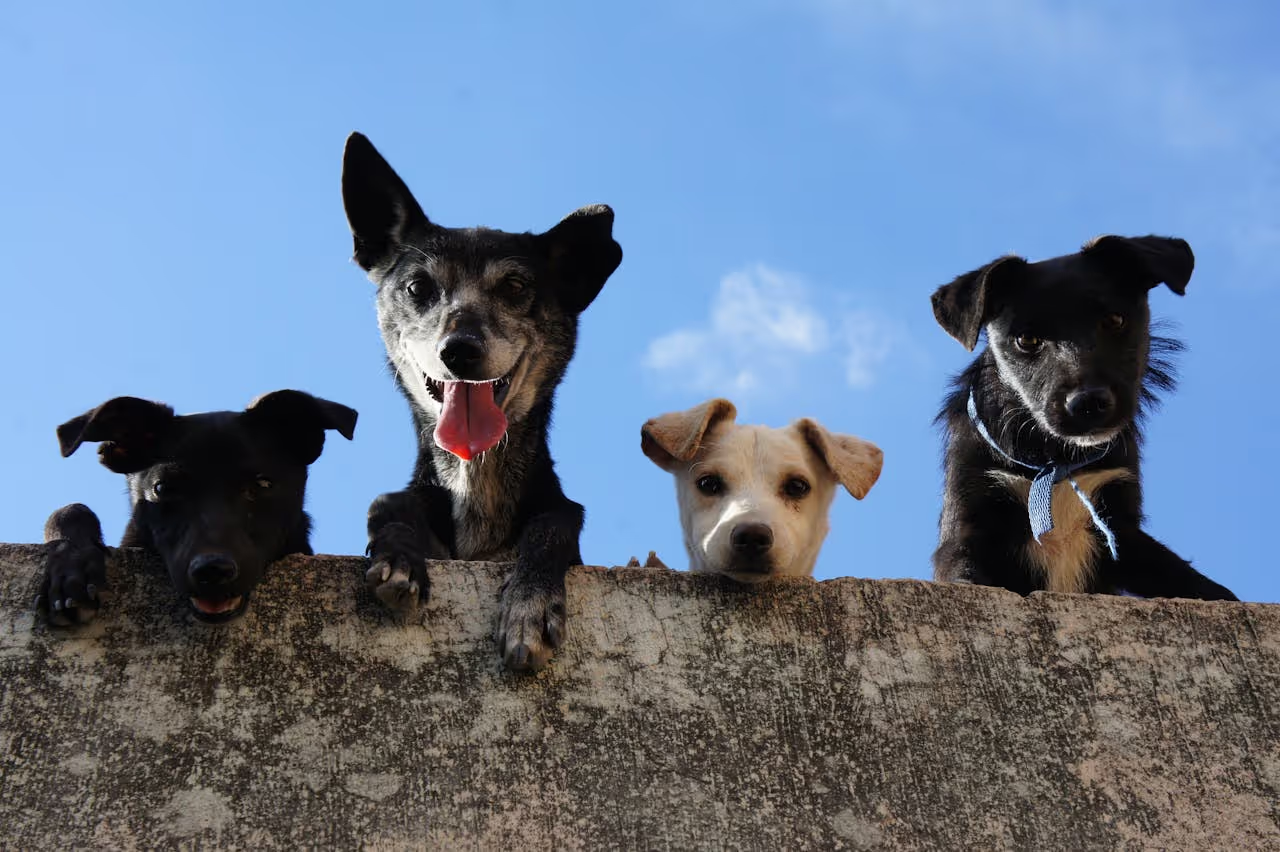
What Is Actually Different With Two Dogs
A single dog sit has one routine, one set of needs, one personality to understand. A two-dog sit doubles the variables without doubling the difficulty. it multiplies it, because the dogs interact with each other in ways that create dynamics you cannot fully predict until you are living with them.
The practical differences that change from day one:
Feeding. Always separate. This is not optional and it is not just for dogs that have shown food aggression. In Cortona, Teddy and Lucca were not fighters, but one of them would cheerfully finish his bowl and then move to the other's. We separated their bowls by several metres as a matter of course. In Portugal, the golden retriever will eat continuously if given the opportunity. we started throwing her food across the terrace so she had to sniff it out over five to ten minutes, which slowed her eating and kept her occupied while the other dog finished at its own pace. Keeping two dogs separated at mealtimes is a lifetime management habit according to veterinary behaviourists, not a temporary measure while dogs settle in.
Walking. Two leads, two directions. In Cortona the walks were enjoyable. the dogs had walked together for years and had a rhythm. But they still pulled against each other at times, which at 95kg (209lbs) I could manage but which would be quite difficult for a smaller person. If one dog is reactive and the other is calm, the reactive dog's behaviour can trigger the calm one. If both are large and energetic, you are managing a significant amount of force and the margin for error narrows.
Overnight dynamics. Two dogs in a shared space can develop tensions that do not appear during the day. In Portugal, one dog would get up and hover over the other at night, which escalated into aggression. We resolved it by separating them completely overnight into different spaces. After two days, they were sleeping in the same room again with no tension. The aggression, we came to understand, was rooted in anxiety and exhaustion. the dog that was lunging and barking was not dominant or dangerous by nature, it was overwhelmed. Once it started getting proper rest, both dogs relaxed, the tension dissolved, and they began playing together. Anxiety, not aggression, was the underlying issue.
Feeding Multiple Dogs: The Rules That Actually Work
Feeding dogs separately, particularly at first, is the consistent recommendation across veterinary and behaviourist guidance. Even dogs that seem relaxed together can develop food-related tension, and the safest habit is to manage mealtimes as a controlled, separated routine from the start.
| Situation | Recommended approach |
|---|---|
| Dogs eat at similar speeds | Separate bowls several metres apart, supervised |
| One fast eater, one slow eater | Fast eater finishes first and will approach the other's bowl — stand between them or feed in separate rooms |
| Scatter or sniff feeding for a fast eater | Throw kibble across the garden so the dog spends time finding it — slows intake naturally |
| One dog resource guards food | Feed in entirely separate rooms or behind a baby gate |
| Different foods or portions | Always separate — no opportunity for one dog to access the other's feed |
| High-value treats or chews | Manage individually in separate spaces — even relaxed dogs can become possessive over high-value items |
The golden retriever scatter-feeding method was one of the most practical things we tried in Portugal. Instead of placing her bowl, we scattered the kibble across the terrace tiles. She spent five to ten minutes working her way across the surface finding every piece, finished satisfied, and was not focused on the other dog's bowl. No training required. just a change in how the food was delivered.
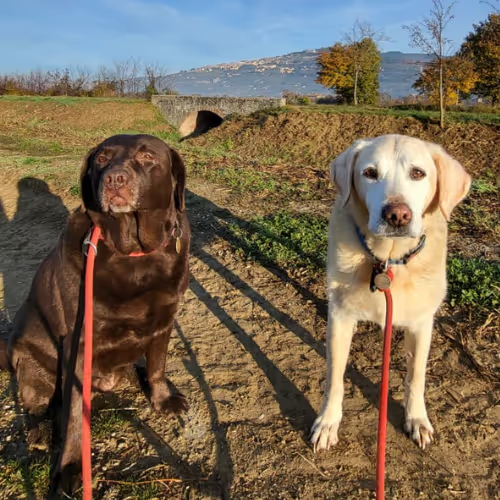
Walking Two Dogs: What to Expect
Two dogs on leads simultaneously is the situation most first-time multi-dog sitters underestimate. Here is what actually happens in practice.
They pull in different directions. This is almost universal even with well-trained dogs. One wants to investigate a hedge to the left while the other wants to continue forward. Over a 40-minute walk, the cumulative physical strain of managing that tension is real. At 95kg with strong arms, I manage large dogs without significant difficulty. For a smaller or less physically strong sitter, two large dogs on separate leads is a meaningful challenge.
One dog can set the other off. A reactive dog that lunges at another animal or a passing cyclist will raise the arousal of the dog beside it. Two reactive dogs walking together is a significantly harder situation than one reactive dog managed alone. Our reactive dog guide covers how to manage single reactive dogs on walks. with two reactive dogs, the principles apply but the physical and attentional demands double.
Consider splitting walks if the dogs are very different in pace, reactivity, or size. Two separate thirty-minute walks takes longer than one combined walk, but the quality of control and the safety margin is significantly better. In Cortona, the dogs were well-matched and enjoyed walking together. In a situation where the dogs are mismatched, splitting the walk is not failure. it is management.
Know your own physical capability relative to the dogs you are managing. I have walked a 70kg (154lb) St Bernard without major difficulty, though the moment he decided to pull, the force was noticeable. Two dogs at that size on leads simultaneously is not a walk. it is a workout with consequences if one of them decides to move suddenly. Be honest with yourself before accepting a sit involving multiple large, energetic dogs.
Pack Dynamics: What the Dogs Tell You About the Owners
One of the clearest lessons from the Portugal sit is something that applies to multi-dog situations more than any other: dogs mirror the energy of the people they live with.
Looking back at our conversations with the Portugal homeowner before the sit, there were signs. She was frequently negative in her responses, and we attributed it to the bad weather she was experiencing at the time. Once we arrived and began to understand the dog's anxiety, the resource guarding, the sound sensitivity, and the overnight aggression, the pattern made sense retrospectively. The dog's state was not a coincidence. Anxious, high-strung owners frequently produce anxious, high-strung dogs.
The reverse is equally true. In Cortona, the owners were warm, organised, and relaxed. Teddy and Lucca were warm, happy, and easy. The correlation between owner temperament and dog temperament is not perfect, but it is consistent enough to be a useful signal during the pre-sit video call.
This also means your own energy during the sit matters. A sitter who is anxious, easily startled by barking, or tense in the dogs' presence will amplify the dogs' reactivity. Staying calm when a dog barks, not panicking when they play-fight, not raising your voice when they misbehave. these are not just general good practice. They are the most practical tool you have for keeping a multi-dog household running smoothly.
Managing Conflict Between Dogs
When a fight breaks out with multiple loose dogs, securing the other dogs first before intervening is safer than running directly to the combatants. Getting loose dogs out of the way prevents the situation from escalating into a group conflict, which is significantly more dangerous than two dogs fighting.
For the day-to-day micro-tensions that appear in multi-dog households:
| Situation | What to do |
|---|---|
| One dog hovering over the other | Calmly redirect — call the hovering dog away, do not yell |
| Resource guarding (toy, bed, space) | Remove the resource; do not escalate with physical intervention |
| One dog bullying the other during play | Intervene calmly, separate briefly, reintroduce with lower arousal |
| Active fight | Do not put hands between dogs; use a board, lead, or your body sideways to separate |
| Overnight aggression | Separate the dogs completely for one to two nights; reintroduce when both are rested |
| Persistent tension | Contact the homeowner — they know the dogs' history and what has worked before |
The Portugal overnight aggression resolved itself through separation and rest. Once the anxious dog was sleeping properly, the aggression disappeared. Exhausted, anxious dogs are more likely to lash out at companions. A dog that is rested and feeling safe is a dog that plays rather than intimidates. Rest was the treatment, not training.
Knowing Your Limit
I will not accept a sit with more than two dogs. This is a firm personal position based on experience.
Each additional dog beyond two adds care demands that compound rather than accumulate neatly. Three dogs need three separate feeding arrangements, three lots of individual attention, three personalities to manage in relation to each other. The margin for a rest day, a longer work session, or a spontaneous afternoon in town shrinks significantly with each dog added.
The Swiss Shepherd sit was one of the loudest and most nerve-testing experiences of our house sitting life. That was one dog. The sound of a full-size shepherd barking at maximum volume, repeatedly and unpredictably, elevated our stress levels throughout the sit in a way that accumulated over the two weeks. Two dogs of that type would have been another category of experience entirely.
Multiple dogs is a bigger responsibility than many listings make it appear. The exchange model of house sitting is built on roughly equal value: free accommodation in return for reliable care. When the care demands of a listing mean you are essentially working throughout the sit, the exchange is no longer equal. Our pop-in visits vs overnight house sitting guide covers the exchange model in more detail. Our guide to listings that are not a fair exchange covers the broader principle.
There are enough excellent two-dog sits on THS at any given time that there is never a shortage of good options. My personal recommendation: start with a single calm dog, build experience, and choose multi-dog sits where the dogs are well-matched, well-described, and the owners feel relaxed. That combination predicts a good sit more reliably than anything else.

What to Ask Before Accepting a Multi-Dog Sit
The questions below belong in the pre-sit video call for any listing with two or more dogs. Some of them surface the owner's temperament as much as the dog's behaviour.
| Question | What you are really finding out |
|---|---|
| "How do the dogs get on with each other day to day?" | Whether there is existing tension the listing did not mention |
| "Do you feed them separately?" | Whether the homeowner has already identified and managed food tension |
| "Do they walk together or separately?" | Whether the dogs are compatible on lead and whether splitting walks is normal |
| "Is either dog reactive to other dogs or loud noises?" | Flags potential issues before arrival rather than after |
| "How do they sleep — together or in separate spaces?" | Whether overnight management is already established |
| "Are there any situations where they have shown tension?" | Opens the conversation to disclose behavioural history directly |
| "What does their routine look like from morning to evening?" | Tells you the daily demand level and whether it suits your style of sitting |
Conclusion
Multiple dogs is not inherently harder than a single dog. Teddy and Lucca in Cortona were a joy. two well-matched Labradors with a shared routine, a calm owner, and an energy that made the sit feel easy. But the variables increase with each dog added, and the sits that go wrong with multiple dogs tend to go wrong in predictable ways: feeding tension, walking management, and overnight conflict.
Separate the feeding. Know your physical limits on walks. Watch the dogs' dynamic in the first 24 hours. Stay calm in their presence. And pay attention to the owner's energy during the video call. it often tells you more than the listing ever will. If one of them starts retching over and over, what that actually means is worth having read before the sit rather than during it.
Join TrustedHouseSitters with 25% off and read our what to ask a homeowner guide before accepting any multi-dog sit.
DM us @housesittersguide on Instagram. We answer everyone.

Frequently Asked Questions
Is it harder to house sit multiple dogs than a single dog?
Yes. each additional dog adds meaningful complexity. Feeding must be managed separately, walks require more physical control, and dog-to-dog dynamics add an unpredictable layer that does not exist with a single animal. The difficulty scales with the dogs' size, energy level, and compatibility with each other. Our experience across 20 sits suggests two dogs is a manageable upper limit for most sitters.
How do you feed multiple dogs without fights?
Always separate them at mealtimes, regardless of whether they have shown food tension before. Separate bowls several metres apart is the minimum. For a fast eater, scatter feeding (throwing kibble across a surface so the dog has to find it) slows intake naturally and keeps the dog occupied while the other dog finishes. For any sign of resource guarding, feed in entirely separate rooms.
Can I walk two large dogs at once on their own leads?
Yes, but know your physical limits. Two large dogs pulling in opposite directions creates real force. At 95kg (209lbs), I manage large dogs comfortably but still feel it when a 70kg St Bernard decides to pull. For a smaller or less physically strong sitter, two large dogs simultaneously on leads is a significant challenge. Consider splitting walks if the dogs are reactive, mismatched in size, or if maintaining control feels uncertain.
What should I do if the two dogs fight during a house sit?
Secure any loose dogs first, then separate the two that are fighting. Do not put hands between fighting dogs. Use your body sideways, a lead, or an object to create separation. After a fight, separate the dogs into different spaces to allow both to calm down. Contact the homeowner with a factual account of what happened. See our dog bite guide for first aid if either dog or the sitter is injured.


Responses
What are your thoughts on this post?