

Home > Blog > House Sitting With Multiple Cats
Quick Facts
| Quick Facts | |
|---|---|
| Easiest multi-cat setup | Outdoor cats that come inside only for feeding |
| Hardest multi-cat setup | Multiple indoor cats in a closed house, especially with allergies |
| Our personal limit | Four outdoor cats maximum, two indoor cats comfortably |
| Most cats at once | Nine in Kefalonia (only one was listed), plus a separate experience of 12+ at family in Cyprus |
| Litter boxes needed? | Outdoor cats rarely use them. Indoor cats need one per cat plus one spare. |
| The surprise you should prepare for | Gifts. Mice, rats, birds, snakes. Outdoor cats bring them regularly. |
The listing in Kefalonia said one dog and one cat. We arrived to find nine cats, several of them with fleas, and a reality that was nothing like what was described. That sit pushed the limits of what Caro and I were comfortable managing, and it taught us something specific about multi-cat sits: the difference between two cats and nine cats is not a matter of degree. It is a completely different experience that requires different preparation, different expectations, and, if you have allergies like I do, antihistamines.
Most multi-cat sits are not like Kefalonia. Most are simple, pleasant, and far easier than dog sits. Two outdoor cats in the south of France was one of the most relaxing sits we have done across 20 sits in 12 countries. Four outdoor cats over Christmas in Ostuni was peaceful and low-maintenance. Our general house sitting for cats guide covers the basics of feline sits, including why cat sits are a great entry point for new sitters. This article focuses specifically on what changes when there are multiple cats, and where the line is between a relaxing exchange and something that feels like unpaid work.
If you are interested in getting into house sitting, our book Travel More for Less puts the whole process in one place: clear, step by step guidance from your first questions to your first confirmed sit, and the reviews that open the door to the next one.
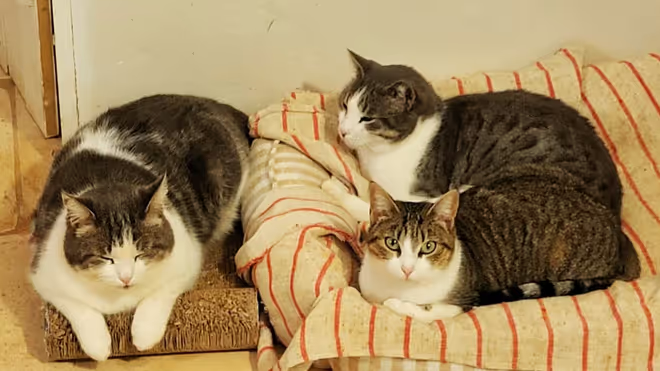
Outdoor Cats vs Indoor Cats: Two Completely Different Sits
This is the most important distinction in multi-cat house sitting, and it determines whether a sit is effortless or exhausting.
Outdoor cats that come inside for feeding and the occasional cuddle are, from what I have experienced, the simplest pets you can look after during a sit. They manage their own toilet outside. They exercise themselves. They socialise on their own terms. They appear when they are hungry, accept food and possibly some attention, and then disappear again until the next meal. The daily time commitment is genuinely minimal: fill the bowls, give some pats if the cats want them, and get on with your day.
In Lullin, France, we looked after two outdoor cats for a month. It was one of our easiest sits out of all 20. The cats were extremely independent and would come back when they were hungry. The rest of the time, they were off doing whatever cats do, and Caro and I had the house to ourselves. In Ostuni over Christmas, I looked after four outdoor cats. Same dynamic: they came in for food, accepted some affection, and otherwise managed themselves. It was simple and genuinely pleasant.
Indoor cats in a closed house are a different proposition entirely. Multiple indoor cats means multiple litter trays to clean, cat hair on every surface, and the constant presence of animals that cannot go outside and therefore need you for stimulation, attention, and entertainment. For one or two indoor cats, this is perfectly manageable. For four or more, the workload and the environment change significantly. More cats also means more chances for one of them to go quiet without anyone noticing, which is what the lethargy baseline is for.
At our current Portugal sit, we have one outdoor cat. It roams freely, comes back for food, and occasionally brings us gifts. We have had mice, rats, a snake, and birds deposited at the door. It is unpleasant at first. After a while, you just pick it up on a tray and throw it away. That is the trade-off with outdoor cats: the sit is easy, but the presents are occasionally disgusting.
What Nine Cats Actually Looks Like
The Kefalonia sit is worth describing in detail because it illustrates what happens when the number of cats exceeds what a listing described and what a sitter reasonably signed up for.
One cat was listed. Nine were present. The homeowner technically had one cat, but eight outdoor cats had adopted the property as their home base and were being fed regularly by the homeowner. On paper, the listing was not lying. In reality, it was clearly misleading. If those cats had disappeared during the sit, the homeowners would not have been happy. If anything had happened to one of them, we would likely have been expected to manage the situation. They were, in every practical sense, part of the sit.
The daily management was straightforward: two large shared bowls, filled once a day. The cats fed themselves and the hierarchy around the bowls was self-regulating. No fights, no starvation, just organised chaos at feeding time and then relative peace afterwards.
What was not straightforward was everything else. We could not leave doors or windows open because the cats would flood into the house, and several of them had fleas. The fleas became a problem from day one, jumping on us when we arrived and persisting throughout the sit despite treatment the homeowner arranged through a local friend. It reminded me of visiting my father's house in Cyprus, where he had 12 cats and another 20 outdoor cats that used the space as their home base. Every time I opened the fridge, I would be swarmed by meowing, climbing cats. It is an experience that sounds amusing in theory and pushes your patience in reality.
With nine cats in Kefalonia, you could not sit anywhere without being jumped by multiple animals. You could not eat on the terrace without cats around your legs. You had to watch every step because they would weave between your feet. And for someone like me with cat allergies, the combination of nine cats and a closed house was physically overwhelming. My nose was completely blocked, my eyes were puffy and watering, and I had persistent headaches. I needed antihistamines for the first time in my life.
That experience is why Caro and I now have a personal limit. Four outdoor cats that come inside for feeding is our maximum. Two indoor cats is comfortable. Anything beyond that starts to tip the balance from a relaxing exchange into something that feels more like unpaid work. If you want the experience of a large multi-cat sit, it can be interesting for the first day or two. From what I have experienced, it quickly loses its charm.
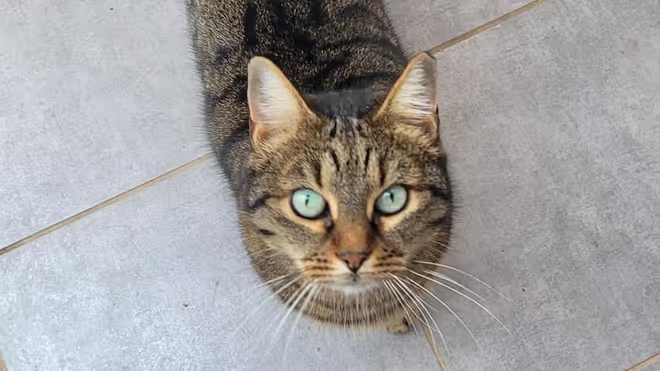
Feeding Multiple Cats
How you feed multiple cats depends on the cats themselves and what the homeowner has established.
In Kefalonia with nine cats, we used two large shared bowls. All the cats ate from them and the system worked without intervention. There was no guarding, no aggression, and no cat went hungry. Shared feeding works when the cats are used to it and when there is enough food for everyone.
In Ostuni with four cats, I gave each cat its own bowl. The homeowner had set it up that way and the cats were used to eating from their own station. They did not need to be separated. They managed perfectly well eating in the same space, each at their own bowl.
The approach you use should be whatever the homeowner tells you during the handover or describes in the welcome guide. If the cats eat from shared bowls, continue with shared bowls. If they eat separately, continue separately. From what I have learned while researching this article, the general recommendation for multi-cat households is separate bowls to reduce competition, but if the homeowner's system works and the cats are healthy, there is no reason to change it during a temporary sit.
If you notice one cat consistently being pushed away from food by another, or one cat eating significantly less than the others, that is worth noting and mentioning to the homeowner. It may be a pre-existing dynamic they are aware of, or it may be something that has changed since they left.
Litter Trays: The Outdoor Cat Advantage
Across all our multi-cat sits, litter trays have barely been a factor, and that is entirely because we tend to sit outdoor cats.
In Kefalonia, there were no litter boxes. Nine cats, zero trays. The cats handled everything outside. In Ostuni, there were trays available but the cats rarely used them because they preferred going outside. In our current Portugal sit with one cat, there is no litter tray at all. The cat roams freely and manages its own toilet.
The homes where litter was a regular task were in Cries, Switzerland, where we looked after three cats. Even there, the trays did not require constant attention because the cats used outdoor space as well.
For sitters considering multi-cat sits with indoor cats specifically, from what I have learned while researching this article, the general guideline is one litter tray per cat plus one spare. So three indoor cats should have four trays. The trays should be in different locations rather than all in one room, to reduce territorial issues around toilet access. Cleaning should happen at least once daily for a multi-cat household, and a full litter change should happen regularly depending on the type of litter being used.
If the welcome guide specifies a cleaning schedule for the trays, follow it. If it does not, once daily scooping and a full change weekly is a reasonable standard for most multi-cat setups.
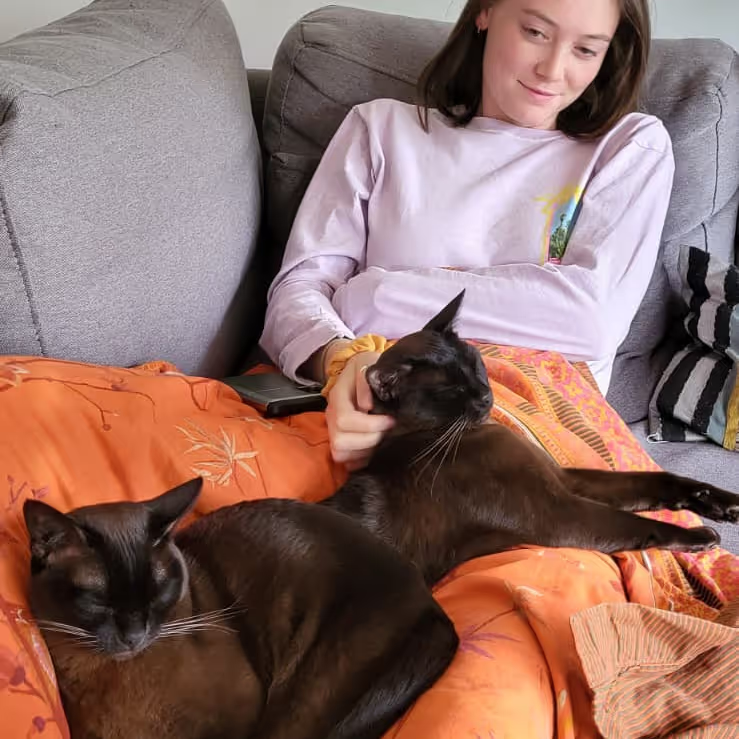
Allergies and Multiple Cats
This is something that rarely gets discussed in house sitting articles but is a genuine health consideration for sitters with cat allergies.
I am allergic to cats. On most of our cat sits, the allergy is manageable because the cats are outdoors and the exposure is limited to feeding times and the occasional cuddle. One or two cats in a well-ventilated house is fine for me with no medication.
Nine cats in Kefalonia was a different situation entirely. The concentration of dander, fur, and the fleas that came with the cats overwhelmed my system. I needed antihistamines daily, and even with them, the symptoms were significant. If I had known in advance that the sit involved nine cats rather than one, I would not have applied.
For sitters with cat allergies considering a multi-cat sit, the questions to ask during the video call are specific. How many cats are there, including any outdoor cats that regularly visit the property? Are the cats indoor or outdoor? Is the house well-ventilated, or do the windows need to stay closed? How much cat hair can you expect on furniture and bedding?
If you have allergies, pack antihistamines regardless of how many cats the listing describes. Our what to pack for illness during a sit article includes antihistamines on the essential list specifically because new environments with unfamiliar allergens can trigger reactions you were not expecting.
What the Listing Should Say
The Kefalonia experience is a clear example of why disclosure matters. The listing said one cat. Nine cats lived at the property. The homeowner fed them regularly. If anything had happened to any of them during the sit, it would have been our problem.
From what I have learned through this and other disclosure issues across our sits, the principle is straightforward: if there are cats on the property and you feed them regularly as a homeowner, they should be in the listing. Calling them "neighbourhood cats" or "strays that visit" while simultaneously feeding them daily and expecting the sitter to continue doing so is misleading. The sitter deserves to know the full picture before they apply.
For sitters, this is something worth asking about directly. "Are there any other animals that visit the property regularly that we should know about?" during the video call catches exactly this kind of situation. The homeowner may not think of the outdoor cats as "theirs" and therefore may not mention them unless specifically asked. Our what to ask a homeowner before a sit guide covers the full question list.
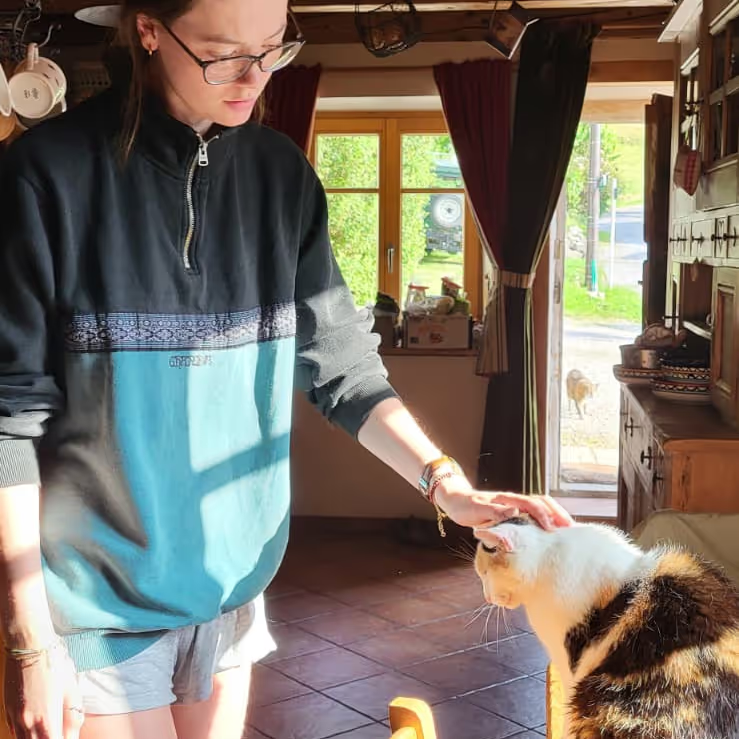
Our Recommended Limits
After 20 sits, here is where Caro and I have landed on multi-cat sits.
| Setup | Our comfort level | Why |
|---|---|---|
| 1 to 2 outdoor cats | Very comfortable | Minimal work, cats manage themselves, easy and relaxing |
| 3 to 4 outdoor cats | Comfortable | Still manageable, feeding is simple, gifts increase |
| 1 to 2 indoor cats | Comfortable | Litter trays and hair are manageable, cats are good company |
| 3 to 4 indoor cats | Cautious | Significant increase in litter work, hair, and allergen exposure |
| 5+ cats of any kind | Would not apply | The workload and environment tip from relaxing exchange to unpaid work |
These are our limits based on our experience and my allergies. Every sitter is different. Someone without allergies who loves cats might be perfectly happy with six indoor cats. The point is to know your own limits before you apply rather than discovering them on day one of the sit.
Conclusion
Multi-cat sits range from some of the easiest experiences in house sitting to some of the most overwhelming, and the difference comes down to three things: how many cats, whether they are indoor or outdoor, and whether the listing accurately described what you are walking into.
Two outdoor cats in France was one of our most relaxing sits ever. Nine undisclosed cats in Kefalonia was one of the most frustrating. The cats themselves were not the problem. The number, the fleas, and the dishonesty of the listing were.
If you are considering a multi-cat sit, ask how many cats are actually on the property, whether they are indoor or outdoor, and what the daily care routine involves. Pack antihistamines if you have any sensitivity at all. And know your limits before you apply, because discovering mid-sit that five indoor cats is two too many is a harder conversation to have than simply choosing a listing that matches what you are comfortable with.
Caro and I have completed 20 house sits across 12 countries, driven 19,000km in Australia and 24,000km in our 1998 VW T4, and saved over $26,500 in accommodation costs over three years of house sitting. If you have questions about managing cats during a sit, send us a message on Instagram, we read every DM.

Frequently Asked Questions
Are multi-cat house sits harder than single-cat sits?
Not necessarily. Two outdoor cats can be easier than one demanding indoor cat. The difficulty depends on whether the cats are indoor or outdoor, how independent they are, and whether the listing accurately described the situation. Outdoor cats that come inside only for feeding are among the simplest pets to look after during a sit. Our general house sitting for cats guide covers why cat sits are a great option for sitters at any experience level.
How do you feed multiple cats during a house sit?
Follow whatever system the homeowner has established. Some multi-cat households use shared bowls and the cats self-regulate. Others use separate bowls in the same space. If the homeowner's system works and the cats are healthy, there is no reason to change it. If you notice one cat being consistently pushed away from food, mention it to the homeowner.
How many litter trays do you need for multiple cats?
From what I have learned while researching this article, the general guideline is one tray per cat plus one spare, placed in different locations. For outdoor cats this is rarely relevant since they manage their toilet outside. For indoor cats, daily scooping and regular full changes are the standard.
What if there are more cats than the listing described?
This happened to us in Kefalonia. One cat was listed and nine were present. If extra cats are on the property and being fed by the homeowner, they should be in the listing. Ask directly during the video call whether any other animals regularly visit the property, because homeowners may not think to mention outdoor cats they consider strays.
Should I take a multi-cat sit if I have cat allergies?
It depends on the setup. Outdoor cats with limited indoor time are usually manageable with mild allergies. Multiple indoor cats in a closed house can be physically overwhelming, as I experienced in Kefalonia. Pack antihistamines regardless, and ask about ventilation and the cats' indoor/outdoor status before applying.
What are the "gifts" outdoor cats bring?
Mice, rats, birds, snakes, lizards, and anything else the cat can catch. At our current Portugal sit, we have received all of the above. It is unpleasant at first. After a while, you pick it up on a tray and dispose of it. It is the trade-off for the simplicity of outdoor cat sits.


Responses
What are your thoughts on this post?