

House Sitters Guide > Blog > House Sitting Canada Platforms
Quick Facts
| Best platform for volume | TrustedHouseSitters — ~340 Canadian listings |
| Best Canada-only platform | House Sitters Canada — ~135 listings at $59 CAD/yr (use HSG15 fof 15% discount) |
| Best for Quebec | Nomador — ~25 listings, French-speaking community |
| Best value | MindMyHouse — ~5 Canadian listings at $29 USD/yr |
| Peak season | October to March (snowbird exodus) |
| Pro tip | Browse listings for free first — sign up only once you've confirmed sits exist for your destination |
TrustedHouseSitters leads Canada with around 340 listings, but House Sitters Canada offers 135 for $59 CAD with far less international competition, and Nomador is the pick for Quebec. The snowbird window from October to March brings the longest sits. Browse first, before paying.
Canada has one feature that almost no other house sitting market has: a built-in reason for homeowners to leave every single winter. When the temperature drops in Calgary, Vancouver Island, and Montreal, tens of thousands of Canadians pack their bags for Florida, Arizona, and Mexico. They take themselves. They cannot take their homes or their pets. That is where house sitters come in.
The snowbird window, roughly October through March, is when Canadian listings spike, competition is lower than in summer, and sits tend to run longer. A retired couple heading to Palm Springs for three months is not looking for a weekend sitter. They want someone reliable for the whole stretch, which means less competition and a more relaxed handover.
Caro and I have not been to Canada yet. It sits firmly in the dream category, somewhere between a Whistler cabin with a hot tub and a summer drive through the Rockies with a borrowed dog. We have the passports and the experience. The logistics just have not lined up yet. What we do have is a clear picture of how the platforms perform, built from years of applying to sits across Europe and Australia and tracking the numbers across every major market. What follows is exactly how we would approach Canada if the flight were tomorrow.
Winner by Category (April 2026)
Best for volume and city sits: TrustedHouseSitters
Best for rural Canada and lower competition: House Sitters Canada
Best for Quebec and French-speaking Canada: Nomador
Best value and long-term sits: MindMyHouse
The Canadian Platform Landscape in Numbers
Before you spend money on a membership, check whether the sits you actually want exist on the platform. The numbers for Canada as of April 2026 look like this:
| Platform | Canadian listings | Annual cost | Best use case |
|---|---|---|---|
| TrustedHouseSitters | ~340 | $129–$259 USD | Cities, international sitters |
| House Sitters Canada | ~135 | $59 CAD | Rural, Canada-only sitters |
| Nomador | ~25 | $44–$209 USD | Quebec, French-speaking regions |
| MindMyHouse | ~5 | $29 USD | Long-term sits, budget sitters |
| House Carers | ~5 | $50 USD | Not recommended at this price-to-listing ratio |
The single most useful thing you can do before paying for any membership is browse listings for free. Most platforms show at least some listings to unregistered users. THS shows listings to browsers who have not signed up. House Sitters Canada and MindMyHouse both allow free browsing. Find the sits you actually want in the region you are planning to travel to, confirm they exist in the volume you need, then sign up for that platform. Paying first and searching second is how people end up with memberships that yield nothing useful for their specific destination.
For Canada-focused sitters, House Sitters Canada deserves particular attention. At $59 CAD for 110+ listings it covers the national market at a fraction of THS's price, with lower competition from international sitters who have never heard of it. If you browse both platforms and find the sits you want on House Sitters Canada, that is your answer.
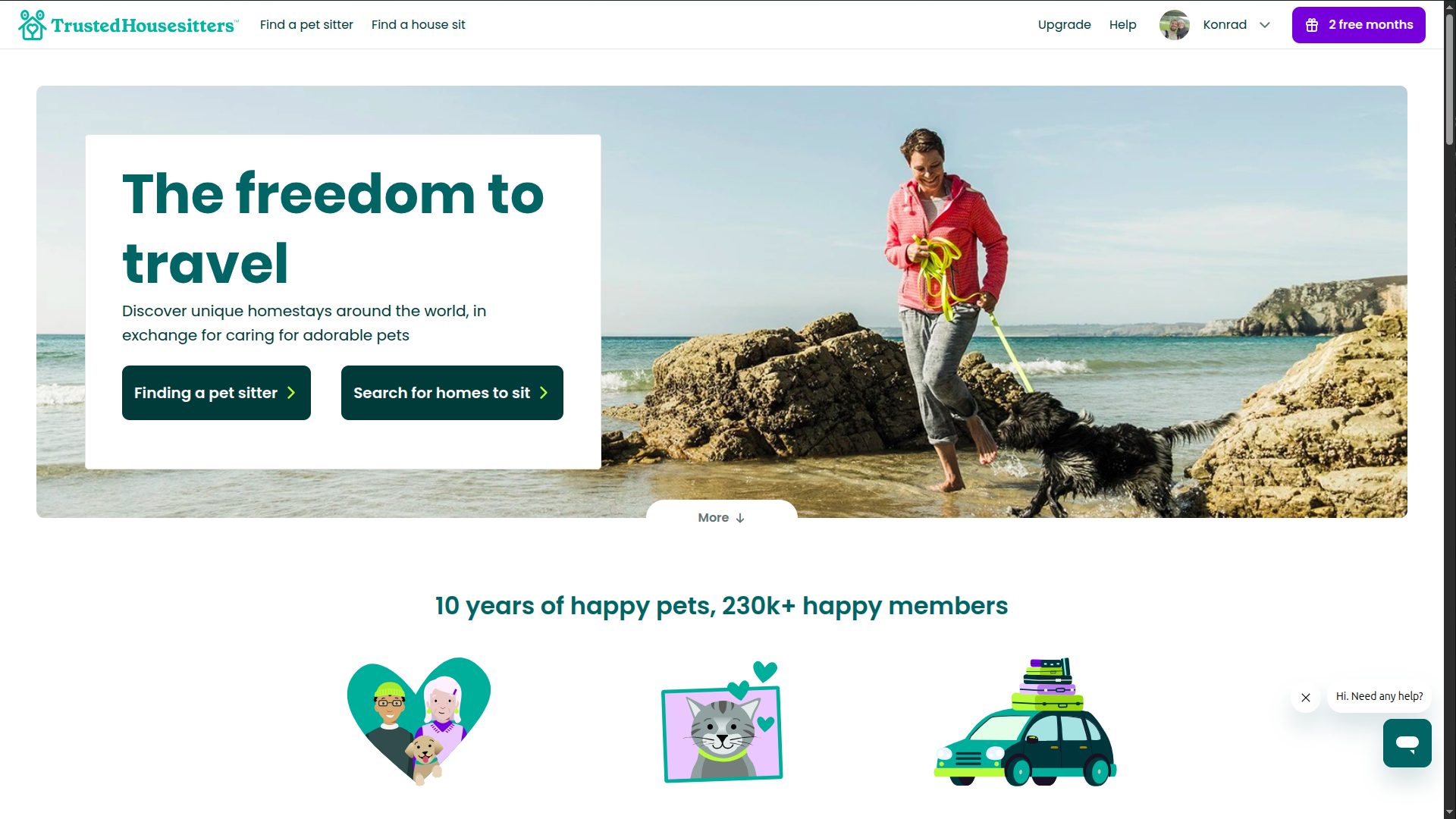
TrustedHouseSitters: The Volume Play
TrustedHouseSitters is the platform we use most for international sitting and it earns its place in any serious sitter's stack. With ~340 Canadian listings it has the deepest inventory of any platform in the market, concentrated heavily in Vancouver, Toronto, Calgary, and Victoria. For house sitting Vancouver specifically, THS is the dominant platform and the competition reflects that.
The annual cost ranges from $129 to $259 USD depending on the tier. Standard adds a $12 per sit booking fee on top of the membership, which adds up if you are doing multiple sits in a year. Premium removes that fee entirely and is better value for anyone doing three or more sits annually. Our TrustedHouseSitters discount code takes 25% off the first year, which makes the entry point significantly more manageable.
The five-applicant cap per listing means you need to be fast on new posts and your house sitting application needs to be sharp. At 17 reviews we find that applying to THS feels less like competing and more like choosing. At zero reviews it is harder work, but Canadian homeowners on THS tend to be more willing to take a chance on newer sitters than European listings where the competition is higher. For full detail on the platform's tier structure and fees, see our TrustedHouseSitters review.
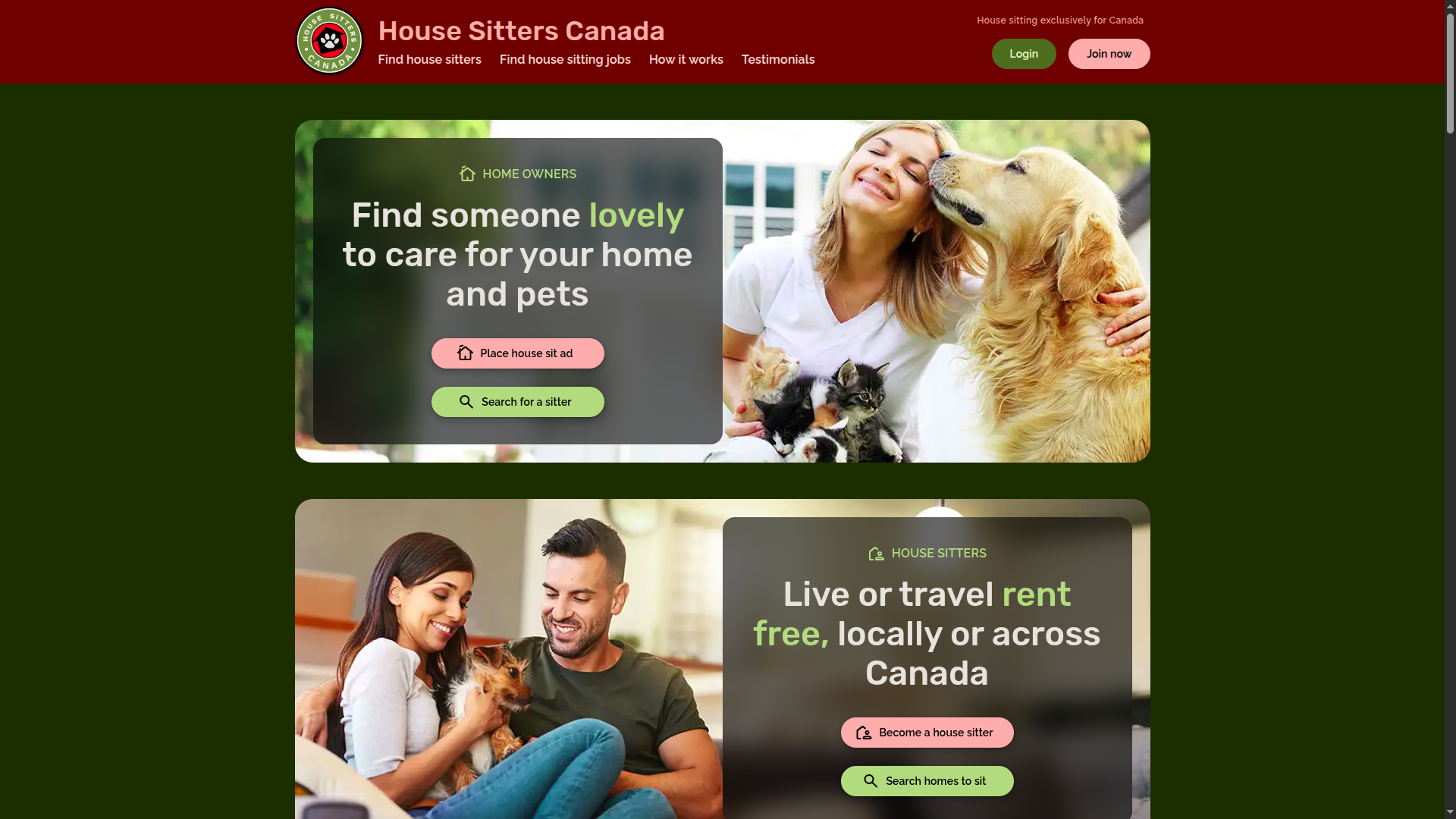
House Sitters Canada: The Local Specialist (use code HSG15 to get 15% discount)
This is the platform that most international sitters overlook and that is precisely why it is worth knowing about. At $59 CAD per year for ~135 listings, the value-to-listing ratio is better than anything else in the Canadian market. More importantly, the competition pool is smaller. You are not up against a global membership of 250,000 sitters. You are applying against a focused group of mostly Canadian and North American applicants.
The practical advantages are real. Listings skew toward rural and suburban sits that never appear on THS because those homeowners have no interest in an international platform with an international price tag. Nova Scotia farmhouses, Ontario cottages, British Columbia hobby farms: these are the sits that appear on House Sitters Canada and nowhere else. For anyone building their first reviews or focusing exclusively on the Canadian market, starting here before adding THS is the smarter order of operations.
The interface is no-frills. There is no app, no 24/7 vet line, and no slick onboarding. What it has is relevant sits, lower competition, and a $59 annual fee that covers itself after a single day of saved accommodation costs.
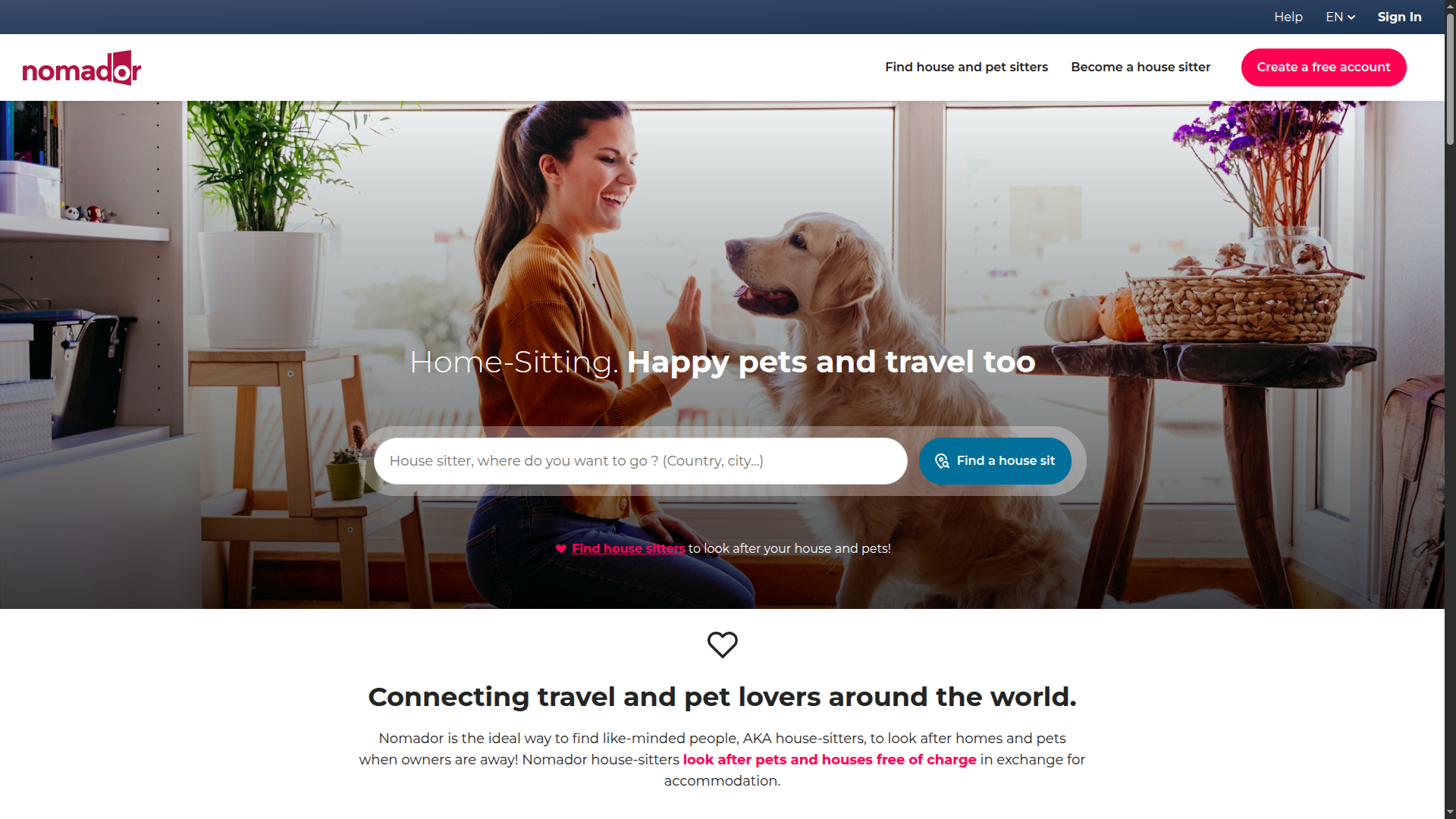
Nomador: The Quebec Angle
Nomador is built around French-speaking users and it shows in the Canadian data. Of its ~25 Canadian listings, the majority are concentrated in Quebec, particularly Montreal and the surrounding regions. For anyone specifically targeting house sitting in French-speaking Canada, Nomador is not optional — it is the primary platform.
Plans run from $44 USD up to $209 USD with no booking fees across any tier. The Discovery option at the lower end is designed specifically to let you browse and verify that sits exist before committing to a full membership. For Canada, we would check the Quebec listing count before paying, given the small inventory nationally. If you are heading to Montreal for two months and there are four active sits that match your timeline, the membership pays for itself immediately. If there is one listing and it does not fit your dates, hold off.
The Stopover feature, which allows stays with hosts who are still in residence rather than away, is useful for filling gaps between sits or for extending a Quebec trip beyond what the sit calendar allows.
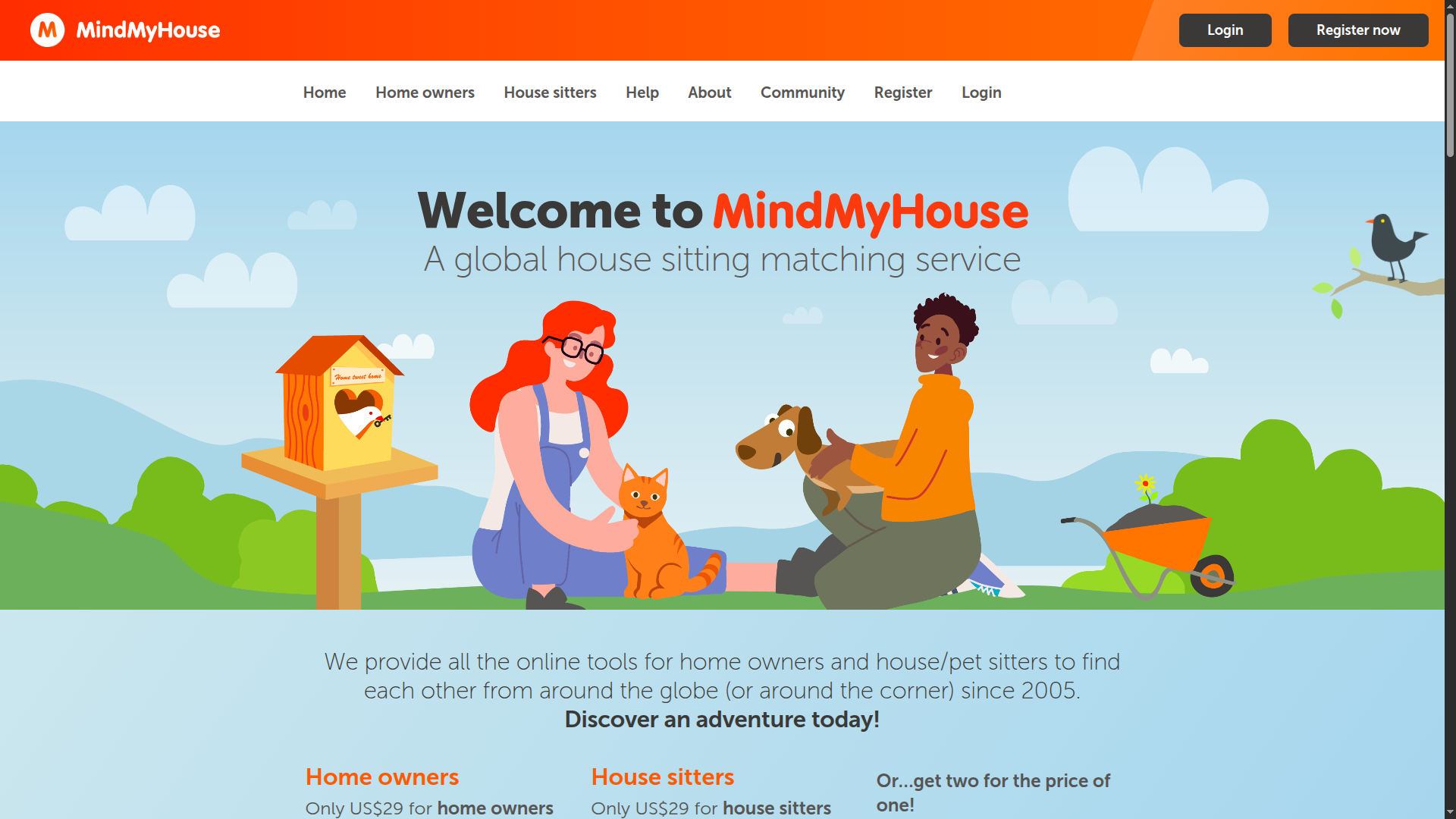
MindMyHouse: Five Listings and a Reason to Consider It
Seven Canadian listings sounds like a reason not to bother. The reason it makes the list is the price point and the sit type. At $29 USD per year MindMyHouse is so cheap that even a single long-term sit justifies the membership fee several times over. The Canadian listings that do appear here tend to run longer, reflecting the platform's general skew toward extended stays rather than short vacation sits.
If you are planning a Canada trip that also takes you through Eastern Europe or Switzerland, where MindMyHouse has significantly stronger coverage, adding it to your stack at $29 is low risk. For a Canada-only trip, check whether the current listings match your destination before paying.
The Snowbird Window: When to Apply and Where
The mechanics of the snowbird season are worth understanding before you start browsing. Canadian homeowners who travel south for winter typically leave between October and December and return between March and April. The sits that open up during this window are longer, better maintained, and in many cases in cities or regions that are significantly cheaper to experience from a house sit than on the open rental market.
Where to look for three-month-plus sits between October and March:
Vancouver Island: the mildest winters in Canada, high demand from retirees heading to Arizona and Hawaii
The Sunshine Coast (BC): stunning scenery, high volume of longer-term listings, lower competition than Vancouver city
Toronto and Ottawa suburbs: massive concentration of retirees who leave for Florida, some of the longest sits in the country
Montreal and Quebec suburbs: strong snowbird culture, and where Nomador's listings are concentrated
Calgary and Edmonton: colder winters mean more homeowners leave, which means more sits available
Montreal in winter from a house sit is a completely different proposition to Montreal in winter from a hotel. The same applies to Calgary, Ottawa, and the interior of British Columbia. The cities function normally in winter. The cost of accommodation is the problem, and house sitting removes it entirely.
Summer sits exist and are worth pursuing, but they are shorter, more competitive, and concentrated in coastal and tourist areas. The snowbird sits are where the duration and quality are highest. If Canada is on your radar for 2026, the application window for winter sits typically opens in August and September. That is when listings appear and when applying early gives you the strongest advantage.

What Cold Climate Sits Actually Require
We have not sat in Canada, but we have managed properties in Iceland in February and in the Switzerland and Germany in December. Cold climate sits follow predictable patterns regardless of the country and Canadian homeowners posting winter sits expect applicants to understand what they are taking on.
Heating systems vary significantly between properties. A modern condo in Toronto manages itself. A rural property in Alberta may rely on a wood-burning stove, a pellet boiler, or an oil system that needs monitoring. Asking about the heating setup before accepting a winter sit is not optional. In our experience in similar climates, the answer tells you immediately whether the sit is manageable or whether it requires specific technical knowledge you may not have.
Dog walking in sub-zero temperatures is short by necessity. Paws freeze faster than owners expect and the dog will tell you when it is time to go inside. Snow removal is physical work. A driveway that needs clearing three times during a heavy snowfall is a realistic possibility in many parts of Canada, not an edge case. For a detailed look at what house sitters are typically responsible for, see our guide on what house sitters usually do.
The compensation for all of this is a free home in one of the most expensive rental markets in the world, in a country that is genuinely extraordinary to explore. We consider that a reasonable trade.
Paid House Sitting in Canada: Rover and Alternatives
The platforms above all operate on a free exchange model: you provide care, the homeowner provides accommodation. If you want to earn money rather than save it, the model is different.
Rover and Pawshake are the two main platforms for paid in-home pet care in Canada. Both connect homeowners with sitters who charge a nightly rate for staying in the home and looking after the animals. Rover takes around 20% commission but handles payments, provides insurance, and has strong presence in Canadian cities. Pawshake operates similarly with a slightly different fee structure.
These are professional services rather than cultural exchange arrangements and they attract a different kind of client. For sitters who want income rather than free accommodation, or who want to earn while staying in a city between unpaid sits, building a Rover profile in parallel with a house sitting membership is a sensible approach. For sitters focused purely on free accommodation, ignore this section entirely and focus your energy on THS and House Sitters Canada.

The Visa Question
We are not lawyers and this is not legal advice. It is our honest understanding based on years of reading forums, community discussions, and official guidance.
House sitting exists in a grey area for border control. You are providing a service, even if you are not being paid in cash. Most sitters enter Canada on a tourist visa or eTA depending on nationality and describe their stay as visiting friends or as tourism. That is not inaccurate: the homeowners do become friends, and you are exploring the country. What you avoid saying is that you are "working," because border officials interpret work more broadly than most sitters expect.
Before your trip, do two things. Read our guide on what to tell customs when you are house sitting abroad — the situations that go wrong are almost always avoidable with the right framing. Then check the official Canada Border Services Agency entry requirements for your nationality, particularly whether you need an eTA or a visitor visa. Entry rules vary significantly by passport and change periodically.
Conclusion
Canada is still on the list. Somewhere between a Portuguese cliffside in May 2026 and whatever comes after, we will get to British Columbia. We know exactly which platforms we would open first, which season we would target, and which listings we would save before committing to a membership. If you are heading there before us, we are jealous and we want to hear about it.
DM us @housesittersguide on Instagram — we answer everyone.

Frequently Asked Questions
Which platform has the most Canadian listings in 2026?
TrustedHouseSitters leads the Canadian market with ~340 listings as of April 2026. House Sitters Canada follows with ~135 listings but at $59 CAD versus $129–$259 USD, it costs significantly less and has lower competition from international sitters. For volume in major cities, THS is the answer. For rural sits and Canada-only trips, House Sitters Canada offers better value.
Is House Sitters Canada worth it if I already have TrustedHouseSitters?
Yes, if Canada is your primary destination. The two platforms have minimal listing overlap. House Sitters Canada surfaces rural and suburban sits that homeowners never list on THS because they have no need for an international platform. At $59 CAD the combined cost of both memberships is still less than THS Standard alone, and you cover the Canadian market far more thoroughly.
When is the best time to find house sitting sits in Canada?
The snowbird window from October to March is peak season for long-term Canadian sits. Homeowners heading south for winter post sits that run weeks or months at a time, with lower competition than summer. Summer sits exist but tend to be shorter, more competitive, and concentrated in coastal tourist areas. If you want a longer sit in a major Canadian city, apply in August or September when winter listings begin appearing.
Does Nomador have enough Canadian listings to be worth it?
For Quebec and French-speaking Canada specifically, yes — but check current listings before paying. Nomador has ~25 Canadian listings as of April 2026, most of them in Quebec. If Montreal is your target, the French-speaking community and the Stopover feature (which lets you stay with hosts who are still in residence) make it genuinely useful beyond just the sit listings. For the rest of Canada, THS and House Sitters Canada cover the market better.
Do I need a work visa to house sit in Canada?
No — most sitters enter on a tourist visa or eTA and describe their stay as tourism or visiting friends. House sitting in exchange for accommodation occupies a grey area legally. The arrangement is generally treated as an informal exchange rather than employment, but the word "work" at the border can create problems. See our full guide on what to tell customs when house sitting abroad before traveling.
Can I house sit in Canada in winter with no prior experience?
Yes, but be honest about it and choose the right sit. A city condo in Toronto in January is very manageable for a first-timer. A rural property in Alberta with a wood stove, a long driveway, and a large dog is not the right first sit. Start with getting house sits without prior experience for the profile and application side, and be upfront with homeowners about your experience level. Most will appreciate the honesty and match you accordingly.


Responses
What are your thoughts on this post?