

Home > Blog > Can House Sitting Cause Burnout?
Quick Facts
| Quick Facts | |
|---|---|
| Is house sitting slow travel? | It can be. It can also be exhausting if chained back to back without breaks |
| When burnout is most likely | After months of consecutive short sits with driving and transitions in between |
| What fixed it for us | A long sit. The current six-month Portugal sit has been the reset we needed |
| The honest advice | Mix short sits with at least one long sit per year, and schedule breaks with no responsibilities |
| What burnout actually feels like | Not dramatic. Just tired, tense, and unable to fully relax in someone else's home |
House sitting is supposed to be slow travel. You stay in one place, you look after someone's pets, you settle into a routine. That is the version you read about in every article and every platform marketing page. And it is true, sometimes. Other times, house sitting is cleaning a new kitchen every ten days, packing and unpacking the van every two weeks, learning a new coffee machine and a new shower and a new set of door locks every time you arrive somewhere, and pretending to yourself that this is relaxation because you are in a beautiful home and should be grateful. This article is about the gap between those two versions.
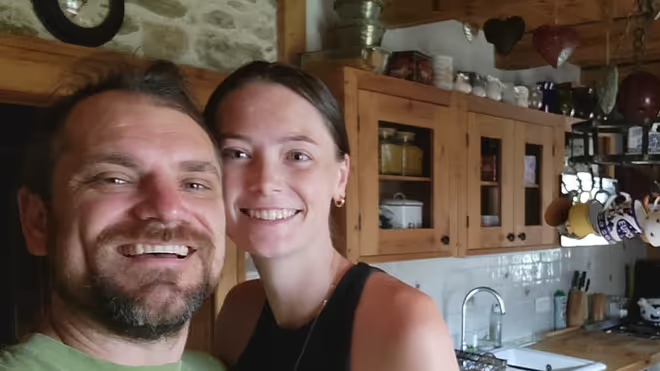
Caro and I have completed 20 house sits across 12 countries over three years. We are currently a month into a six-month sit in Portugal, which is the first time since November 2025 that we have genuinely felt settled. Everything before this has been, in one way or another, movement. Some of it was wonderful. Some of it was exhausting. Most of it was both at the same time, which is the part nobody writes about.
If you are interested in getting into house sitting, our book Travel More for Less puts the whole process in one place: clear, step by step guidance from your first questions to your first confirmed sit, and the reviews that open the door to the next one.
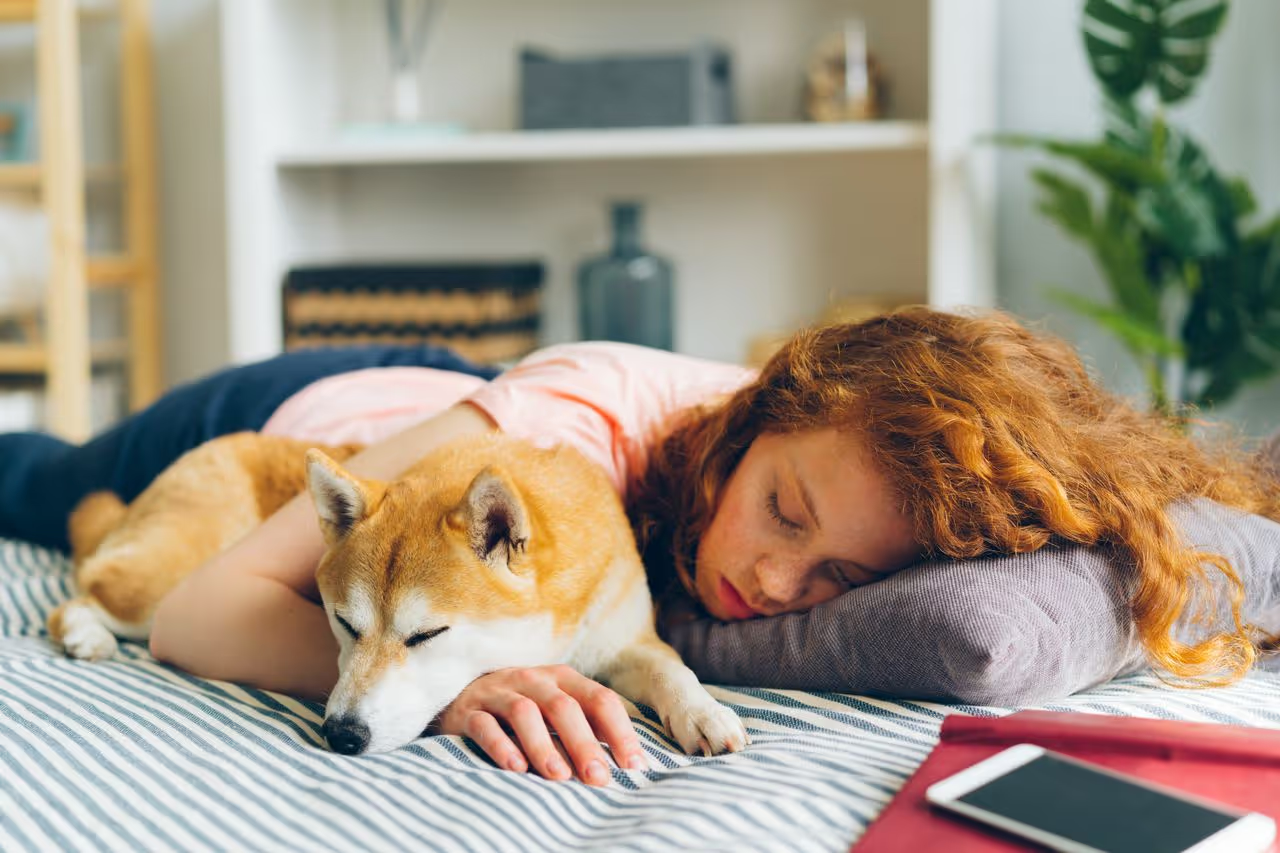
What House Sitting Burnout Actually Feels Like
It does not arrive dramatically. There is no specific morning where you wake up and think "I am burned out." It builds in layers, and each layer is individually small enough to dismiss.
You arrive at a new sit and the first thing you notice is that you are not excited about it. Not disappointed exactly, just neutral. The home is nice. The pets are fine. But the process of unpacking, reading the welcome guide, meeting the homeowner, doing the walkthrough, learning where the bins go and how the shower works and which cupboard has the coffee, feels like a task rather than an adventure. You have done it too many times in too short a period and the novelty has been replaced by familiarity with the process itself.
You are in someone else's home and you cannot fully relax. Not because of anything wrong with the home or the homeowner, but because some part of you knows this is temporary, that you will be packing up again in ten days, and that the next sit is already booked and the drive is already planned. You are physically present but mentally already preparing for the transition.
The cleaning starts to weigh on you differently. Every checkout involves stripping the bed, vacuuming, mopping, wiping every surface, loading the washing machine, doing the final video walkthrough. It takes two to three hours and you do it well because you always do it well. But when you are doing it every ten days, the accumulated weight of all those checkouts starts to feel like a job rather than a courtesy.
None of these things are problems individually. Together, sustained over months, they produce a kind of fatigue that is difficult to name because the lifestyle you are living is objectively wonderful. You are staying in beautiful homes, looking after lovely animals, traveling across Europe for free. How can you possibly be tired? And yet you are.
How We Got There
Between November 2025 and May 2026, Caro and I were on the move continuously. We drove the T4 from Bochum through Italy then across to the Balkans, down to Greece, across multiple countries and the Dolomites, back up through France, across to Spain, and into Portugal. In between the driving, we were house sitting. Short sits, long drives, new homes, new pets, new routines.
The closest we came to genuine burnout was in the final stretch before the current Portugal sit. We went from Manosque to Valencia to our first Portugal sit in Tavera within a short period. The Manosque sit was exceptional and gave us exactly the break we needed, ten days of doing nothing except caring for the animals and being present. But it was only ten days. The momentum resumed immediately afterward.
The Tavera sit was difficult. The dog had undisclosed behavioural issues and the communication with the homeowner was strained. We were tired. We were tense. We wanted to relax and could not because the environment did not allow it. It felt like cleaning homes every few days, meeting new people every few days, adjusting to new pets every few days, with no fixed point to anchor any of it to.
And then we arrived at the current sit. Six months. One cat. Four chickens. A view from the desk that still does not feel real after a month. The shift was immediate and physical. Within a few days we were sleeping better, eating better, working with more focus, and experiencing something we had not felt since leaving Bochum: the feeling that we are not going anywhere tomorrow.
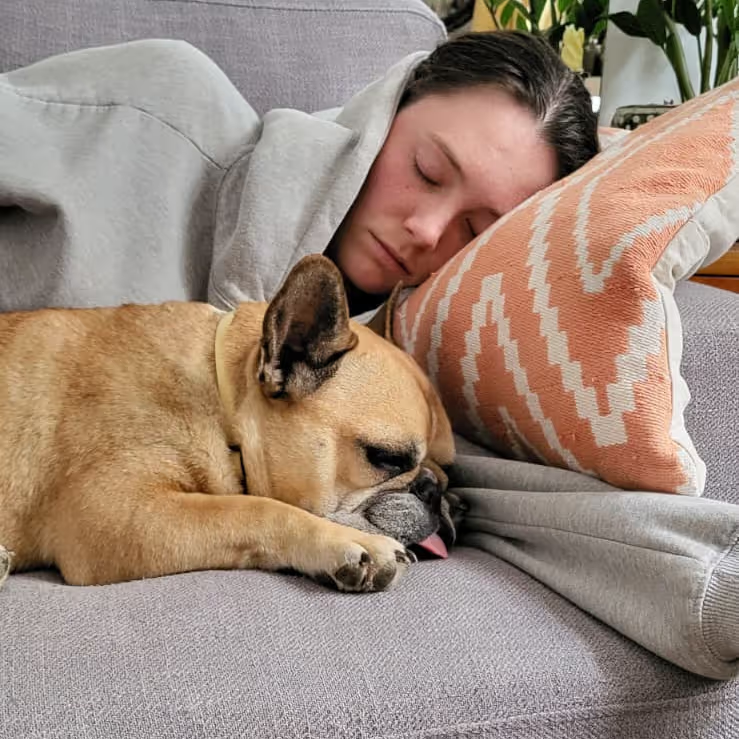
The Slow Travel Paradox
House sitting is slow travel in the sense that each individual sit is slow. You are in one place for a period of time, following a routine, living locally rather than sightseeing. That part is genuinely true.
What makes it not slow is everything in between. The driving. The planning. The logistics of chaining sits together across different countries, different climates, different visa requirements. The fact that every transition involves packing the van, cleaning the home, saying goodbye to animals you have bonded with, driving for hours or days to the next location, unpacking into a new space, and starting the whole cycle again.
If Caro and I had stayed in one country, say France, and jumped from sit to sit within the same region, the transitions would have been gentler. Same language, same supermarkets, same driving rules, shorter distances. The intensity of what we did, twelve countries in seven months, was our choice and we do not regret it. But describing it as slow travel would be dishonest. We covered 19,000 kilometres. We saw an enormous amount. We were tired in a way that accumulated so gradually we did not fully register it until we stopped.
The paradox is that each sit felt slow while the overall trajectory was anything but. A two-week sit in Greece feels like settling in. A two-week sit in Greece followed by a drive to Italy followed by a two-week sit in Italy followed by a drive through the Alps to France feels like a tour with occasional pauses. The pauses are real. The slowness within each one is real. But the cumulative effect of stringing them together without a genuine break is not slow at all.
Why Short Sits Are Holidays and Long Sits Are Life
This is the clearest distinction we have found after 20 sits, and it took us a while to see it.
A short sit, anything under two weeks, functions like a holiday. You arrive, you settle in, you explore, you enjoy it, and by the time you have fully adjusted to the space and the pets, it is nearly time to leave. The halfway point comes fast and the second half is coloured by the knowledge that departure is approaching. You are in holiday mode the entire time, which is enjoyable but not restful in the way that actual stillness is.
A long sit, a month or more, functions differently. The first week or two is still the settling-in phase, the same as any sit. But then something shifts. You stop thinking in terms of arrival and departure and start thinking in terms of daily life. You sign up to a gym. You find a favourite coffee spot. You develop a routine that does not reference the end date because the end date is far enough away that it does not register.
Caro and I did a month-long sit in France early in our house sitting journey and by the end it felt slightly too long. We thought we were not suited to long sits. What we actually were not suited to was long sits in isolation, without the context of months of movement beforehand. Now, after seven months on the road, six months in one place feels like exactly the right medicine. The length of a sit is not objectively too long or too short. It is relative to what came before it.
Our current sit is the closest thing to a home we have had since leaving Bochum. We have been here a month and still have five months ahead. Even when we pass the halfway point, we will still have three months to go. That is a different kind of time from anything a two-week sit offers. It is time that allows you to stop performing travel and actually live.
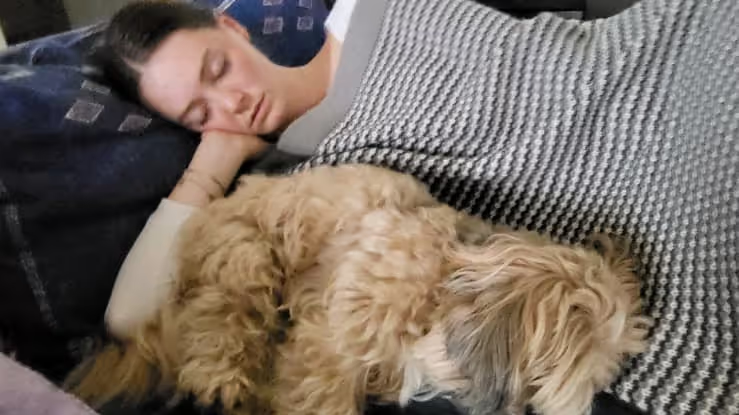
The Things You Discover You Want
There is an unexpected upside to the exhaustion of constant movement through different homes: you learn exactly what matters to you in a living space.
After 20 homes, Caro and I now know with precision what we want in our own home someday. A bidet is non-negotiable. We never had a dishwasher together in Bochum, but nearly every house we have sat in has had one and the difference in daily comfort is significant. We know what kind of kitchen layout works for how we cook. We know what kind of desk setup we need for how we work. We know what a good shower feels like versus a bad one.
This is one of those benefits that only emerges from volume. If you do two sits a year, you probably do not accumulate enough data points to draw conclusions. If you do 20, you start to see patterns in what makes you comfortable versus what you tolerate. The exhausting part, the constant transitions, is also the part that produces the most useful information about what you actually need.
What Actually Fixes House Sitting Burnout
The answer, from our direct experience, is a longer sit.
Not a hotel break, although that works too. Not "going home" since we do not have a home to go to in the traditional sense. A long sit, three months minimum, in a place where the care requirements are manageable and the environment is comfortable. A sit where you can build a routine and keep it long enough for it to actually settle into your body rather than your calendar.
The current Portugal sit fixed almost everything that the previous six months of movement had accumulated. Within a week of arriving, we were sleeping better. Within two weeks, we had a routine that felt natural rather than imposed. Within a month, we were working better, eating better, exercising properly, and having the kind of slow mornings that the lifestyle is supposed to provide but that short sits rarely deliver in practice.
| Sign of burnout | What it looks like | What fixes it |
|---|---|---|
| Arrival fatigue | Neutral rather than excited about a new sit | A longer sit where the arrival is the last one for months |
| Cleaning exhaustion | Checkout routine feels like a job rather than a courtesy | Fewer transitions, longer stays between full cleanouts |
| Unable to relax in the home | Mentally preparing for the next move while still in the current one | Enough time in one place that the next move stops occupying mental space |
| Routine keeps resetting | Just learned the kitchen, shower, coffee machine and now have to learn new ones | A sit long enough that the routine has time to stop being conscious and become automatic |
| Missing a fixed point | No anchor, no home base, nowhere that is consistently "yours" | A long sit that starts to feel like home, or a deliberate break in a hotel or with family |
| Gratitude fatigue | Feeling guilty about being tired because the lifestyle is objectively wonderful | Acknowledging that exhaustion and privilege coexist, and that rest is not ingratitude |
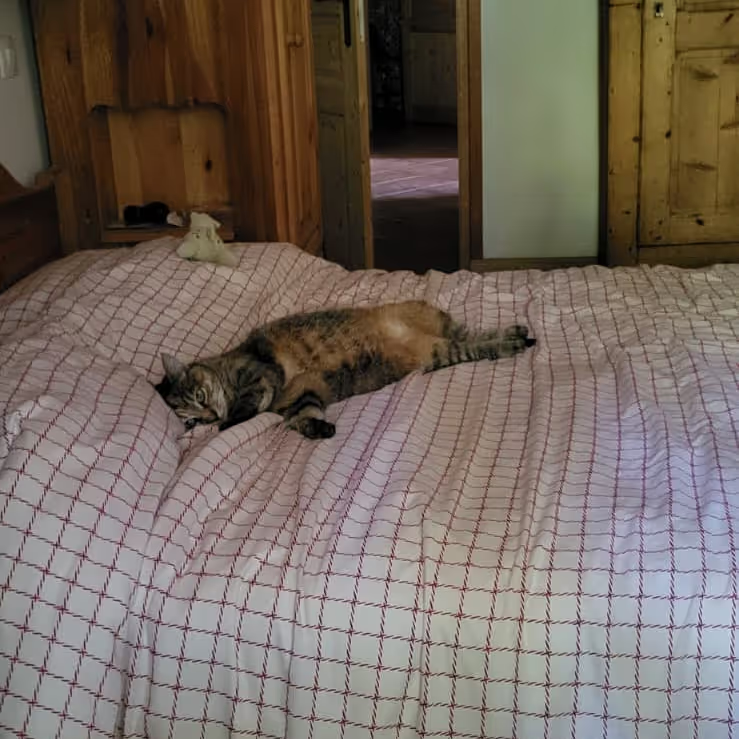
What We Would Do Differently
If Caro and I were planning another year of travel across Europe, we would structure it differently from the first time. Not radically differently, because most of what we did worked well. But with one specific adjustment.
We would anchor the year around one or two long sits of at least two months each, spaced roughly six months apart, with the shorter sits and van travel filling the time between them. The long sits would be the recovery points, the places where the routine settles and the fatigue dissipates. The short sits and driving would be the exploration, the variety, the adventure. The two phases would feed each other rather than the short sits accumulating into something unsustainable.
This is roughly the rhythm we fell into by accident rather than by design. The Manosque sit gave us a short reset in April. The Portugal sit is giving us a long one from May onward. If we had planned those anchor points from the beginning rather than letting them happen opportunistically, the months leading up to them would have felt more sustainable because we would have known the rest was coming.
Our year-long house sitting guide covers the logistics of planning a route across a full year. The piece it does not cover, and that this article is trying to fill, is the emotional and physical pacing that makes the difference between a year that energises you and a year that depletes you.
For Anyone Planning Twelve Back-to-Back Sits
Do it. It will be one of the most extraordinary experiences of your life. You will see places that most people only read about. You will look after animals you will never forget. You will learn more about yourself, your partner, and what you actually want from life than any other year could teach you.
And after twelve months, you will probably need a break. That is normal. It does not mean the lifestyle is wrong for you. It means you need a pause, a week in a hotel, a visit to family, a month-long sit where you do not explore anything and just exist. Build that pause into the plan rather than waiting until your body forces it on you.
If possible, slot one longer sit into the middle of the year. Even a month makes a noticeable difference. Two weeks is a holiday. A month is the beginning of a routine. Three months is where the routine stops being something you maintain and becomes something that carries you.
Conclusion
House sitting can absolutely be slow travel. It can also be a series of transitions that accumulate into exhaustion while looking, from the outside and from the Instagram feed, like the most relaxed life imaginable.
The cure is not stopping. The cure is pacing. Long sits between the short ones. Planned breaks between the drives. And the willingness to admit, even to yourself, that being tired after months of living in other people's beautiful homes is not ingratitude. It is a completely normal response to a life that asks you to adapt, constantly, to spaces and animals and people that are new every single time.
Caro and I are in the best version of this lifestyle right now. Settled, rested, productive, and genuinely happy. It took six months of movement to get here and a six-month sit to recover from it. Both parts were necessary. Neither was wasted.
Caro and I have completed 20 house sits across 12 countries, driven 19,000km in Australia and 24,000km in our 1998 VW T4, and saved over $26,500 in accommodation costs over three years of house sitting. If you have questions about pacing a year of house sitting travel, send us a message on Instagram, we read every DM.
Frequently Asked Questions
Can house sitting actually cause burnout?
Yes, particularly when sits are chained back to back over several months without genuine breaks. Each individual sit may be enjoyable, but the cumulative effect of constant transitions, new environments, new routines, and the cleaning and packing cycle can produce a kind of fatigue that is difficult to recognise because the lifestyle looks wonderful from the outside.
What does house sitting burnout feel like?
It is not dramatic. It shows up as a neutral feeling about arriving at a new sit rather than excitement. An inability to fully relax in someone else's home. The checkout cleaning routine feeling like a job. Mentally preparing for the next transition while still in the current sit. And a low-level guilt about being tired when you are living a life most people would envy.
How do you prevent burnout while house sitting long term?
Anchor your year around one or two long sits of at least two months each. Use the shorter sits and driving for exploration and variety, and use the long sits for genuine recovery and routine-building. Schedule at least one break per quarter with zero responsibilities, whether that is a hotel, a visit to family, or simply a few days in the van with nowhere to be.
Is a long house sit better than several short ones?
Both serve different purposes. Short sits function like holidays: exciting, varied, but not deeply restful. Long sits function like temporary life: routine-building, recovery-enabling, and genuinely restorative. The healthiest version of the lifestyle includes both, with the long sits providing the anchor points that prevent the short ones from accumulating into exhaustion.
How long does it take to recover from house sitting burnout?
For us, the shift was noticeable within the first week of our current six-month sit. By two weeks we had a settled routine. By a month, the accumulated fatigue of the previous six months had largely dissipated. The recovery time depends on how depleted you are and how completely you allow yourself to stop performing travel and simply exist in one place.
Should I still do back-to-back sits if I am new to house sitting?
Yes. The experience of chaining sits together is genuinely one of the most rewarding things about this lifestyle and the variety teaches you things that a single sit cannot. Just build in recovery points. After every three or four short sits, take a break or book a longer one. The burnout risk applies mainly to sustained periods of six months or more without a genuine pause.




Responses
What are your thoughts on this post?