

Home > Blog > House Sitter Lost the Keys: Who Pays?
Quick Facts
| Quick Facts | |
|---|---|
| How common is this? | Genuinely rare. Most stories are near-misses, mishaps, and inconvenience, not actual permanent loss |
| Who should pay for a replacement key or re-key? | The person who lost it. If it was the sitter, that's the sitter's responsibility |
| What professional pet sitters do | Keep a backup key in a separate secure location, and typically offer to cover a re-key as standard practice if theirs goes missing |
| Homeowner's best prevention | Always have a spare key stored somewhere accessible in an emergency |
| Sitter's best prevention | Put the house key on the same ring as your own keys immediately, so it's never separated from something you'd never lose |
| Our own habit | We use a carabiner clip and attach house keys the moment we're handed them |
Losing a house sit's keys is rare, and most of what actually happens when something goes wrong with keys is minor: a fob accidentally driven off with, a key left in the wrong mailbox, a bad copy that doesn't work. True permanent loss is uncommon. When it does happen, the principle is simple: whoever lost the key pays to replace it or re-key the lock, the same way a tenant who loses a rental key is generally expected to cover it. The best protection on both sides is prevention, a backup key kept in a secure location, and a sitter who puts the house key on their own keyring the moment it's handed over.
If you are interested in getting into house sitting, our book Travel More for Less puts the whole process in one place: clear, step by step guidance from your first questions to your first confirmed sit, and the reviews that open the door to the next one.
This guide covers how rare this actually is, who should pay when it happens, real stories from the wider house sitting community, and the small habits that make this a non-issue in practice.
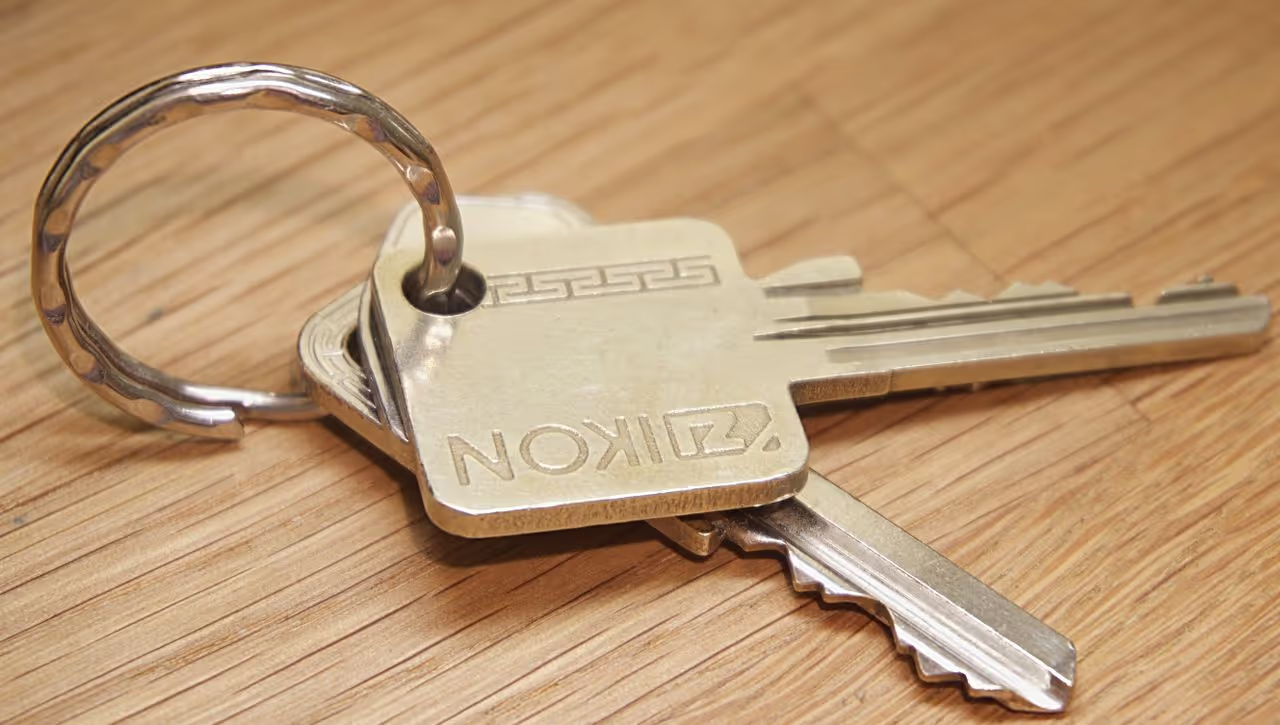
How Rare Is This, Actually?
Genuinely rare, and what actually shows up when you look for real stories is reassuring rather than alarming.
We went looking through the wider house sitting community for genuine accounts of this happening, and almost none of them involve a key being permanently lost. What actually happens is closer to comedy than crisis: a sitter accidentally driving off with an electric gate fob and posting it back once they realised, a key left in the wrong mailbox at an apartment building (recovered via a neighbour), a freshly cut key copy that simply didn't work properly, a keyless entry system with a battery that died at the worst possible moment.
One story involved a sitter locked out of a flat who ended up climbing across an eighth-floor balcony between two apartments to get back in, dramatic, but resolved without any real damage or cost.
The pattern across nearly every account: minor, occasionally funny, rarely expensive. True loss, the key genuinely gone for good, appears to be the exception rather than the rule.
Who Should Pay?
The principle here is straightforward: whoever lost the key is responsible for replacing it.
This isn't just our opinion. It lines up with how professional pet sitting businesses generally handle it, several sitting companies we looked into explicitly build this into their client agreements: if their sitter loses a key, they proactively offer to cover the cost of a replacement or a full re-key as standard practice, without being asked. It also matches the general consensus in landlord-tenant situations, where a tenant who loses a rental key is typically expected to cover the cost themselves, unless the landlord's own negligence caused the problem.
For house sitting specifically, that means if a sitter loses the key, covering the cost of a replacement, or a full lock re-key if it comes to that, is the sitter's responsibility. If it's a simple key copy rather than a full lock replacement, this is genuinely affordable, often under $20 at a local key cutting service. A full lock replacement is a different scale of cost, but it's also a genuinely rare outcome; in most cases, a spare key solves the problem entirely without needing to touch the lock at all.

Prevention Matters More Than the Rule Itself
Since this is rare and inexpensive to fix when it does happen, the real value is in preventing it altogether, and there's a simple habit on each side that mostly eliminates the risk.
For sitters: the moment you're handed the house key, put it directly onto your own keyring, the same one your car or house keys live on. We use a small carabiner clip specifically for this, it takes seconds to attach a new key, and once it's on, it becomes something you'd have to lose your entire set of keys to actually lose. That's a meaningfully lower risk than a loose key rattling around in a bag or pocket on its own.
For homeowners: always have at least one spare key stored somewhere accessible, whether that's with a trusted neighbour, in a secure lockbox, or with a nearby family member. If a sitter does lose the primary key, the fix becomes simple and cheap: get a copy made from the spare, rather than an emergency locksmith call or a lockout crisis. This is worth confirming directly during the pre-sit video call, alongside the other practical questions worth asking before you commit to a sit.
We've also built key-handling into how we do every handover. When we're wrapping up a sit, we do a final walkthrough of the whole house to make sure we didn't leave anything behind, and we hand the keys directly to the homeowner in person as part of that same process, rather than leaving them somewhere for the homeowner to find later. Tying the key handover to the same moment as the final walkthrough means nothing gets forgotten, on either side. Our full guide to a proper house sit checkout covers the rest of that process in detail.
The Worst-Case Version of This
Worth knowing, even though it's rare: the genuinely bad version of this story isn't just a lost key, it's a lost key combined with no backup plan and no way to prove you belong in the house.
One account we came across online described exactly this: a sitter locked out with the homeowners unreachable, no spare key available, and, critically, their own ID and wallet locked inside the house along with the pets. Without any way to prove residency, both a locksmith and the police were unable to help without written authorization the sitter didn't have.
It's a genuinely stressful scenario, and it's avoidable entirely with two simple precautions: never let your only key become your only way in (a spare should always exist somewhere), and never leave your own ID locked inside a house you don't have guaranteed access back into. Our house sitting safety guide covers this kind of preparation as part of the broader picture of being ready for the unexpected.
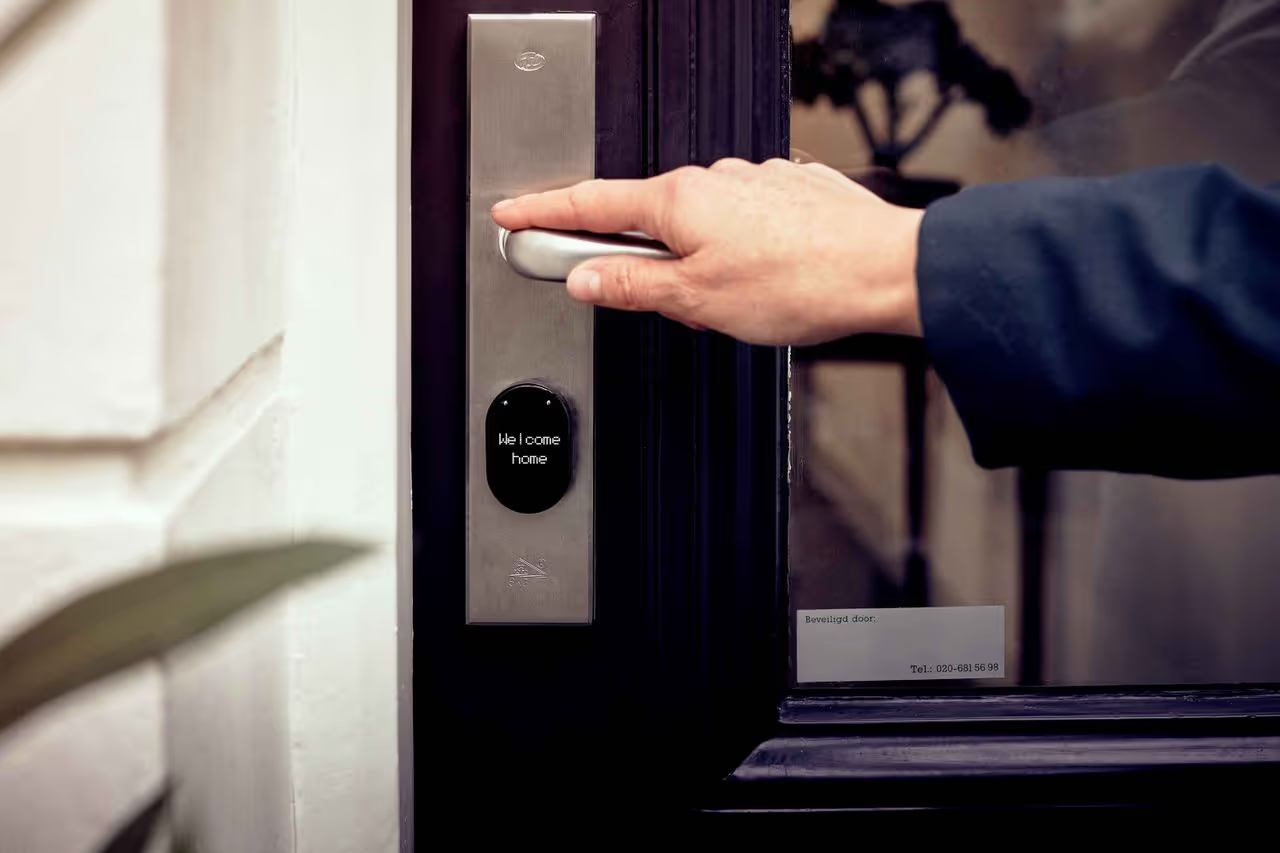
Smart Locks vs. Physical Keys
This debate comes up regularly in the house sitting community, and it's worth knowing both sides rather than assuming one is obviously better.
The case for smart locks is real: no physical key to lose at all, and if you've ever managed multiple guests or clients, a single code is far simpler than cutting individual keys for everyone. One of us ran a hostel in Iceland using exactly this kind of digital key system, and it removed an entire category of key-related hassle: no lost keys, no re-keying costs, just a code that worked or didn't.
The case against them, for a sitter specifically: a smart lock usually means the homeowner can see exactly when you enter and leave the house, which is a genuine privacy trade-off worth being aware of. A physical key carries no such log. For a sitter, having a key on your own keyring is simple, private, and reliably in your pocket the moment you lock the door behind you. Neither option is objectively better, it comes down to what you personally value more: the convenience of never having a physical key to lose, or the privacy of a lock that doesn't quietly track your movements.
Has anything key-related ever gone wrong on one of your sits, lost, forgotten, or just a bad copy that wouldn't turn? We'd like to hear how it played out, drop it in the comments below.
The Bottom Line
This is rare enough that it shouldn't be a real source of anxiety going into a sit, and cheap enough to fix when it does happen that it's not worth losing sleep over either. The responsibility is straightforward: whoever lost the key covers the cost of replacing it. The real value is in the small habits that make this a non-issue entirely, a spare key on the homeowner's side, and a key clipped straight onto your own ring the moment you're handed it on the sitter's side.
Caro and I have completed 20 house sits across 12 countries, driven 19,000km in Australia and 24,000km in our 1998 VW T4, and saved over $26,500 in accommodation costs over three years of house sitting through TrustedHouseSitters. If you've got a question about handling keys or handovers, DM us @housesittersguide, we answer everyone.

Frequently Asked Questions
Who pays if a house sitter loses the keys?
The person who lost the key is generally responsible for covering the cost of a replacement, whether that's a simple key copy or, in rarer cases, a full lock re-key. This matches standard practice among professional pet sitters and the general consensus in landlord-tenant situations.
How much does it cost to replace a lost house key?
A simple key copy from a local key cutting service is usually affordable, often under $20. A full lock replacement costs considerably more, but is a genuinely rare outcome, most situations are resolved with a spare key and a fresh copy rather than needing to touch the lock itself.
How can a house sitter avoid losing keys during a sit?
Put the house key directly onto your own keyring, ideally the same one your car or personal keys live on, the moment you're handed it. A carabiner clip makes this quick and easy, and once the key is attached to something you'd never lose on its own, the risk drops significantly.
Should homeowners always have a spare key ready?
Yes. A spare key stored somewhere accessible, with a neighbour, in a lockbox, or with family nearby, turns a potential lockout crisis into a simple, cheap fix if the primary key ever does go missing.


Responses
What are your thoughts on this post?