

Quick Facts
| Quick Facts | |
|---|---|
| How it usually starts | A farewell meal when the homeowner returns |
| What makes it last | A genuinely good sit on both sides — not effort, just honesty |
| The expectation to watch for | Repeat sit invitations should feel like a preference, not a pressure |
| What kind of friendship it tends to be | Low-frequency, warm, genuinely mutual — not dependent on constant contact |
| Who it happens with | Not every homeowner — but more often than most sitters expect |
Some house sits end with a handover, a review, and a polite goodbye. Others end with a meal, a bottle of wine, and the beginning of something that continues for years. The shift from professional exchange to genuine friendship is one of the quiet pleasures of this lifestyle, and it happens more often than most people expect. What it requires is a good sit, mutual respect, and the willingness to let it develop naturally without forcing it.
Caro and I have completed 20+ sits across 12 countries and have built genuine friendships from several of them.
Not with everyone — some sits were excellent professional exchanges that ended warmly and that was exactly right. But in Bochum, in Switzerland, in Athens, and in Cortona, the connection did not end when the homeowner came back through the door.
Those friendships are still real, still warm, and still active in their own way years later. This article is about how that happens, what to do when it does, and the few things worth being aware of when the relationship shifts.
If you are interested in getting into house sitting, our book Travel More for Less puts the whole process in one place: clear, step by step guidance from your first questions to your first confirmed sit, and the reviews that open the door to the next one.
The Mindset That Changes Everything
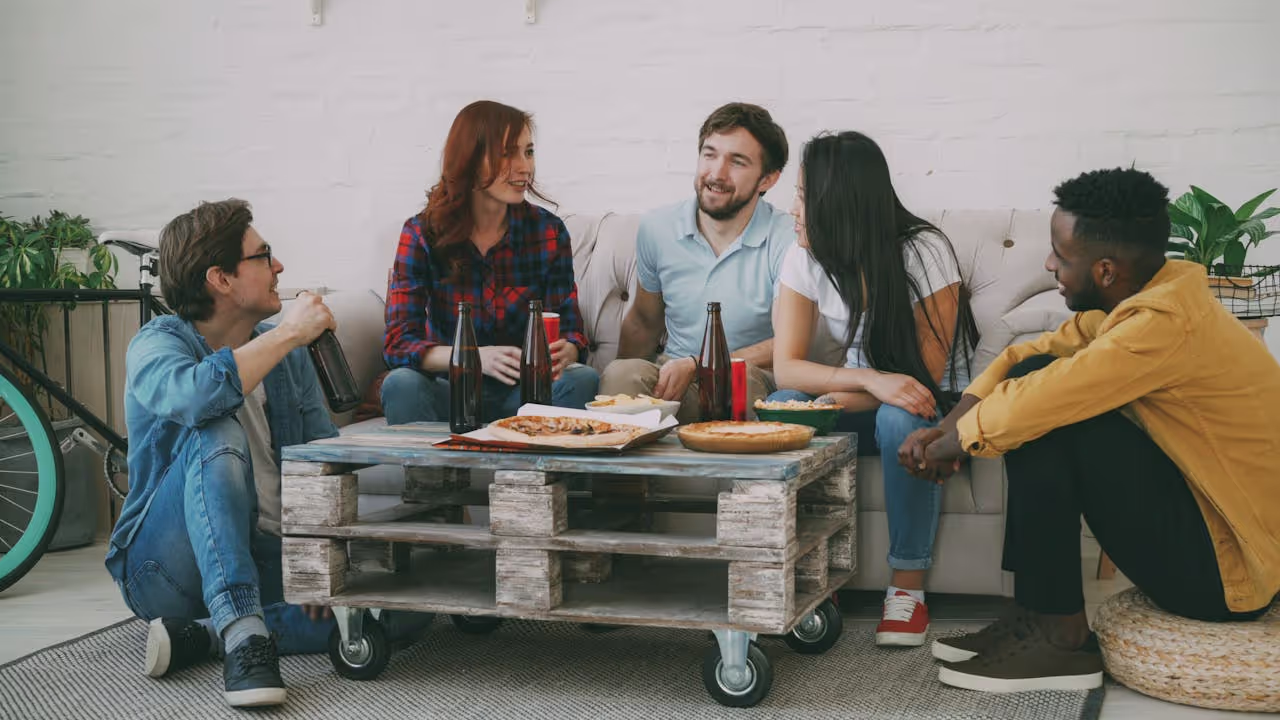
There is a meaningful difference between approaching a house sit as a transaction and approaching it as an opportunity to meet people.
A transactional mindset is not wrong exactly. The exchange is real — free accommodation for the sitter, free pet care for the homeowner — and treating it professionally is appropriate. But when the transaction is all either party sees, the sit tends to feel exactly like that. Efficient, correct, and a little hollow. The homeowner leaves feeling like they hired a service. The sitter leaves feeling like they completed a job. Both parties got what they came for and nothing more.
When you go into a sit with the genuine openness that you might be about to meet someone interesting, the dynamic shifts. You read the listing differently. You write the application differently. The video call feels less like an interview and more like a conversation. The messages during the sit carry a different warmth. And when the homeowner returns, the handover feels less like a checkout and more like two people wrapping up a shared experience.
This is not about being artificially warm or performing friendliness you do not feel. It is about remembering that the person who listed that sit and the person who applied for it are both real people, not roles in a transaction. Homeowners who are genuinely open to their sitters tend to attract sitters who are genuinely invested in the home. Sitters who approach homeowners as people rather than clients tend to be given more trust and more latitude during the sit.
The practical result of this mindset is that the sits tend to be more comfortable, more honest, and more likely to produce the kind of experience both parties are hoping for. You are less likely to be caught out by misrepresentation if the relationship was built on genuine communication from the start. You are more likely to handle small problems calmly if there is a real human connection on both sides. And you are significantly more likely to leave a sit having made a connection worth keeping, which over years of travel accumulates into something that looks a lot like a community.
The house sitting world is full of genuinely interesting people. Homeowners who have chosen to open their homes to strangers tend to be curious, trusting, and open-minded by default. Sitters who have chosen to travel this way tend to be resourceful, adaptable, and genuinely good with people and animals. Those two groups have more in common than the transaction suggests, and the friendships that come from treating each sit as a potential meeting rather than just an exchange are one of the things that make this lifestyle genuinely rich.
How the Shift Usually Happens
It is almost never a conscious decision. You do not sit down and decide to become friends with a homeowner. It tends to happen around the moment the homeowner returns, in the overlap between the end of the professional exchange and whatever comes next.
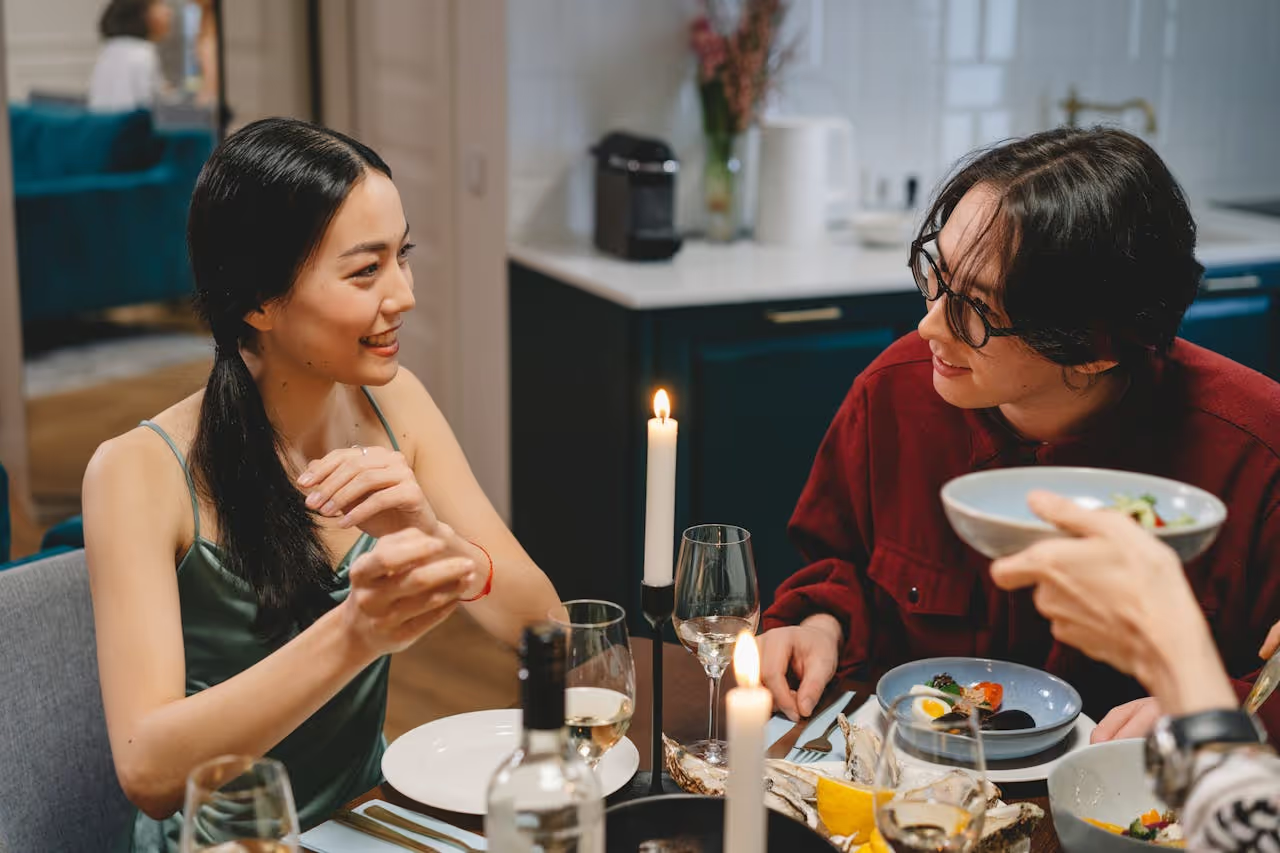
The farewell is where it starts. If the sit has gone genuinely well, if the pets are clearly happy and the home is in good order, and if both parties feel comfortable with each other after weeks of occasional messages and updates, the natural thing is to spend a little time together before parting. A meal, a drink, an hour of conversation. The homeowner is grateful for what you did. You are grateful for the home and the experience. That mutual appreciation, expressed simply and without performance, is where most house sitting friendships begin.
Our first sit in Bochum set the template. The homeowner invited us for dinner after the sit ended, and from there it became a genuinely easy friendship — occasional meetings when we were in the area, warm messages, a connection that has continued long after we moved on from Bochum entirely. The logistics of how repeat sits develop from that kind of relationship are covered in the repeat sit relationships guide. This article is about what happens on the human side of that dynamic.
The Switzerland homeowners were similar. As Caro and I were driving through the area on our way to another sit, we messaged them. We ended up at a barbecue together for a few hours. The conversation was easy, the food was good, and by the end of the evening it felt entirely natural that we would do the same thing again if we passed through. There was no agenda. It was just two sets of people who had got on well, catching up over a meal.
Athens was the same. As we were finishing our campervan leg through Greece, we stopped in the city again and had dinner with the homeowners. It felt like visiting friends, which is essentially what it was.
What Makes Some Connections Last and Others Fade
Not every sit produces a friendship and that is completely normal. Some homeowners want an excellent professional exchange and nothing more. Some sitters are the same. The sit works perfectly, the review is warm, and both parties move on. That is a good outcome and there is nothing missing from it.
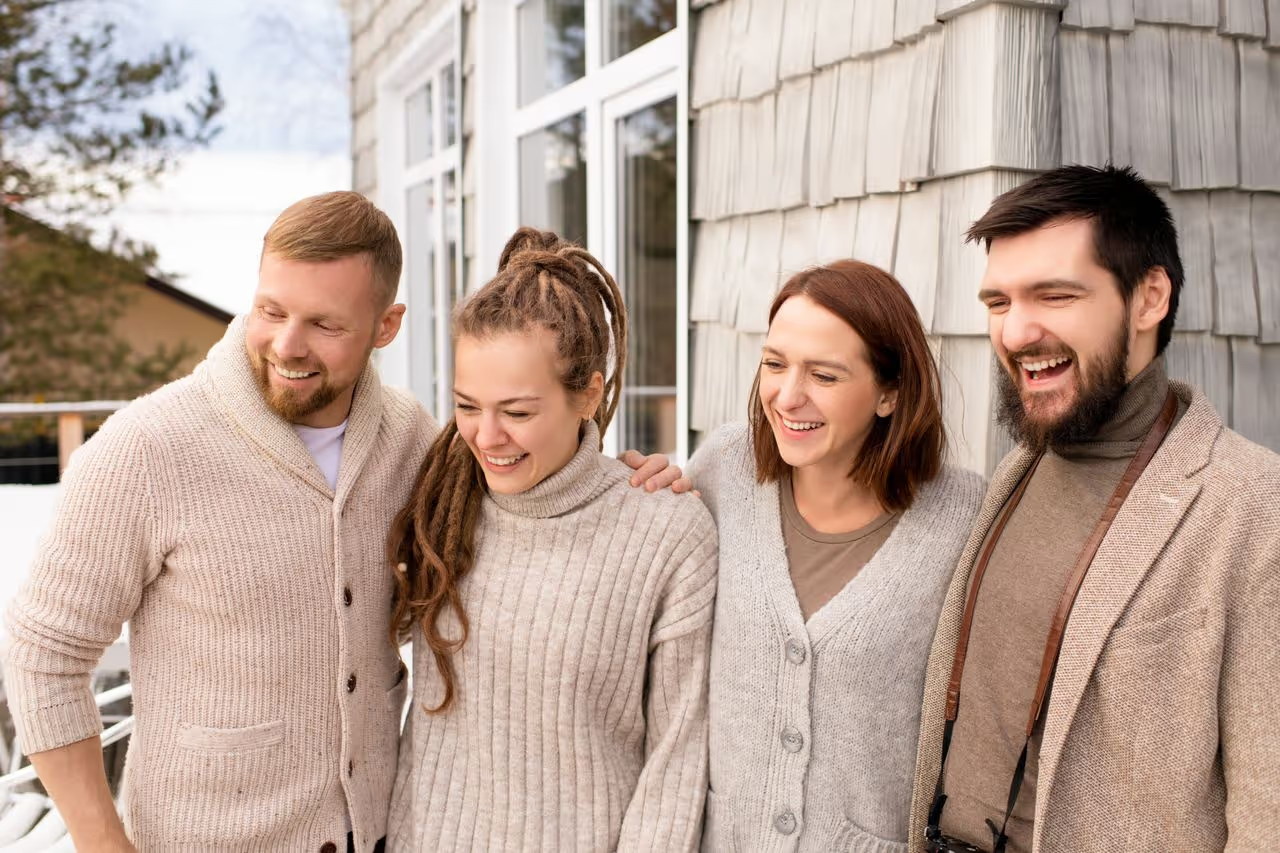
What makes a connection persist is harder to define. It is not effort exactly. You cannot manufacture a friendship by messaging someone every week after a sit. It is more about whether there was a genuine meeting of people during the sit itself. Whether the conversations, the messages, the farewell meal revealed that these are people you would enjoy spending time with outside the context of house sitting entirely.
Caro and I have found that most of the homeowners we have stayed in genuine contact with are people we simply got on with as people. Similar sensibilities, similar approaches to life, similar things to talk about. The house sit was the mechanism that brought us together. It was not the foundation of the friendship.
Traveling in the T4 has also made this kind of friendship unusually easy to maintain. We do not need a bedroom. When we pass through an area where someone we know lives, we message and arrange a meal. They have a guest for the evening who does not need a spare room. We have a dinner and a conversation with someone whose company we enjoy. Nobody is inconvenienced and everyone benefits. That dynamic, relaxed and low-maintenance, is what makes these connections sustainable over months and years.
The Farewell Dinner and What It Signals
The meal when a homeowner returns is worth paying attention to, because it is the moment where the relationship either stays professional or begins to shift.
If the sit has gone well, a shared meal is a genuinely nice thing for both parties. The homeowner can hear directly about the pets, the highlights of the stay, the small things that happened while they were away. The sitter gets to see the homeowner's reaction to returning to a well-maintained home and happy animals. Both sides can feel the goodwill that was built during the sit without having to articulate it formally.
This moment matters more than most people realise. The homeowner leaving for their trip with peace of mind, knowing their home and pets are in good hands, is something significant. Being able to return and see that trust honoured, then sit down and share a meal with the person who provided that, is a kind of gratitude that does not always translate well into a review but is real nonetheless. The security that a good house sitter provides, that ability to go on holiday without the background anxiety of wondering if everything is fine, is worth a great deal. A meal together is a simple way of acknowledging that on both sides.
Not every sit ends this way and that is fine. Some homeowners return tired from travelling, the handover is quick and warm, and everyone goes their separate ways. The friendship potential was not necessarily there and no one is worse off for it. But when the conditions are right, this hour or two is worth taking.
Navigating Repeat Sit Invitations
When a homeowner has had a genuinely good experience with a sitter, their first instinct for the next sit is to reach out to the same person. That preference is natural and flattering. The full picture of how to handle repeat sit logistics — timing, messaging, what the booking process looks like — is in the repeat sit relationships guide.
What is worth noting here is the emotional dimension. The difference to watch for is between an invitation and an assumption. An invitation feels like "we would love to have you back if your timing works out." An assumption feels like "we have listed the dates and expect you to be available." In our experience, every repeat invitation we have received has felt like the former. The homeowners reached out because they enjoyed the experience and would prefer us over starting again with someone new. There has never been a sense that the friendship created an obligation or that declining would damage the relationship.
The Emotional Complexity of Moving On
What nobody writes about is what it actually feels like to leave a place where you have built a connection, particularly early in a full-time travel life when the anchors are still new.
When Caro and I left Bochum for the last time to begin traveling properly, we were stepping away from the last fixed point we had. Our home was gone. Her family was nearby but we were moving. The Bochum homeowner represented one of the few threads of continuity from our settled life into the new one. Leaving did not feel like losing a friend exactly, but it felt like stepping into something genuinely unfamiliar, smaller, more uncertain. The van was our home now, with all our possessions in it, and the security of a fixed address had been replaced by the security of motion.
That transition was both unsettling and motivating at the same time. What helped was knowing the connection was not actually ending. It was just becoming a different kind of connection. The kind that does not require proximity or regular contact. The kind where you message when you are passing through, arrange a meal, pick up the conversation where it left off, and leave feeling like no real time has passed. Those friendships, built in concentrated bursts of shared experience rather than sustained daily contact, can be surprisingly durable.
Many of the connections from our travels have that quality now. Bochum, Switzerland, Athens, Cortona. If we passed through any of those places tomorrow, we could send a message and be reasonably confident of a warm response. That network of low-frequency but genuine connections is one of the quieter benefits of three years of house sitting that almost nobody mentions when they describe the lifestyle.

When to Keep Things Professional
Not every warm sit needs to become a friendship and not every homeowner wants one. Some people have clear preferences for a good professional exchange, a five-star review on both sides, and a clean ending. Respecting that is as important as nurturing the connections that do develop naturally.
The signals are usually clear. A homeowner who does a quick and efficient handover, thanks you warmly, and leaves without lingering is probably someone who prefers the professional version of the relationship. A homeowner who invites you to stay for a drink and asks about your plans is probably open to more. Following the homeowner's lead rather than pushing for a warmer connection than they are signalling is the right approach. Not every good sit needs to be the beginning of a friendship. Some of the best ones are complete in themselves.
The slow travel journal covers what it feels like to build a life from a series of temporary connections that somehow accumulate into something real.
Conclusion
The friendships that come from house sitting are not a guaranteed outcome but they are a genuine one. They tend to develop quietly, around a farewell meal or a casual message months later, and they tend to be the low-maintenance kind that do not require constant contact to stay warm. They are built on a foundation of trust that was established during the sit itself and they tend to last longer than most people expect.
Going into every sit with the openness that you might be about to meet someone worth knowing changes the quality of the experience before it even begins. It makes the application more honest, the video call more natural, the sit itself more comfortable, and the ending more likely to be the beginning of something rather than just a conclusion. That mindset costs nothing and adds something real.
If a homeowner invites you for dinner when they return, go. If they reach out months later to ask how you are, reply. If you find yourself driving through a city where someone you once sat for lives, send a message. These connections are one of the things that make this lifestyle genuinely rich rather than just practically convenient.
Caro and I have completed 20 house sits across 12 countries, driven 19,000km in Australia and 24,000km in our 1998 VW T4, and saved over $26,500 in accommodation costs.
If you have a question about navigating the personal side of house sitting, send us a message on Instagram — we read every DM.

Frequently Asked Questions
Is it normal to become friends with a homeowner after a house sit?
Yes, and it happens more often than most new sitters expect. The house sitting exchange is built on trust, and trust between people who get on well naturally tends to develop into something warmer over time. Not every sit produces a friendship — some are excellent professional exchanges and that is entirely right — but genuine connections from house sitting are common enough to be one of the lifestyle's underrated benefits.
How do you know if a homeowner wants a friendship or just a professional relationship?
Follow their lead. A homeowner who lingers at the handover, invites you for a meal, or asks about your plans beyond the sit is signalling openness to a warmer connection. A homeowner who does an efficient handover and thanks you warmly but briefly is probably comfortable with a professional ending. Respecting what the other person is signalling is more important than pursuing a friendship for its own sake.
What should I do if a homeowner invites me for a farewell meal?
Go, if you want to. A shared meal when the homeowner returns is a natural and genuinely pleasant way to close a sit that has gone well. It gives both parties the chance to express appreciation directly and see whether there is the kind of connection that might continue beyond the sit. There is no obligation and no pressure — but if the sit has been good and the invitation feels genuine, it is worth taking.
Do house sitting friendships last when you move on to different countries?
Many of them do, in a low-frequency way. The friendships that tend to last are the ones that do not require constant contact to stay warm. A message when you are passing through, a meal if the timing works, a reply when they reach out. Several of the connections Caro and I have built over three years of sitting have that quality. We do not message these people every week. But if we were in the area tomorrow, we could reach out and be confident of a warm response.
What if a homeowner expects me to always be available for future sits?
Distinguish between a preference and an assumption. A homeowner who reaches out because they enjoyed the experience and would love to have you back is expressing a preference, which is entirely normal. A homeowner who assumes your availability or makes you feel obligated is a different situation. In our experience, repeat invitations from homeowners we have built genuine connections with have always felt like an open offer rather than a demand.
Does approaching a sit as a human connection rather than a transaction actually make a difference?
Yes, and the difference shows up before the sit even starts. When both parties approach the exchange as people rather than roles, the application is more honest, the video call is more natural, the sit is more comfortable, and the ending is more likely to be the beginning of something genuine. The transactional version of house sitting works. The human version of it is better for everyone involved.


Responses
What are your thoughts on this post?