

Home > Blog > Handling Deliveries and Mail During a House Sit
Quick Facts
| What to do with arriving post | Collect it, bring it inside, stack it in one designated spot |
| Should you photograph it | Yes — always send a picture to the homeowner |
| Packages requiring ID | You are under no obligation to provide your ID — it is a personal choice |
| Should you ever open mail | No — it is not addressed to you |
| Can you have mail sent to the sit address | Only if the homeowner explicitly says yes |
| Is it usually mentioned in the welcome guide | Sometimes — more often communicated at the handover |
| What happens with tracked parcels | Homeowners usually know they are coming and message you in advance |
Stack it, photograph it, send the picture. That routine covers almost every parcel and takes about two minutes. Never open post addressed to the homeowner, and you are under no obligation to show your own ID for their deliveries. Their address is not your mail drop.
Handling post and deliveries on a house sit is one of the quieter responsibilities that rarely causes problems when done well and occasionally causes avoidable ones when done thoughtlessly. Caro and I have received packages across sits in Manosque, Athens, Cortona, and Valencia. None of it has been complicated. Most of it takes two minutes.
If you are interested in getting into house sitting, our book Travel More for Less puts the whole process in one place: clear, step by step guidance from your first questions to your first confirmed sit, and the reviews that open the door to the next one.
Use our 25% discount when joining. Our house sit checkout guide and welcome guide article cover the broader administration side of any sit.
The Standard Approach: Stack, Photograph, Send
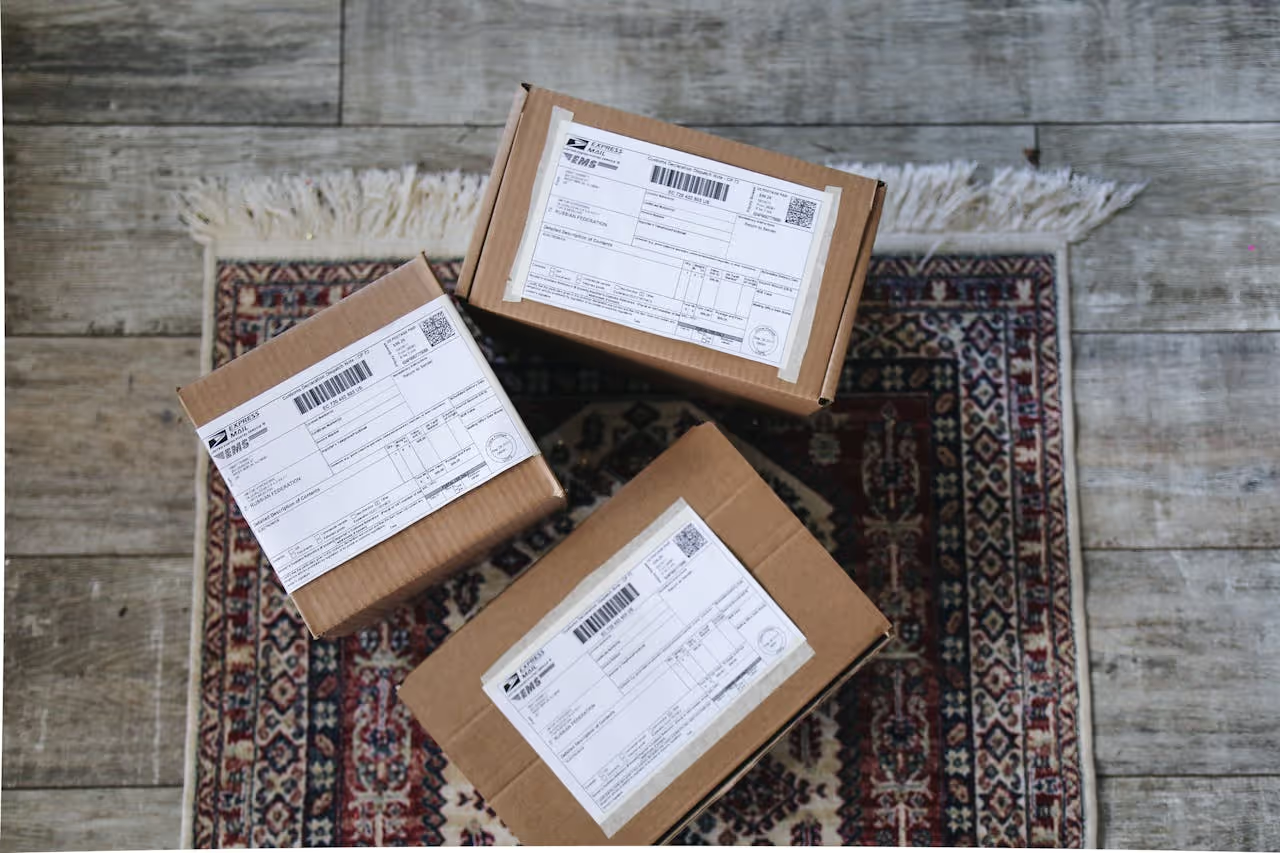
The default handling of any post or parcel arriving during a sit is simple.
Collect it. Bring it inside immediately. Do not leave post in an external letterbox or a parcel on the doorstep. A package sitting uncollected outside a home signals absence, which is exactly what the homeowner does not want advertised.
Stack it. Designate a single corner or surface in the home as the collection point for all deliveries during the sit. Every parcel, every letter, every piece of post goes there. When the homeowner returns, everything is in one place, easy to find, nothing has been moved or misplaced.
Photograph it. As each item arrives, take a picture. Of the parcel, the letter, the label. Send it to the homeowner immediately with a brief message: "Package arrived, left it on the kitchen table." This is one of the most appreciated small actions a sitter can take. The homeowner knows the item has arrived, knows it is safe inside the home, and has a timestamp. If the delivery involves anything sensitive, the photograph creates a simple record of what was received and when.
These three steps handle the vast majority of delivery situations without any further thought required. The photograph in particular is worth making habitual. It takes ten seconds and removes any ambiguity about whether something was received, when it arrived, or where it was placed.
How Tracked Deliveries Work on a Sit
Most packages from major retailers now include tracking numbers that notify the recipient automatically at each stage of delivery. This means homeowners are usually aware a parcel is on its way before it arrives at the door. In many cases, the homeowner will message you ahead of time: "There is an Amazon delivery coming this week. Just leave it in the utility room."
When a homeowner gives you a specific instruction for a particular parcel, follow it exactly. If no instruction exists, the default is the stack-photograph-send approach. Either way, the communication loop is closed quickly and the homeowner has the information they need without having to ask.
When a Delivery Requires ID
In Valencia, a government letter arrived during a weekend sit that required ID to be handed over. This is worth addressing directly because it is a situation that can feel unclear in the moment.
A sitter is under no obligation to provide personal identification to receive a package on behalf of a homeowner. The package is not addressed to the sitter. The legal responsibility for its receipt does not belong to the sitter. Providing ID is a personal choice, not part of the house sitting agreement.
If you are comfortable doing it, that is your decision. If you are not comfortable, the correct response is to explain to the delivery person that you are not the homeowner and cannot provide ID for mail addressed to someone else. The package is then returned to the sorting office or held for the homeowner to collect on their return. This is not a problem. It is the normal process for signature and ID-required items when the recipient is unavailable.
What the homeowner should not expect, and certainly should not request, is that a sitter provides their own identification documents to facilitate the homeowner's mail collection. A homeowner who places any pressure on a sitter to do this is crossing a line.
If a homeowner knows they are expecting ID-required official mail during a sit, they should make alternative collection arrangements or be present for the delivery. This falls squarely in the category of expectations that belong in the listing and the welcome guide, not sprung on a sitter mid-sit.
The Two Rules Around Mail That Matter Most
Do not open mail that is not addressed to you. This should not need saying, but it does. Post addressed to the homeowner is the homeowner's private correspondence. It is not the sitter's business regardless of how curious the envelope looks or how innocuous the contents might seem. Opening someone else's mail without permission is illegal in most countries and an obvious breach of trust. Even well-intentioned acts. Opening a parcel to check whether it is perishable, for example. Cross a line that should not be crossed without explicit instruction from the homeowner.
If a parcel appears to contain something perishable and no instructions exist, photograph it and contact the homeowner immediately. Let them make the decision. Do not open it yourself.
Do not have your own mail delivered to the sit address. If you are going to be at a sit for three weeks and you are expecting a delivery of your own, do not use the homeowner's address. Not without asking explicitly. And even then, think carefully about whether it is appropriate.
The homeowner has agreed to provide temporary accommodation for you, not a mail forwarding service for your personal shopping. Having your own packages arrive at their address creates complications: it blurs the boundary between your temporary presence and their permanent home, it may require awkward explanations when something arrives after you have left, and some homeowners find it presumptuous even when they do not say so. If you truly need a delivery during a sit, use a locker service, a collection point, or a trusted personal contact's address.
The Paper Trail Principle
Throughout our sits Caro and I have maintained a habit of written communication and documentation that goes beyond what any single situation has required. Photographs of delivered packages. Messages confirming what was received and where it was placed. A walkthrough video at the start and end of every sit showing the home's condition.
Not every homeowner or sitter has made this easy. In our first Portugal sit, the homeowner was warm at handover and visibly cooler by the time the sit ended. We informed her about her dog's resource guarding behaviour. Accurately and in good faith. And her response suggested she took it as a criticism rather than a helpful observation.
The review she eventually left, after we followed up a week after the sit, was technically five stars: "I would happily recommend Konrad and Caro." Technically positive. Practically minimal. We have done longer reviews for sits where the only animal was an outdoor cat.
The paper trail is not something you maintain because you expect every sit to end well. You maintain it because the ones that do not end well are impossible to navigate without it. A photograph of a delivered package, a message confirming it arrived, a record of the communication. These are trivial in the moment and invaluable in the small number of cases where they matter. Our legal issues guide covers the formal side of documentation on sits.
What to Confirm Before the Sit Starts
Delivery and mail handling is rarely covered in as much detail as pet care or house maintenance in pre-sit conversations, but it is worth a brief confirmation at the handover. The key questions:
Are you expecting any deliveries during the sit, and do you have preferences for where they should be left? Is there a designated spot for incoming post? Is there anything time-sensitive or requiring special handling arriving while you are away? Are there any neighbours who might bring over post, or to whom I might need to pass anything?
These take thirty seconds to cover in the pre-sit video call or at the handover and remove any ambiguity for the duration of the sit. Our what to ask a homeowner guide covers the full list of questions worth covering before any sit starts.
When Something Goes Wrong
If a delivery goes missing, arrives damaged, or if a situation arises that the homeowner's instructions did not cover, the same principle applies as with any unexpected development during a sit: communicate immediately, document what you know, and let the homeowner make any decisions that belong to them.
A missing parcel that you have a photograph of and a message confirming its receipt is a manageable situation. A missing parcel with no record is considerably harder to navigate. The photograph takes ten seconds. Take it every time.
Join TrustedHouseSitters with 25% off and read our full cleaning and etiquette guide for the broader picture of how we approach house maintenance during a sit. DM us @housesittersguide on Instagram. We answer everyone.

Frequently Asked Questions
What should I do with post and parcels during a house sit?
Collect everything, bring it inside immediately, stack it in one designated spot, photograph it, and send the picture to the homeowner. Most homeowners with tracked deliveries will message you in advance when something is on its way. If no instructions exist, the stack-photograph-send approach handles the vast majority of situations without any further action required.
Do I have to show ID to receive a parcel during a house sit?
No. Providing ID is entirely your personal choice. You are not the legal recipient of mail addressed to the homeowner and you are under no obligation to produce identification documents on their behalf. If you are not comfortable providing ID, inform the delivery person that you are not the homeowner. The item will be held for collection or redelivered when the homeowner returns.
Can I have my own mail delivered to the house sit address?
Only if the homeowner has explicitly agreed to this. Using a homeowner's address as your personal mail collection point without asking is presumptuous and can create complications. Use a parcel locker or collection point service for your own deliveries during a sit where possible.
Should I ever open a homeowner's mail?
No. Mail addressed to the homeowner is their private correspondence. Do not open it regardless of circumstances. If a parcel appears to be perishable or requires urgent attention, photograph it and contact the homeowner immediately to let them decide.


Responses
What are your thoughts on this post?