

Home > Blog > Green House Sitting: How to Live Sustainably
Quick Facts
| Is house sitting eco-friendly? | Yes: you occupy existing housing instead of creating new accommodation demand. |
| Bochum energy saving | Energy bill fell from €80 to €40 monthly, with 70% returned. |
| Can I change the thermostat? | Ask first, framing it as your preference, not a correction. |
| How do I recycle abroad? | Photograph the bins on day one and ask the homeowner. |
| Best countries for organic food? | France, Italy and Portugal are the most accessible in Europe. |
| Does organic wine matter? | Unsulfated organic wine produces no hangover at the same quantity. |
The most sustainable thing about house sitting is the model itself. You are living in a home that would otherwise sit empty, absorbing its standing energy costs with nobody present to benefit from them. You are not building new accommodation demand. You are not flying between hotels. By existing in the home as a present, conscious occupant, you are already making a better choice than most travel alternatives.
Caro and I live in a 1998 VW T4 with a 200Ah battery charged entirely by solar panels and our accumulator. On a good day in summer we run two laptops, charge phones, use a kettle, and keep a 40-litre compressor fridge running. And stay in credit. When we lived in Bochum, our energy bill started at €80 per month. By the end of our time there, it had dropped to €40 and we received back close to 70% of what we had paid toward heating. We do not think of this as environmental performance. We think of it as how we live.
This article is not a guide to lecturing homeowners about their energy use or installing your own compost system in someone else's kitchen. It is about how environmental consciousness works naturally within the house sitting model. And how to be a positive presence without making it anyone's project but your own.
If you are interested in getting into house sitting, our book Travel More for Less puts the whole process in one place: clear, step by step guidance from your first questions to your first confirmed sit, and the reviews that open the door to the next one.
The Model Is Already Sustainable
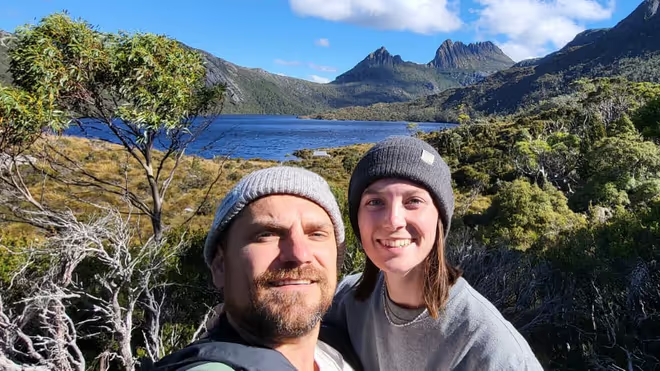
Before any habits or practices: the house sitting exchange is structurally greener than most forms of travel. A home has a standing energy cost whether occupied or empty. Heating to prevent damp, fridges running, security systems drawing power. A sitter who occupies that home uses it efficiently, tends the garden, maintains the property, and does all of this without generating the accommodation demand that builds new hotels or fills short-stay platforms.
We travel primarily by van, mostly in winter when campsite and tourist pressures on popular areas are lowest. We buy secondhand clothing when possible. We avoid accumulating things that need to be stored or transported. These habits are not performances. They come from the same minimalist logic that makes the van life and house sitting combination work financially. Less consumption means fewer logistics, lower costs, and less weight in every sense.
The organic food choice is a health decision first and an environmental one second. The pesticide load in conventionally farmed produce has a measurable impact on soil health and insect populations. Choosing organic where it is accessible. And in Portugal, France, and Italy it is meaningfully more accessible than in many other European countries. Is the better choice on both grounds.
The marker I use: if I drink conventional wine, I feel it the next morning. Organic wine without sulfates, at the same quantity, produces no hangover. The difference is not visible but it is present.
Energy in Someone Else's Home
The Portugal house has thick walls and high ceilings that manage the temperature without any active system. We run a fan at night. Not for heat management but because it keeps the mosquitoes moving. There is no AC and there is no need for one. The house does the work that modern construction delegates to machinery.
This is the most useful thing a sitter can do on any sit: work with the home's natural systems rather than immediately reaching for climate control. Shutters closed on the sunny side during the day. Windows open at night when outside air cools. Clothes air-dried rather than tumble-dried. Washing on a cooler cycle. None of this requires permission. None of it inconveniences the homeowner. It is simply how people who are not wasteful live in any home.
Where there is a question. Adjusting a thermostat, switching off a secondary fridge, changing a heating schedule. The ask is direct and framed correctly: "I tend to be fairly energy conscious. Would you be comfortable if I adjusted the thermostat down a degree or two during the day? I'll make sure the pets' areas stay warm." Most homeowners receive this positively. It signals that the sitter is thoughtful, not demanding. Our what house sitters can and cannot change guide covers the boundaries around making physical or systemic changes to a property.
The van's energy logic transfers directly to house sitting. During sits, we charge the van's power station from solar rather than from the grid. The laptops, phones, and kettle run from stored solar energy during the day. Our grid use on the current sit is truly minimal. A fan at night and lights in the evening. This is not a performance. It is the habit formed from living with a 200Ah battery and knowing what draws from it. Our campervan setup guide covers the power system in detail.

Water and the Garden
Watering at the right time is the kind of small thing that compounds. Early morning or evening watering reduces evaporation significantly compared to midday. In the Portugal summer, this makes a practical difference to how much water the garden actually needs. We water daily because the heat requires it. But at the right time of day, the same water goes further.
Leaking taps are worth reporting and, if minor, worth fixing. A dripping tap loses thousands of litres over a season. In Athens, I repaired chairs that were falling apart and built a proper cat feeding area. In other sits I have done small fixes that needed doing. Not because I was asked. Because I am handy and I was there. Homeowners notice this. Not in a way that requires praise, but in the way that produces a relationship with people who are now contacts across twelve countries. This is the practical version of leaving something better.
Food and Local Shopping
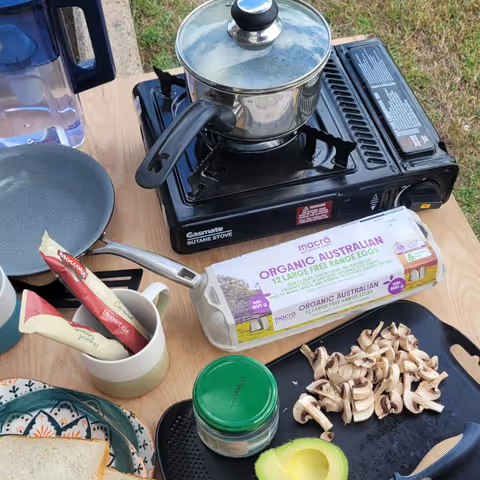
The most sustainable food habit during a sit is also the most enjoyable one: shop at the local market and buy what is in season. This is not an environmental sacrifice. Seasonal local produce tastes better, costs less, and produces less packaging than supermarket alternatives. In Portugal, the weekly market produces everything we need without plastic bags or pre-wrapped portions.
Buying loose vegetables, taking reusable bags, and choosing products with minimal packaging is the baseline. Beyond that, asking the homeowner where they shop and what they recommend is one of the most natural conversation starters in any new place. And it often leads to the best food and the most interesting local connections. Our running errands and groceries guide covers the broader approach to shopping on a sit.
Food waste is reduced by the same approach that works in the van: shop for two to three days at a time rather than for a week. Know what you have. Use what will go off first. Cook once and eat twice where it makes sense. These are not environmental policies. They are just sensible approaches to feeding yourself without waste.
Recycling in a New Country
Portugal has one of the clearest recycling systems we have encountered in Europe. At the entrance to most towns there are clearly marked colour-coded bins. Paper, plastic, glass, general waste. The system is visible, consistent, and simple to follow. We have been better at recycling here than in many of the more complex multi-stream systems elsewhere.
Not every country is this clear. The approach that works everywhere: look at the bins on day one and photograph the labels. Ask the homeowner in the pre-sit video call or welcome message where things go and what the collection days are. Check the local council website if anything is uncertain. The goal is to recycle what can be recycled correctly rather than guessing and contaminating the stream with wishful sorting. Our handling deliveries and mail guide touches on this in the context of packaging that accumulates during a sit.
Being a Good Example Without Making It Anyone's Business
The organic wine we bring homeowners at the start of a sit is the extent of our environmental evangelism. We do not explain our food choices unless asked. We do not comment on the homeowner's recycling habits or their energy setup. We live as we live, and people notice that without needing it explained.
The most effective advocacy for any way of living is being a compelling example of it. If you are healthy, present, and clearly thriving on the choices you make, people are curious in a way that is not triggered by being told things. I would not tell a homeowner that organic food is better for soil health. But if a homeowner sees us buying at the market every few days, eating well, and clearly enjoying the process, the conversation starts naturally if they want it to.
This is the right relationship between personal values and a space that belongs to someone else. The home is theirs. The choices within it, beyond what directly affects the care of the property and animals, are shared space. Tread lightly, live well, leave the place in good condition. The rest takes care of itself.
Our cleaning and etiquette guide and utilities and hidden costs guide cover the practical side of responsible occupancy.
Join TrustedHouseSitters with 25% off. DM us @housesittersguide on Instagram. We answer everyone.
The Green House Sit in Practice
| Area | What we do | Worth discussing with the homeowner |
|---|---|---|
| Energy | Charge from solar where possible. Turn off unused lights and appliances. Air-dry laundry. | Adjusting the thermostat. Switching off a secondary fridge. Heating schedule. |
| Water | Water garden in early morning or evening. Report leaks. Short showers. | Best time for garden watering. Whether a water butt is available. |
| Food | Market shopping, loose produce, minimal packaging, organic where accessible. | Where the best local market or organic shop is. |
| Recycling | Photograph bins day one. Ask the homeowner or check council website. | Collection days and what the local system accepts. |
| Cleaning | Reusable cloths, simple soap, avoid unnecessary chemicals. | Whether the homeowner has preferences about cleaning products. |
| Transport | Walk or cycle for local errands where practical. | Whether a bicycle is available. Local public transport. |
| Repairs | Fix small things that need doing if you have the skills. | Always let the homeowner know what you did and why. |
Frequently Asked Questions
How do you recycle correctly when you arrive at a new house sit?
Photograph the bins on day one and ask the homeowner during the pre-sit video call or in the welcome message. Most homeowners are happy to explain. If the system is still unclear, the local council website almost always has a simple guide. Portugal's system is particularly clear. Colour-coded bins at the entrance to most towns, consistently applied across the country.
Is it appropriate to change the energy settings in a house sit?
Small changes like turning off unused lights, air-drying laundry, and using eco modes on appliances require no discussion. For anything that affects the homeowner's systems. Thermostat settings, heating schedules, switching off a fridge. A direct, friendly question first. Frame it as your preference and their choice, not as a correction of their habits. Our what house sitters can and cannot change guide covers what is within a sitter's remit.
Does house sitting have a smaller environmental footprint than conventional travel?
Generally yes. The model uses existing housing stock that would otherwise sit empty. It reduces the demand that builds new accommodation. When combined with lower-impact travel like campervanning rather than frequent flying, the overall footprint of a house sitting lifestyle is meaningfully lower than resort or hotel-based tourism. The slow travel element. Staying longer in fewer places. Also reduces the transit emissions that dominate the carbon footprint of travel.
How do you eat organically while travelling across different countries?
France and Italy are the best countries in Europe for accessible organic produce. Portugal is also very good. In other countries the range is more limited. The market is always the first option. Loose, seasonal, local produce with minimal packaging. When organic labelling is absent, buying directly from small producers at a market is often a meaningful equivalent. Our honest position: the health and environmental benefits justify the higher cost. We treat food as the investment that keeps everything else working.


Responses
What are your thoughts on this post?