

Home > Blog > The Future of House Sitting: Trends to Watch in 2027
Quick Facts
| Market size 2033 | $1.9 billion now, projected $5.3 billion by 2033. |
| Growth rate | 12.1% annually, faster than wider travel accommodation. |
| Will THS survive? | Yes. 12,000+ active sits give it an unassailable network effect. |
| Biggest risk | Pre-sit emotional manipulation scams, never transfer money outside the platform. |
| Will AI replace sitters? | No, but applications improve and the video call still decides. |
| Tech reservation | Indoor cameras: their privacy cost outweighs the security benefit. |
The house sitting travel market is projected to grow at 12.1% annually through 2033, reaching $5.3 billion. The driver is simple: travel is expensive, remote work is permanent, and house sitting eliminates the biggest cost of both. TrustedHouseSitters will remain dominant — the network effect is too strong to dislodge — but the platform's community tensions, the emergence of younger digital nomad sitters, and the growing sophistication of AI applications will reshape how the model works. The scam to watch is not deepfake video calls — it is emotional manipulation before a sit starts, exploiting homeowners who have invested trust in a sitter before anyone has paid for anything.
If you are interested in getting into house sitting, our book Travel More for Less puts the whole process in one place: clear, step by step guidance from your first questions to your first confirmed sit, and the reviews that open the door to the next one.
The market data is real. The projections come from multiple research firms. But the analysis is mine. Use our 25% discount when joining THS.
The Market Is About to Get Larger and Younger
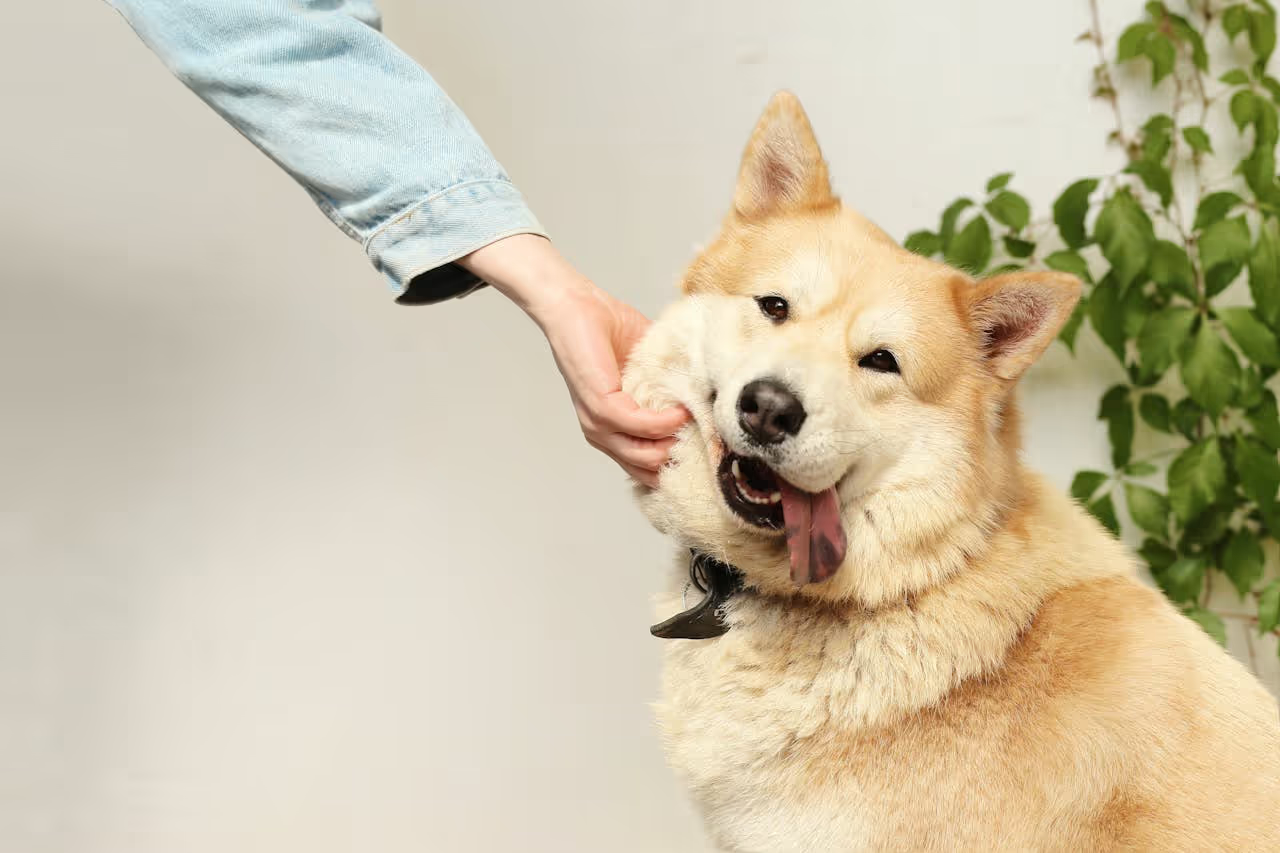
The house sitting travel market is currently valued at approximately $1.9 billion and is projected to reach $5.3 billion by 2033, growing at 12.1% annually. That is faster than the broader travel accommodation market, which grows at around 10%. The related pet sitting segment is growing at a similar rate. These are not small numbers for what is still, in most people's awareness, a niche lifestyle.
The growth driver is not complicated. Travel is more expensive. Housing is more expensive. Remote work has made location irrelevant for a growing proportion of the global workforce. House sitting solves all three problems simultaneously. Free accommodation, meaningful travel, and a base from which to work. The platform infrastructure is already in place. What is coming is a much larger volume of people discovering it for the first time.
The demographic I expect to grow fastest is younger digital nomads. People in their mid-twenties who see house sitting not as an occasional travel hack but as a core financial strategy. The TikTok generation discovering that you can live in a nice home in Portugal for six months, look after a cat and four chickens, and pay approximately €100 in platform fees for the privilege. That is a message that travels quickly online.
Caro and I might end up as something like minor celebrities in this space, which I am still figuring out how I feel about. But the content on housesittersguide.com. The real experiences, the specific costs, the honest reviews.
Is positioned exactly where this incoming wave of curious new sitters will look for information. Our digital nomad visas and house sitting guide and save $10,000 remote work guide are already picking up this search intent.
THS Is Not Going Anywhere
The honest prediction: TrustedHouseSitters will be larger in five years, not smaller.
The community frustration with booking fees, corporate messaging, and the perception of a values shift is real and documented. My platform community vs corporation article goes into this in detail. But frustration with a platform that works does not move people to platforms that work less well. The THS listing volume. 12,000+ active sits. Is the thing nobody else has, and that gap does not close easily.
When the booking fee was introduced, the community vented loudly. The platform continued to grow regardless. This is the network effect in action. Each additional listing makes the platform more valuable to every sitter. Each additional verified sitter makes it more valuable to every homeowner. The only thing that dislodges a network effect is a competing network of comparable or greater size. And no current alternative is close.
Nomador is the platform I most want to grow. Not because it is necessarily better across the board, but because competition makes everything better. Better pricing, better features, more innovation, more choices for sitters and homeowners. My TrustedHouseSitters alternatives article is consistently one of the most searched pages on the site, which tells me the desire for alternatives is real. People just have not found one that satisfies it yet.
The regional platforms. Aussie House Sitters, Kiwi House Sitters, House Sitters America. Are genuine recommendations in their markets. In Australia and New Zealand specifically, they are better than THS for most local sitters and significantly cheaper. If those platforms ever unified their listings under a single global interface, they would have approximately 2,000 listings overnight and a meaningful proposition. That has not happened yet. If it does, the competitive landscape changes.
AI: Profiles Will Get Better, Scams Will Get Smarter. But Not in the Way People Fear
AI-generated profiles are already the norm rather than the exception. Most sitters are using AI to improve their profile descriptions, and the quality of those profiles is going up across the board. Homeowners are receiving better-written, more complete applications than they were three years ago. That is broadly good for the ecosystem.
The authenticity concern. That an AI-polished profile hides the real personality. Is legitimate but partially solved by the video call. A beautifully written profile followed by a poor video call is actually more revealing now than it was before, because the gap is larger. The video call remains the trust moment that no AI currently bridges effectively. Our pre-sit video call guide covers what that call needs to achieve.
The scam I truly think about is different from deepfake video calls. The more plausible threat is this: a sitter applies, builds genuine rapport with a homeowner over days or weeks of communication, and then, just before the sit begins, raises a problem. A missed train, a family emergency, a last-minute expense. The homeowner has emotionally invested in this specific sitter. They do not want to start the search again. A vulnerable homeowner in that position might transfer money to "help" a sitter they have come to trust.
The entry barrier of paying for a platform membership is still the main protection against this. Someone who has paid €200 for a THS Premium account is significantly less likely to be running a pre-sit scam than someone operating through a free Facebook group. The platform fee is not just a revenue model. It is a trust filter. Our lack of platform support article covers what happens when things go wrong and why self-protection matters regardless.
Smart Home Technology: Useful, With One Reservation
Automated feeders, GPS trackers on pets, smart locks. These are truly useful tools on sits and their adoption is going to accelerate. Caro and I are actively considering an automatic feeder for the Portugal cat, who has a talent for waking us at 4:30am with escalating intensity until food appears. A feeder that dispenses at 6am would solve this entirely without disrupting our sleep schedule.
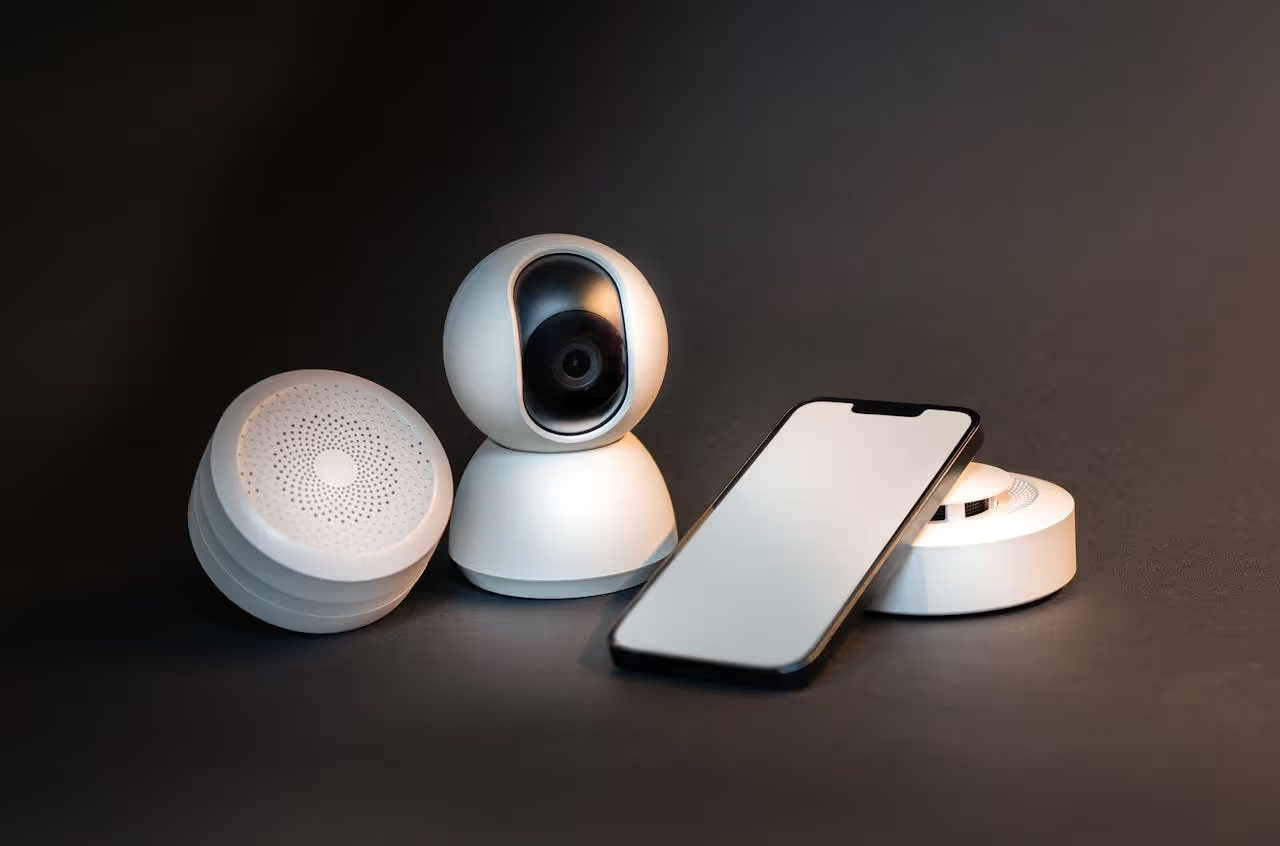
The technology I have a reservation about is indoor cameras. Not for privacy reasons specific to house sitting. Though those concerns are real and our hidden cameras guide covers them in full. But because of what normalising indoor surveillance does more broadly. An outdoor camera pointing at the street provides genuine security information. An indoor camera feeds footage to a tech company's servers and creates a granular record of every movement inside a private home. The incremental security benefit compared to the privacy cost does not, in my view, justify it. It is slightly dystopian how quickly people have accepted this as standard.
The TrustedHouseSitters Search Plus feature is the tech integration I am more interested in. Natural language search for listings is truly useful and the direction of platform intelligence is toward helping sitters and homeowners find better matches faster. That kind of AI integration improves the exchange. Indoor cameras that let homeowners watch sitters make breakfast do not.
The Community Question
My honest view: THS is not a community in any meaningful sense of the word. It is a matchmaking service that some of its members use as a community. The comparison that comes to mind is Workaway. Where there are local catch-ups, a forum that people actually use, and a structure that brings travellers together with purpose. THS has a forum and a Reddit thread used by a small fraction of its member base. For a platform with hundreds of thousands of members, the community interaction feels minimal.
This is not necessarily a criticism. THS does its core job. Matching sitters with homeowners. Extremely well. But the "community" language in the platform's marketing overstates what the platform actually provides. The community of house sitters exists, and it is real and valuable. It just lives mostly in Reddit threads, Facebook groups, and websites like this one rather than inside the platform itself.
The "Same community. Higher standards" initiative from THS is interesting. A private "would you recommend" prompt at the end of the review flow, designed to help THS identify patterns and remove consistently problematic members before the public review system catches them. That is a sensible idea if implemented without algorithmic over-reach. The risk is that any scoring system that operates outside the public review process creates the possibility of a member being penalised based on data they cannot see or contest. The transparency of the current review system is one of its genuine strengths. Supplementing it with private signals needs to be handled carefully.
The Digital Nomad Visa Complexity
This does not concern Caro and me directly. Polish and German passports give us EU freedom of movement across the Schengen zone, which covers the majority of our travel. When we eventually spend extended time in Asia, Australia, or elsewhere, we will assess the options then.
For non-EU sitters, the legal landscape is truly more complex. Several countries that welcomed digital nomads enthusiastically in 2021-2023 are tightening requirements. Canada has moved toward stricter proof of foreign income requirements. The UK ETA and similar entry systems add friction for frequent travellers. This complexity makes the financial logic of house sitting stronger, not weaker. If you are spending significant money on visa applications and border compliance, eliminating accommodation costs becomes even more financially significant. Our digital nomad visas and house sitting guide is updated regularly as these rules change.
The House Sitting Market in 2027: My Prediction
More sitters, more homeowners, more sits. The market will grow because the conditions that drive it. Expensive travel, expensive housing, remote work. Are not going to reverse. THS will be larger and probably still structurally dominant, though I hope Nomador or the regional network platforms make meaningful inroads.
The sits available to experienced sitters will be better on average, because the growing pool of applicants increases competition for desirable listings and incentivises homeowners to improve their listings to attract strong candidates. That is already happening. The number of beautiful, well-presented listings on THS has increased noticeably in the three years I have been using it.
The biggest personal change for Caro and me: housesittersguide.com will be an established resource in this space, the referral credits will continue compounding, and we will likely have years of premium access at zero additional cost. That was always the point. Build something that serves the community and let the mechanics of the platform reward us for doing it.
If you are not yet on TrustedHouseSitters, now is an excellent time to join. The platform is growing but the best sits still go to sitters with established profiles, and profile quality takes time to build. Start now, build the record, and the sits compound from there.
Join TrustedHouseSitters with 25% off. DM us @housesittersguide on Instagram. We answer everyone.

Frequently Asked Questions
Is house sitting growing as a travel trend?
Yes. Significantly. The house sitting travel market is valued at approximately $1.9 billion in 2024 and projected to reach $5.3 billion by 2033 at a 12.1% annual growth rate. The related pet sitting market and broader alternative accommodation sector are growing at comparable rates. The drivers are structural: rising travel and accommodation costs combined with permanent remote work flexibility.
Will TrustedHouseSitters remain the dominant platform?
Almost certainly, unless a competitor builds a comparable listing volume. The network effect. More listings attracting more sitters, more sitters attracting more homeowners. Is difficult to overcome. Nomador is the most credible alternative in Europe, particularly for France. Regional platforms like Aussie House Sitters are better value and better suited for their specific markets. But for global coverage, THS has no current equal.
What is the biggest risk to watch out for as house sitting grows?
Pre-sit emotional manipulation scams. Not deepfake video calls. The more plausible threat is a bad actor who builds genuine rapport with a homeowner over weeks of communication, then engineers a last-minute financial request before the sit starts, when the homeowner is emotionally invested and does not want to restart the search. The platform membership fee is the primary deterrent. Never transfer money to a sitter outside the platform for any reason.
Will AI replace the human side of house sitting applications?
No. But it will raise the baseline quality of all applications. AI-polished profiles are already common and improving overall application quality across the platform. The video call remains the trust moment that distinguishes genuine sitters from well-written ones. A strong profile followed by a poor video call is more revealing now than before AI. The gap is larger and more visible.


Responses
What are your thoughts on this post?