

Home > Blog > The Benefits of House Sitting
Quick Facts
| Our total accommodation saving | Over €24,000 across 3 years |
| Locations sat | 20 locations across 12 countries |
| Longest upcoming sit | 6 months in Portugal (cat and four chickens) |
| Our monthly living costs | Around €600 together, food and transport only |
| Platform we use | TrustedHouseSitters, membership from $97/year |
| Who it works for | Remote workers, nomads, retirees, career-breakers, animal lovers |
Three years, 20 sits and 12 countries have saved us over €24,000 in accommodation alone, and our joint monthly costs sit around €600. A chalet in Leysin would have cost €650 a night for ten days: the money makes it possible, the animals and friendships are why we stay.
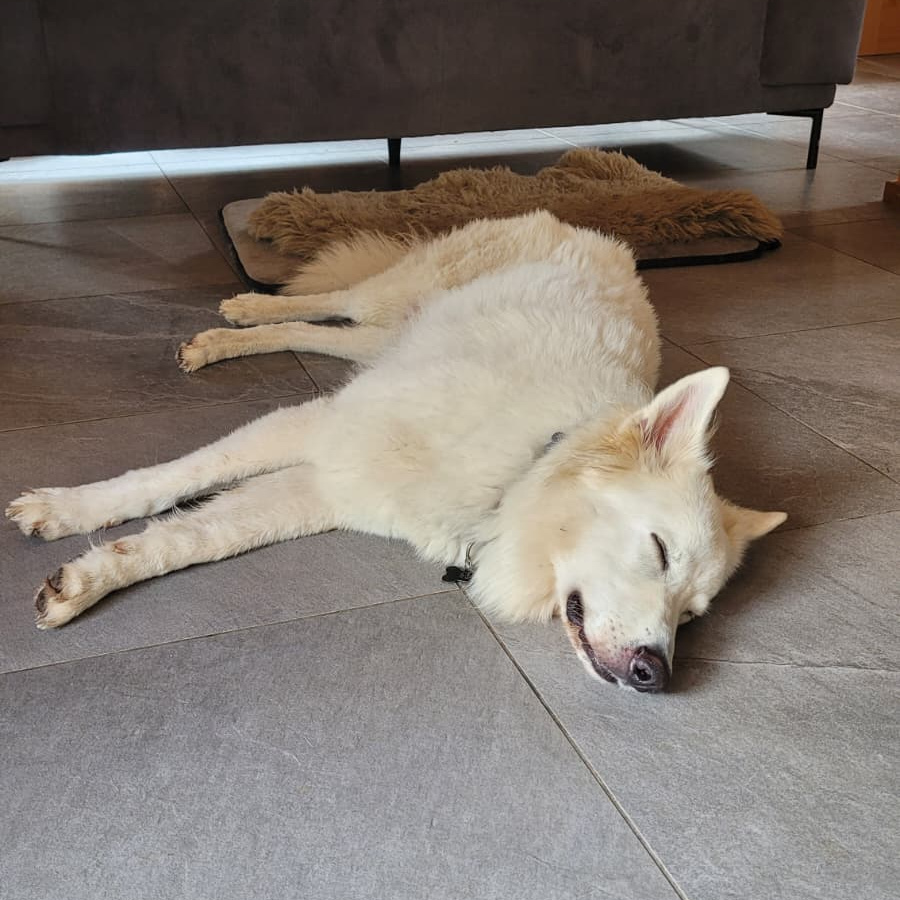
We dropped our bags on the polished wooden floor of a three-storey Swiss chalet and the silence broke immediately: the happy panting of an enormous Swiss Shepherd bounding toward us from the hallway. Outside, the Alps stood in the kind of stillness that makes you forget whatever you were worried about before you arrived.
Caro checked Airbnb out of curiosity. Smaller homes in that village, Leysin, were renting for €650 a night. We were staying for ten days. That is €6,500 in accommodation costs we simply were not paying, for one of the most beautiful places either of us had ever been. All we had to do was care for one incredible dog.
That was not luck. That was house sitting.
Is house sitting worth it? Over three years, across 20 locations in 12 countries, Caro and I have saved over €24,000 in accommodation costs alone. We are about to begin our longest sit yet: six months in Portugal, looking after a cat and four chickens. Not paying rent for six months is not a travel hack. For many people it is life-changing.
Here is exactly why.
The Money: What €24,000 in Three Years Actually Means
Accommodation is almost always the single largest cost in travel and in life. Remove it and everything changes.
The €24,000 figure is accommodation only. It does not include the meals we cooked in full kitchens instead of eating out every night, the laundry we did for free instead of finding a laundromat, or the utilities that simply came with the house. The real saving is higher. But even the conservative number tells the story clearly enough.
| Expense | Standard travel | House sitting |
|---|---|---|
| Accommodation | €800–€2,000 per month | €0 |
| Utilities | Included in rent | €0 |
| Kitchen access | Eating out most meals | Full kitchen, cook at home |
| Laundry | Laundromat cost | Washing machine included |
| Effective monthly cost | €1,500–€3,000+ | Around €600 (food and transport) |
Our joint monthly costs across Europe sit at around €600. That covers food, occasional transport, and small incidentals. Two people, full homes in places like Tuscany, Greece, and Switzerland, for less than most people spend on a week away.
The longer the sit, the more pronounced the effect. Six months of zero rent in Portugal means every euro coming in becomes savings rather than monthly expenses. For someone working remotely, that is six months of genuine financial progress. For someone on a pension, it is the difference between a comfortable life abroad and a stretched one. For someone saving toward a deposit or paying down debt, six months of accommodation-free living can move the timeline forward by years.
This is not just a travel strategy. It is a financial planning tool. For a full breakdown of whether the platform membership cost makes sense for your situation, our guide to whether house sitting is worth it runs the honest numbers.
The Animals: Getting Your Pet Fix Without the Commitment
Here is the truth about why Caro and I are so passionate about house sitting, beyond the financial case.
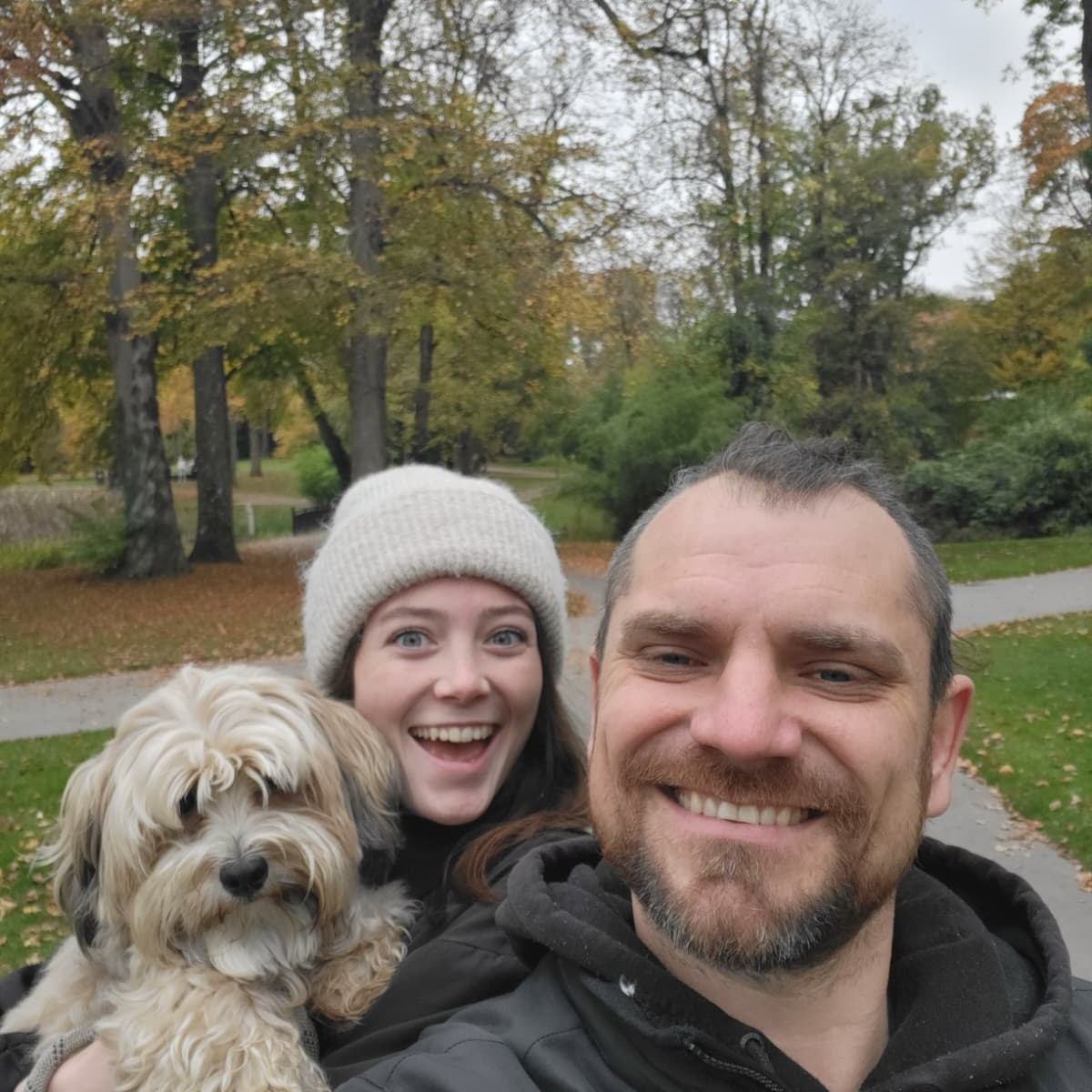
We are obsessed with animals. Genuinely, uncomfortably obsessed. When we are driving through Europe in the van and Caro spots a dog through the window, she will stop mid-sentence to tell me exactly how fluffy, cute, or beautiful it is. I regularly warn her not to approach unknown dogs on the street because she has no idea whether they are safe. She does not listen. She goes straight in: hands out, down at eye level, already making friends before I have finished the sentence. Cats get exactly the same treatment. We both make a meow sound when we drive past one. We cannot help it.
We are at a stage in life where we want to travel and see the world. Owning a pet right now would make that incredibly difficult. Travelling with animals is stressful for the owners and even more so for the animals themselves. The costs, the logistics, the guilt of putting a pet through constant disruption. It is not fair on anyone. My dad owned 13 cats in Cyprus with another 20 or so neighbourhood cats that turned up daily for feeding, so I grew up with animals as a constant presence. Caro had two rescue cats before we started travelling. The absence of animals in our daily life is something we both feel.
House sitting solves this completely. We move into a home, build a routine with the animals over the course of the sit, and get everything we love about having pets without the permanent commitment. The animals do not know the difference between a permanent person and a temporary one. They just know whether you are paying attention, and if you are, they give you everything back.
We will have our own pets eventually. That is not a question. But right now, while we are still excited about the world and what is in it, house sitting is the closest thing to owning pets that works for our life. And it works beautifully.
The Slow Life: Experiencing a Place Rather Than Ticking It Off
I have stayed in hotels, hostels, and Airbnbs across a lot of countries. There is a meaningful difference between all of those and a house sit, and it is not primarily about comfort or cost. It is about how you experience a place.
In a hotel or hostel, no matter how comfortable the room is, you are still a tourist. You feel the pressure to fill your day, to justify being somewhere by seeing its attractions, to move on before you have really settled. The room is functional. It does not feel lived in.
A house sit is a home. You have a neighbourhood. You have a dog pulling you through the same streets every morning until you start recognising faces and faces start recognising you. You have a kitchen where you make breakfast and a couch where you do nothing on a Wednesday afternoon because nothing is exactly what you felt like. The nearby bakery gets familiar. The local supermarket stops feeling foreign. You stop navigating and start living.
What Caro and I actually do during a sit is split our time. Two or three days a week we go and explore the area, visit the things worth seeing, travel to a nearby town. The rest of the time we settle into the house, watch a film, catch up on work, take the dog somewhere new, cook a proper dinner. That rhythm is what real travel feels like to us. Not a rush to see everything before checkout, but actually being somewhere long enough for it to mean something. A hotel room with just a television does not give you that, regardless of the star rating.
The Community: The Benefit Nobody Talks About
This is the one that surprised us most, and it is the reason I would call house sitting life-enriching rather than just financially smart.
When you sit for someone's home, you are not booking a property through an algorithm. You have video calls before you arrive. You understand how they live and why they love the place they have chosen to make their home. By the time you arrive, you already have a relationship with these people. You then spend days or weeks living inside their life, caring for the things they care most about.
Most homeowners are generous in proportion to the trust they have placed in you. They share their favourite spots, the restaurants that do not need a sign in four languages outside, the walk that no guidebook mentions. Some introduce you to their friends. Some invite you to come back.
And some become real friends.
Not every homeowner stays in your life after a sit ends. Many do not. But some do, and those connections accumulate in a way that changes how you experience the world. As I get older I understand more clearly that friendships are the most valuable thing you can collect. Genuine connections with people who love their corner of the world, who are glad you spent time in it, who ask when you are coming back. You no longer have a hotel to look forward to in a city. You have friends who will tell you to come stay when you are next passing through.
That is not something you can book. It is something house sitting makes possible.
None of these relationships start by accident. They start with an actual conversation before the sit begins. Our pre-sit video call guide covers how to turn that first call into something more than a formality.
In Athens, at the end of a sit, the homeowner asked if we could stay an extra night so we could all have dinner together. We said yes. Two weeks later she invited us back to meet her partner and cooked for us again. We are still in contact with her, and whenever we are heading back to Greece we let her know in the hope of catching up. That sit started as a listing on a platform. It became a friendship and a standing invitation.
In Switzerland, the sit ended with all of us taking a cable car to the top of a mountain for drinks and a meal as the sun went down over the Alps. Before we left they invited us back for a skiing trip in March. We had to decline because of our travel plans, but the fact that the invitation existed at all says everything about what the relationship had become over the course of one sit.
These are not unusual stories. They are the version of house sitting that does not make it into the financial comparisons or the platform marketing, but it is the version that keeps us coming back.
Has a house sit turned into a genuine friendship for you, or an invitation back? We'd love to hear the story in the comments.

Who This Works For
House sitting tends to be talked about as a nomad strategy. It is a good one. But the benefits apply across three quite different groups of people, and the article reads differently depending on which one you are.
Remote workers and digital nomads get the most obvious benefit: accommodation costs drop out entirely while the infrastructure needed to work comes standard. Reliable wifi, a desk, a quiet space, a real address. If your income follows you, house sitting removes the largest variable in what it costs to live and work from interesting places. Our guide to remote working while house sitting covers the practical side.
Career-breakers, retirees, and long-term travellers get a different kind of value. Taking six months away from a career is financially daunting precisely because accommodation costs do not pause while income does. On a pension, the difference between a comfortable life abroad and a stretched one often comes down to housing. House sitting changes that calculation fundamentally. Long-term sits of three to six months appear regularly on TrustedHouseSitters, which maps directly onto the typical length of a career break or a winter spent somewhere warm.
If you're thinking about this as more than a single trip, our guide to house sitting as a career structure covers the difference between using it to eliminate expenses versus trying to earn directly from pet care.
Couples and solo travellers testing a country before relocating get something different again: the experience of actually living somewhere rather than visiting it. Deciding whether to move to Portugal, Italy, or somewhere in southern France is a significant decision, and a two-week tourist visit tells you very little about whether you could really live there. A house sit in a residential neighbourhood, shopping locally, navigating daily life without a tourist map, tells you the truth. We are using exactly this logic for our upcoming six-month Portugal sit, which is as much a test of whether we want to be there long term as it is simply a place to base ourselves.
Whether you're doing this solo or as a couple changes the experience meaningfully too. Our guide to house sitting solo versus as a couple covers how that dynamic actually plays out.
House Sitting vs. Hotels and Airbnb: The 2026 Comparison
Laid out side by side, the practical differences are stark:
| House sitting | Hotel or Airbnb | |
|---|---|---|
| Nightly cost | €0 | €80–€650+ |
| Location | Residential streets, real neighbourhoods | Tourist areas |
| Kitchen | Full kitchen | Often none |
| Laundry | Washing machine included | Laundromat or paid service |
| Animal companionship | Dogs, cats, daily connection | Empty room |
| Sense of belonging | Neighbours, rhythm, local life | Passing through |
| Homeowner connection | Real relationship | Algorithm |
| Length of stay | Days to six months | Expensive long-term |
Conclusion
The money is real and the saving is significant. Over €24,000 in three years, purely on accommodation, is the kind of number that changes what your life is capable of. But it is not why Caro and I are still doing this.
We are doing it because of a Swiss Shepherd who used our feet as a pillow in the Alps. Because of a French Bulldog in Athens who stared at us sadly as we walked away. Because of slow Tuesday afternoons on someone else's couch in a town we would never have understood any other way. Because of homeowners who became friends and cities that now feel like somewhere we belong.
The money makes it possible. The rest is why it is worth it.
Portugal is next. Six months, a cat, four chickens, and a country we are excited to understand properly. If you have questions about getting started or making the lifestyle work practically, DM us @housesittersguide on Instagram. We answer everyone.

Frequently Asked Questions
How much money can you actually save through house sitting?
It depends on where you sit and for how long, but the savings are substantial. Caro and I have saved over €24,000 in accommodation costs across three years and 20 locations. That figure is accommodation only and does not include kitchen savings, laundry, or utilities. A single month in a major European city can save €1,000 to €2,000 compared to renting or staying in hotels. Six months in Portugal removes what would otherwise be a significant living expense entirely.
Do you need experience with animals to start house sitting?
No formal experience is required, but genuine care for animals is essential. Most homeowners are looking for someone responsible, communicative, and clearly comfortable around their specific pet. Starting with shorter sits close to home builds verified reviews quickly. Our guide on getting house sits without prior experience walks through exactly how to do that.
Can you house sit and work remotely at the same time?
Yes, and the two work very well together. Most sits include reliable wifi and a proper working space as standard. The key is being honest before you confirm about your working hours and checking that the care requirements are compatible with your schedule. Our remote working and house sitting guide covers the practical considerations.
How do you find sits consistently without long gaps between them?
Apply well in advance, keep a strong profile with recent reviews, and use saved searches with instant notifications. On TrustedHouseSitters you can set location alerts so new listings come through as soon as they are posted. We typically have the next sit confirmed before the current one ends. Flexible travel dates help significantly in filling any gaps.
Is house sitting safe for solo travellers?
Yes, with standard precautions. The platform's verification system, video calls before confirming, and the review ecosystem create a trustworthy framework on both sides. Our house sitting safety guide covers what to look for in listings and how to handle early concerns.
What is the difference between house sitting and a normal holiday rental?
The relationship, the location, and the experience are all fundamentally different. A holiday rental puts you in a tourist area with no connection to the place or the people in it. A house sit puts you in a real neighbourhood with animals to care for, a homeowner who has shared their local knowledge, and enough time to actually settle. The financial difference is also significant: house sitting costs nothing, while holiday rentals in desirable locations can run to hundreds of euros per night.


Responses
What are your thoughts on this post?