

Home > Blog > Food to Leave for a House Sitter
Quick Facts
| Quick Facts | |
|---|---|
| Is food required from the homeowner? | No, sitters expect to buy their own groceries |
| Best fridge approach | Empty, or one cleared section, ready for the sitter to fill |
| Perishables about to expire? | Leave them with a note saying "please use up" |
| Dry basics genuinely appreciated | Coffee, salt, pepper, Olive oil, spices |
| Should homeowners leave cash for food? | No, this is not standard practice |
| What we have actually received instead | Money left only for pet or household emergencies |
| A shared meal on overlap night | Not expected, but common and genuinely lovely when it happens |
| What we bring on arrival | A small bottle of bio white wine, usually €8-10 |
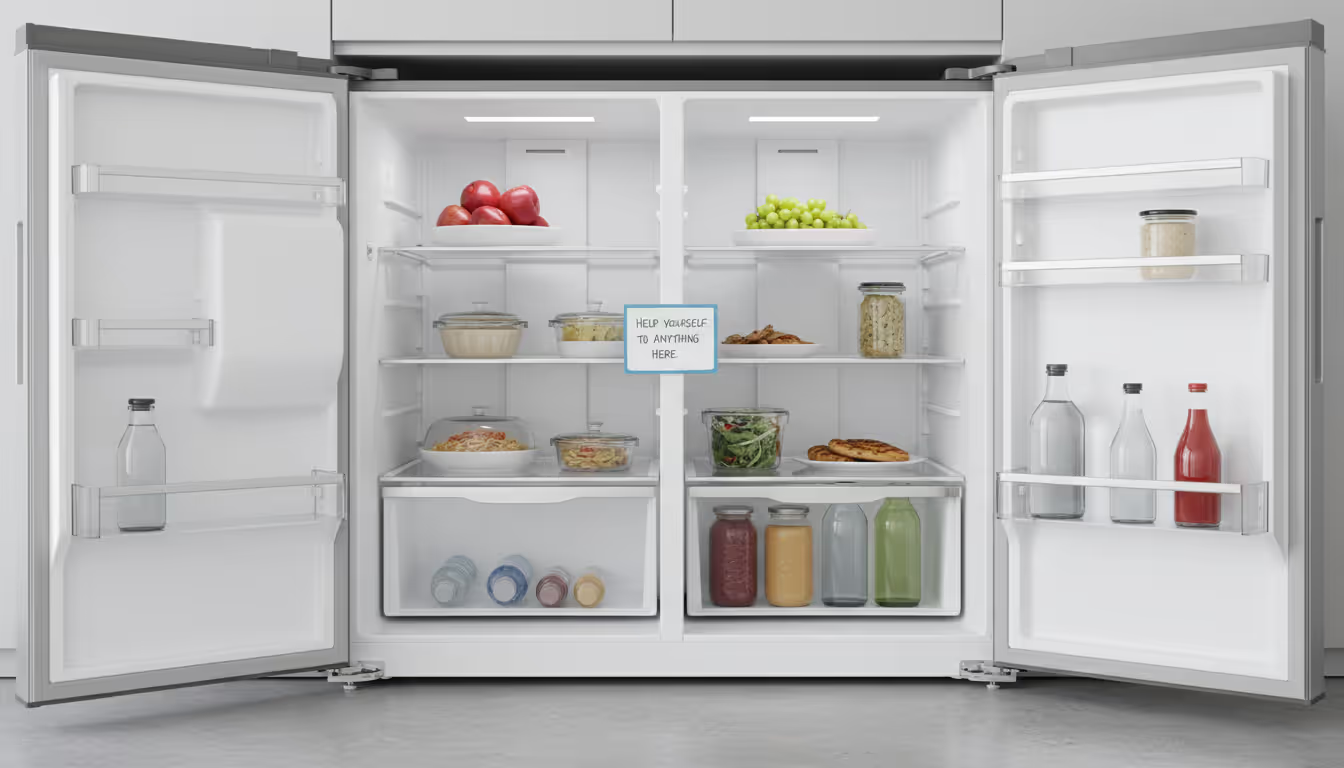
No, you do not need to leave food for your house sitter, and honestly, we would rather you didn't try to guess. The single best thing a homeowner has ever done for us on this front wasn't a stocked fridge. It was an empty one, with a few dry basics in the cupboard and nothing perishable we felt obligated to use up before it went off.
We have arrived at multiple sits now, including Cries in Switzerland and both our stays in Portugal, to a fridge that had been deliberately cleared out before we got there. No guesswork about what we might or might not eat, no half-used jars we felt awkward finishing, no wasted food from mismatched dietary preferences. Just an empty space, ready for us to fill with exactly what we needed for the length of the stay. It sounds small. After 20 sits, it has become one of the clearest signals of a homeowner who has genuinely thought this through.
If you are interested in getting into house sitting, our book Travel More for Less puts the whole process in one place: clear, step by step guidance from your first questions to your first confirmed sit, and the reviews that open the door to the next one.
Do You Have to Provide Food for Your House Sitter?
No. Across 20 sits, we have never once expected a homeowner to leave food for us.
The reason an empty fridge works so well is straightforward once you think about it from a homeowner's side. You have no way of knowing a sitter's dietary preferences. Vegan, vegetarian, allergies, simple personal taste, guessing wrong means food goes to waste either way, and a full fridge you cannot use is arguably worse than an empty one.
That said, our actual preference is more specific than "leave it empty and say nothing." If you have perishables that are genuinely going to expire during the sit, cheese, milk, half a bag of vegetables, the simplest and most useful thing you can do is leave them with a note that says please use this up. We appreciate that far more than either a fully stocked fridge or a silently empty one with no context. It removes the guesswork about what is actually meant for us versus what you are planning to come home to.
Anything that will not go off during the sit, we tend to leave alone, or restock if we end up using it. That is simply respectful of what is yours.
Here in Portugal, the homeowners left the fridge completely empty before our six-month sit, because they had done this before and knew exactly how well it works. We filled it with our own groceries from day one. For a shorter sit, the same logic applies at a smaller scale, one cleared shelf is enough, with a clear note about what is off-limits and what is fair game.
Every homeowner handles this differently. We have never encountered a formal system with labelled shelves or written instructions. A short conversation during handover or the video call has always been enough to sort it out.
The Dry Basics We Genuinely Appreciate
Where our position differs from "leave nothing at all" is with dry kitchen basics. Coffee, salt, pepper, cooking oil, and general spices are things we are genuinely glad to find, particularly on a shorter sit of a week or two.
The reasoning is simple. These are not perishable, so there is no waste risk either way. But making a dedicated shopping trip just to buy salt and pepper for a one-week stay feels wasteful in its own way, buying a full container of something we will use a tiny fraction of before we leave. If it is already there, we use it and top it up if we run low.
For longer sits, this changes. On our current six-month Portugal stay, we bought our own spices from early on, since we knew we would work through a full container ourselves over that stretch of time. The dry basics matter most for shorter sits specifically, where the mismatch between what you need and what makes sense to buy is at its widest.
What to Leave vs. What to Skip
| Item | Leave it? | Why |
|---|---|---|
| Perishables about to expire | Yes, with a note | Reduces waste, removes any guesswork |
| Dry basics (coffee, salt, pepper, oil, spices) | Yes | Genuinely useful, especially on short sits |
| A fully stocked fridge | No | You can't know dietary preferences, often goes to waste |
| Cash for groceries | No | Not standard, can feel awkward rather than generous |
| A welcome gift | Optional, but appreciated | A small, thoughtful gesture, not an obligation |
| A shared meal on overlap night | Not expected, but lovely when it happens | Depends entirely on genuine connection, never plan around it |
The Best Food Welcomes We Have Received
Two specific moments stand out, and they happened at opposite ends of a sit.
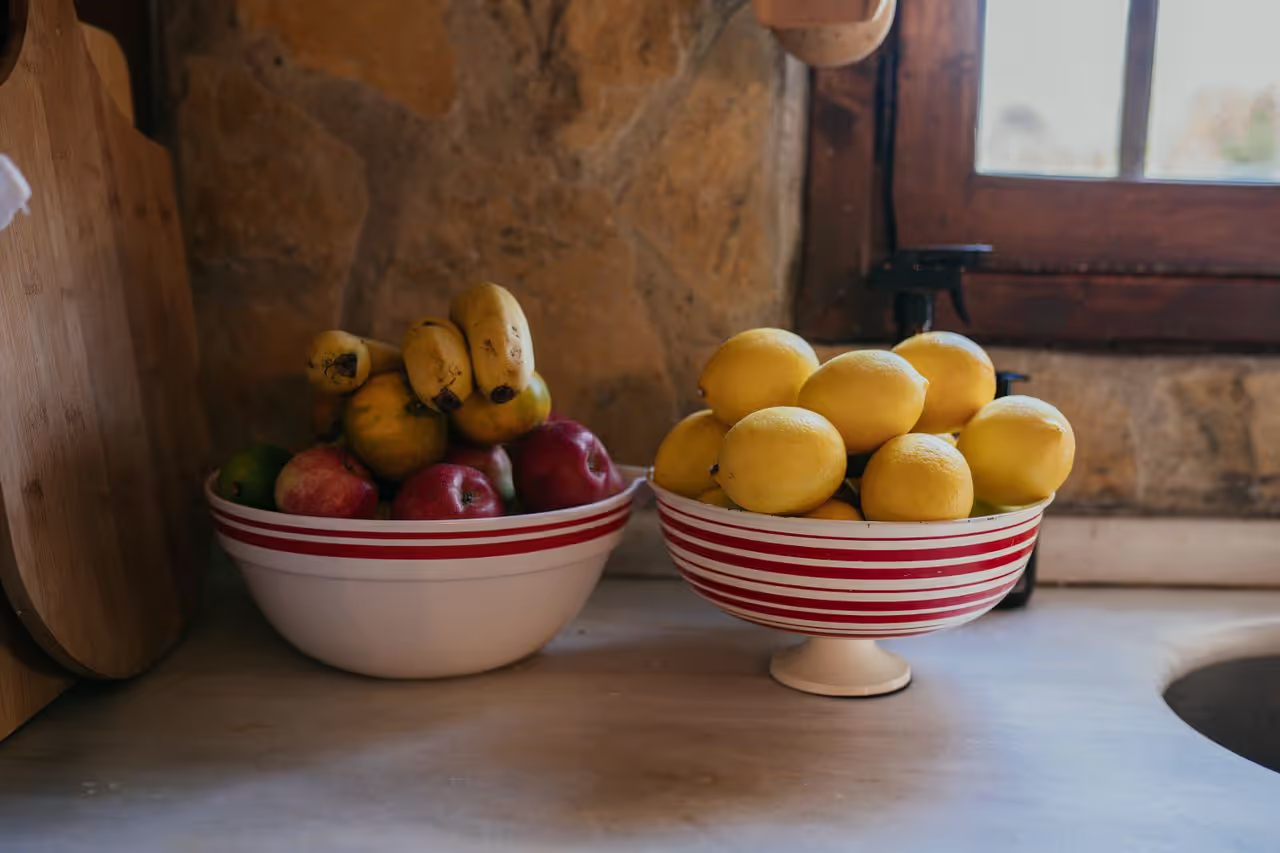
In Cortona, Italy, we were looking after Teddy and Lucca, two Labradors, for ten days. The homeowners invited us over on arrival day with a vegetable soup made from leftover vegetables that would otherwise have gone off during the sit, along with fresh bread and butter. It was one of the more delicious welcomes we have had, and it set a warm tone for the entire stay before we had even properly unpacked.
In Athens, the gesture came the other way around, as we were leaving. The homeowner told us to help ourselves to a bottle of olive oil from their family's own property, fresh, slightly bitter, and genuinely delicious. It was a small, generous send-off rather than a welcome, and it has stuck with us as one of the nicer parting gestures we have had on any sit.
Neither of these is about the everyday fridge. They are one-off gestures, tied to arrival or departure, and completely separate from whether the fridge itself was stocked or empty during the sit in between. That distinction matters, and it leads into something else worth mentioning.
When There Is Overlap: The Shared Meal
Separate again from anything in the fridge, something genuinely lovely happens on most of our sits where we overlap with the homeowners for a night before they leave. Most of the time, that has meant ordering a pizza together and having a proper meal in the same house.
This is not expected, and we would never suggest a homeowner should plan for it. But when there is a real overlap and a genuine connection forms, sharing a meal together tends to break down whatever formality exists between a homeowner and a sitter who, up to that point, have mostly only spoken through messages. It has been one of the more consistent, unplanned pleasures of house sitting for us, and it has nothing to do with what is or isn't stocked in the fridge. It is simply two people who are about to trust each other with a home, sharing a table for an evening first.
Should You Give Your House Sitter Extra Money for Food?
No. This has never happened to us in 20 sits, and if it did, we would genuinely feel uncomfortable accepting it.
The arrangement we agree to every time is a fair exchange: the property, utilities, and pet or animal food covered by the homeowner, in return for us looking after the home, the animals, and often the garden. Our own food is our responsibility, the same way it would be anywhere else we chose to live. Bringing money into that specific part of the arrangement blurs something that works cleanly as it is.
What we have actually received money for, across our first sit in Bochum, our sit in Valencia, and now Portugal, is emergencies. A pet health issue, a household repair, something unexpected. Never our own groceries. That distinction matters. We are not employees, and a house sit is not paid work.
If you want to do something generous for your sitter, a small welcome gift on arrival lands far better than cash earmarked for groceries. Our welcome gift guide covers exactly what tends to work well.

What We Actually Bring and Cook
On the drive toward a new sit, we usually stop at a local shop and pick up a small bottle of bio white wine, typically €8 to €10 in Europe, as a token gesture on arrival. It costs very little and is always well received.
Once we are settled, our typical shopping list is simple: salad vegetables, feta or mozzarella, a protein like sausages or steak, and pasta or rice. We eat straightforward home-cooked meals rather than anything elaborate. After stretches of time cooking in the van, having a real kitchen again is one of the genuine pleasures of a sit.
Our go-to meal after a period of van cooking is roasted vegetables, simple, filling, and built entirely from whatever is already in the fridge and the local shops. Every morning we make coffee with fresh milk, nothing complicated, just a proper home routine after weeks of managing with less.
There is a real financial upside to this too, one that is easy to underestimate. Cooking our own groceries rather than eating out saves roughly €30 to €50 per day compared to restaurant meals at a conservative estimate. Over a two-week sit, that is €400 to €700 that stays in our pocket rather than going to restaurants, on top of the accommodation itself being free. Our full breakdown of what house sitting actually costs covers this alongside the accommodation savings for the complete financial picture.
Quick Fridge Handover Checklist for Homeowners
| Step | What to do |
|---|---|
| Clear the fridge | Remove anything that won't survive the length of the sit or allow the house sitters to use it. |
| Flag perishables | If something can't be used up before you leave, leave it with a note saying "please use up" |
| Leave dry basics | Coffee, tea, salt, pepper, oil, spices, if you have them on hand |
| Clear a shelf | Even if you can't empty the whole fridge, one obvious space is enough |
| Set expectations | A short note or a mention on the video call or welcome tour covers what's off-limits vs. fair game |

What This Actually Means for New Sitters
If you are new to house sitting and unsure what to expect, the honest answer is: expect very little, and be pleasantly surprised by whatever you find. Bringing your own groceries as a default is the right mindset. Head to the local shops on your first day if you can. It orients you to the neighbourhood, gets you out of the homeowner's way during their own departure logistics, and means you are properly set up from the start.
Use what you are offered from the fridge. Replace anything you open that was not near expiring. Leave the kitchen clean, and leave the fridge in better condition than you found it. If you are travelling as a couple, coordinate your shopping so you arrive with something rather than empty-handed. Even a five-minute stop at a local shop for a small token gift is worth it if you are travelling with your own supplies in a van.
Our profile guide and getting started guide cover the wider picture of what to expect walking into a first sit, beyond just the kitchen. If you are wondering what is and is not appropriate to use in someone else's home more broadly, our guide on what house sitters can and cannot change covers that same boundary question. And if you are wondering what to do with any food you have bought yourself once the sit ends, our house sit checkout guide covers exactly that.
Practical Notes From the Road
Food etiquette on a house sit is genuinely less formal than most people expect. There is no standard protocol and no written rules across any of our 20 sits. What there is instead is a mutual understanding between two people who are both trying to make an unusual arrangement work well, and a bit of common sense fills in the rest.
This has held true whether we were settling into a sit in France, a longer stay in Switzerland, or our current stretch in Portugal. The specific country changes what is in the local shops and what a homeowner's cupboard tends to look like, but the underlying approach, buy your own, use what's offered sensibly, replace what you finish, stays exactly the same everywhere.
Conclusion
The honest answer to food expectations on a house sit is simpler than most guides make it sound. Homeowners are not required to leave anything. An empty fridge, or one cleared shelf, with perishables flagged for use and a few dry basics in the cupboard, is the most thoughtful and practical approach we have encountered across 20 sits.
Cash for groceries is not standard and can make things awkward rather than generous. A one-off welcome or farewell gesture, the Cortona soup or the Athens olive oil, is a lovely thing on its own terms, separate entirely from the everyday fridge question. And if there is genuine overlap and a real connection, a shared meal together is one of the nicest, most unplanned parts of the whole experience.
Homeowners who leave perishables available reduce waste and start the sit generously. Sitters who bring a small welcome gift set a tone of appreciation from the first moment. Both cost almost nothing and produce goodwill that outlasts the sit itself. The homeowners in Cortona and the olive oil from Crete are remembered years later. That is the actual return on a €5 bottle of wine and a bag of good olives.
Have you had a particularly good or particularly awkward food handover experience, from either side of the arrangement? Drop it in the comments below. I read every one.
Caro and I have completed 20 house sits across 12 countries, driven 19,000km in Australia and 24,000km in our 1998 VW T4, and saved over $26,500 in accommodation costs over three years of house sitting. If you have questions about food expectations for house sitting, send us a message on Instagram, we read every DM.

Frequently Asked Questions
Do homeowners have to leave food for their house sitter?
No. Sitters expect to buy their own groceries. The most helpful approach is an empty fridge or one cleared shelf, with any perishables about to expire flagged with a note rather than left ambiguous. Dry basics like coffee, salt, pepper, and oil are a genuinely appreciated bonus, particularly for shorter sits.
Should I leave money for my house sitter to buy food?
No, this is not standard practice and can make the arrangement feel awkward rather than generous. A house sit is a fair exchange, accommodation and utilities for pet and home care, not paid work, and food money sits outside that arrangement. A small welcome gift on arrival is a better way to be generous if you want to do something extra.
Is it better to leave a full fridge or an empty one for a house sitter?
An empty fridge, or one cleared section, is almost always better. Homeowners cannot know a sitter's dietary preferences, so a full fridge often goes to waste regardless of good intentions. An empty space that the sitter can fill with exactly what they need removes all the guesswork.
What food basics should I leave for a house sitter?
Dry, non-perishable staples: coffee, salt, pepper, cooking oil, and general spices. These do not risk going to waste and save a sitter an unnecessary shopping trip, particularly on a sit of a week or two, where buying a full container of something just for a short stay feels wasteful.
Should homeowners and house sitters share a meal together?
If there is genuine overlap before the homeowner leaves, sharing a meal, often as simple as ordering a pizza together, is a lovely and fairly common way to break the ice. It is never expected, but when a real connection forms, it tends to make the rest of the sit feel far more comfortable for everyone.
Does cooking your own food during a house sit actually save money?
Yes, meaningfully. Cooking groceries rather than eating out saves roughly €30 to €50 per day compared to restaurant meals, which adds up to €400-€700 over a two-week sit. Combined with free accommodation, this is one of the more underestimated financial benefits of house sitting.


Responses
What are your thoughts on this post?