

Home > Blog > What to Do If a Pet Needs to Be Put Down During a House Sit
Quick Facts
| Quick Facts | |
|---|---|
| Whose decision is it? | The homeowner's, always. A sitter can inform, document, and support, but should not be the one deciding |
| The one thing worth doing before any sit with an elderly or frail pet | Ask the homeowner directly what they'd want done if things got worse during the sit |
| If you can't reach the homeowner or emergency contact, and a vet says the pet is suffering | Follow the vet's professional recommendation, and get it documented |
| Always get this in writing | Any decision this serious, once made, should be confirmed by the homeowner in a message, not left as a verbal or emotional in-the-moment agreement |
| Our own experience | A chicken named Kiwi, on a six-month sit in Portugal |
| Are you responsible if a pet needed to be euthanised through no fault of your own? | No, and you shouldn't carry that blame. This is different from a situation caused by genuine negligence |
Kiwi, a chicken on our six-month Portugal sit, declined over months until she could no longer walk. We sent videos, got the homeowners on a call, and had their euthanasia decision in writing before acting. That decision belongs to them, never the sitter.
This is not veterinary or legal advice. We are not vets or lawyers. This article reflects our own experience and our own reasoning, not clinical guidance. If you're facing this situation right now, the actual authority to rely on is a qualified vet, and the actual decision belongs to the homeowner.
This isn't a hypothetical for us. During our current six-month sit in Portugal, we watched a chicken named Kiwi's condition decline over months, and we were the ones who had to tell the homeowners what we were seeing, get on a video call to show them, and eventually hear them say, through real emotion, that euthanasia was the right decision. We didn't make that call. We made sure they had everything they needed to make it themselves, and we made sure we had it in writing before we acted on it. In her final hours, we made sure she had everything she loved.
If you are interested in getting into house sitting, our book Travel More for Less puts the whole process in one place: clear, step by step guidance from your first questions to your first confirmed sit, and the reviews that open the door to the next one.
This guide is built entirely around what actually happened, not theory, and it covers what we think matters most: who should actually be making this decision, how to prepare for it before it happens, what to do if you're ever left with no one to reach, and how we chose to spend Kiwi's last hours with her.
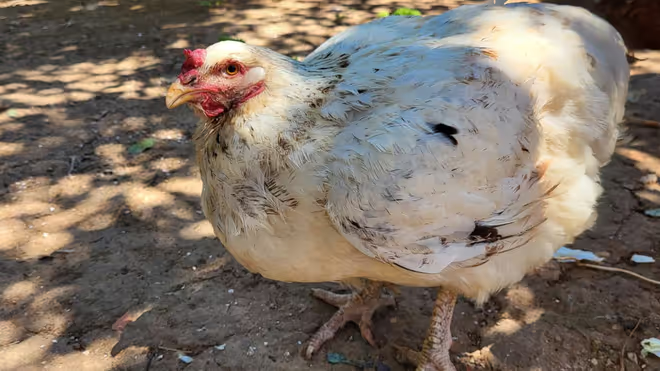
Kiwi
We were looking after four chickens on this sit, each with a genuinely distinct personality, but Kiwi stood out from the very first walkthrough. She had a limp from the start, and it was noticeable enough that during our initial meeting with the homeowners, I asked directly what they'd want done if something happened to one of the pets while they were away. That question wasn't random. It was Kiwi.
She was, honestly, a joy. We'd go down to feed and water the chickens multiple times a day, and Kiwi would come running, limp and all, more eager than any of the others. When we hand-fed her, she pinched the skin, hard enough that Caro eventually had to stop hand-feeding her entirely. The other chickens had self-control. Kiwi held nothing back. You could tell she genuinely loved being alive.
Over time, her condition worsened. She tripped more. We'd arrive to find her lying on the ground, sometimes in direct sun during the worst heat of the day. We adjusted our routine around her specifically: more frequent visits during the hottest stretches, fresh cold water, wet ground to cool the coop, cold watermelon from the fridge, carrying her into shade whenever we found her exposed to the sun. She was still eating, still drinking, still laying eggs, so for a while we genuinely thought she was just struggling with the heat.
Eventually her legs stopped working properly. She fell constantly, to the point that the feathers on her wings were stripped back and she was permanently covered in dirt. She stopped walking to be with the other chickens and just stayed in the coop, and we brought food and water directly to her there. That was when we contacted the homeowners.
We sent them videos of her falling. We got on a video call and showed them her actual condition in real time. It was a genuinely emotional call, and we want to be honest that it's hard to explain to people who assume nobody gets attached to a chicken the way you would a dog or a cat. This one was different. The homeowners had rescued her from a difficult start in life and given her years of real care, plenty of food, space, company, and attention. She'd had a good life. On that call, through real emotion, they told us they wanted us to take her to the vet and have her euthanised.
We asked them to send that decision to us in writing before we acted on it.

Why We Asked for It in Writing
This wasn't about distrust. It was about protecting everyone involved, including the homeowners themselves. A decision made verbally, in an emotional moment on a video call, can feel different once that emotion has settled. It's not our home, and they weren't our pets. We could provide the information and support the decision, but the actual choice, and the responsibility for it, belonged to the homeowners. Having it in writing meant nobody was left uncertain afterward about what had actually been decided, or why.
We'd recommend this regardless of how well you get along with a homeowner, or how clearly they've stated their wishes on a call. It's not about expecting problems. It's about making sure a decision this serious has a clear, documented record for everyone's sake.
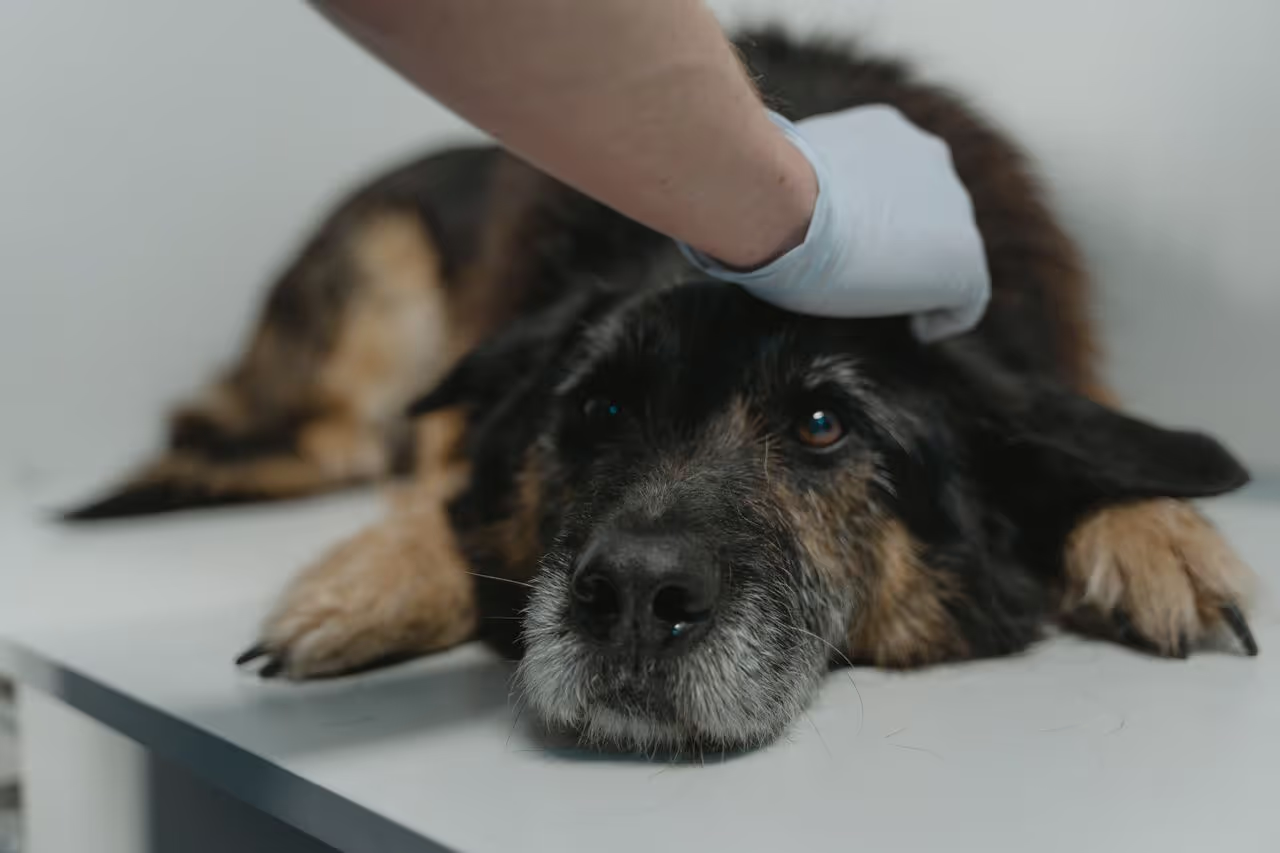
What Her Last Hours Actually Looked Like
Once we had that confirmation, we made a deliberate choice about how the rest of that day would go for her.
We lined a carry cage with a towel and brought her handfuls of her favourite snack, sunflower seeds, on the way to the car. She pecked every seed straight out of my hands, so hard and so fast that I actually bruised from it. She ate genuinely well, right up until she stopped and settled down to rest in the cage. We cleaned her up as much as we could beforehand, made sure she had plenty of food and water, and gave her pats the whole way. Caro and I wanted her final hours to look, as closely as we could manage, like any other good day with her, not a shadow of one.
We think that mattered. Not because it changed the outcome, but because it meant the very last thing Kiwi experienced was exactly what she'd always loved: food she was excited about, attention, and people who cared about her right up to the end.
Is Taking the Pet to the Vet Your Responsibility?
Not necessarily, and it's worth knowing that upfront rather than assuming it automatically falls on you.
With Kiwi, we didn't feel any real need to bring anyone else into it. Once the decision was made, taking her to the vet ourselves felt like the straightforward, natural next step, and the vet made the actual clinical call once they saw her condition. But that was our own comfort level, not a requirement. If you don't feel comfortable being the one to physically take a pet in, it's entirely reasonable to contact the homeowner and ask whether a vet can come to the house instead, or whether an emergency contact or a friend of theirs nearby could handle it. This isn't something that should be expected of a sitter as part of the job description.
That said, there's often a real, practical reason it does make sense for the sitter to be the one who does it: you're usually the person the pet is most familiar with and calmest around at that point, and it tends to be the fastest, least complicated path for everyone involved, including the animal.
You also get to choose whether you're actually in the room. Caro and I decided to stay out of the room during Kiwi's euthanasia. It happened quickly, and we felt it would be calmer for her with fewer people around, and honestly, it's genuinely difficult to witness, even for an animal that isn't yours. Vets are used to this and won't think less of you either way. Whatever you're comfortable with is the right call.
What Happens to the Pet's Body
This is worth discussing with the homeowner directly, since preferences genuinely vary, and there's no single right answer.
Most vet services will offer to return the body to you, or offer cremation instead. We've seen it mentioned in the community, on Reddit specifically, that some sitters have brought a pet's body home and kept it in the freezer so the homeowner could say goodbye properly once they returned from their trip. That's a real option some people choose, though it's obviously not something everyone will be comfortable doing, and it's worth being honest with yourself about that rather than feeling obligated.
With Kiwi, we actually offered to bury her ourselves. The homeowners considered it but decided against it, the ground in Portugal was simply too dry and hard during summer to make burial practical. We settled on cremation instead, which the vet's service offered directly, and left her in their care. That was the right call for their specific situation, not a universal answer.
If you're not comfortable managing the body yourself, leaving the pet with the vet for cremation is a completely reasonable, low-burden option, and one the homeowner is likely to understand given the circumstances. Whatever you decide, make sure it's something the homeowner has actually agreed to, not something you've chosen on their behalf.
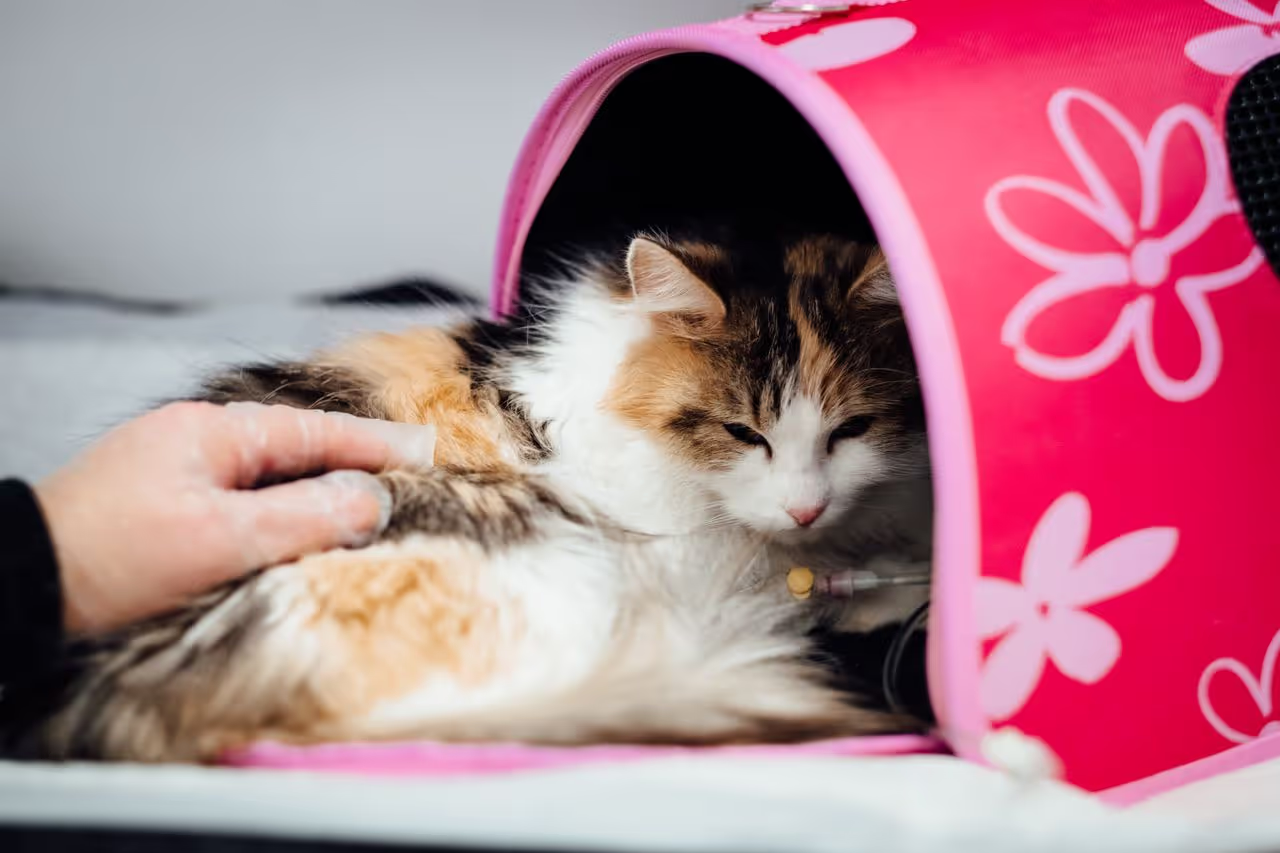
What to Set Up Before a Sit With an Elderly or Frail Pet
If you're taking on a sit that involves a pet who's visibly elderly, frail, or already showing signs of decline, this is worth raising directly during your initial walkthrough or video call, not something to avoid out of politeness. Homeowners generally already know their pet isn't in perfect condition. Asking what they'd want done if something happened during the sit doesn't introduce a worry that wasn't already there. It just opens the conversation. Our guide to what to ask a homeowner before you house sit covers this alongside the other practical questions worth raising at the same stage.
If you notice anything that looks like genuine suffering or serious decline once a sit is underway, tell the homeowner as soon as you notice it, not once you're certain something is seriously wrong. If your platform includes a vet line, TrustedHouseSitters' Standard and Premium plans do, use it. That guidance is genuinely valuable, especially if you don't have deep experience reading a specific animal's condition yourself, and it can help you figure out whether something needs urgent attention or ongoing monitoring. Whatever the vet line tells you, still bring it to the homeowner before making any final decision, they may have seen this behavior before and know exactly what's going on.
If a pet is visibly struggling in a way that feels urgent, call the homeowner. Treat it as an emergency, because it is one. Describe exactly what you're seeing, as accurately as you can, and work through the next step together.
If You Genuinely Cannot Reach Anyone
This is the hardest version of this situation, and it deserves a direct, honest answer rather than being avoided.
If a pet's welfare is deteriorating by the minute, a vet has already assessed the animal after you've shared everything you know, and neither the homeowner nor any listed emergency contact is answering, the next authority to defer to is the vet. They're the most qualified person in that moment to make a judgment call about the animal's actual suffering. If a vet states plainly that euthanasia is the only humane recommendation given the animal's condition, follow that professional guidance. Ask the vet to document their recommendation clearly, and contact the homeowner the moment you're able to, to explain exactly what happened and why.
This isn't a decision to make casually or alone based on your own read of the situation. It's a last resort, specifically for a scenario where a genuine welfare emergency and total unreachability collide, and it's built entirely on deferring to the highest level of professional expertise actually available to you in that moment.
The Sitter's Side of This
We think this is one of the most difficult things a sitter can be asked to navigate, and it deserves to be acknowledged honestly rather than brushed past.
We were fortunate in one specific way: we had to deliver the news and support a heartbreaking decision, but we were never the ones actually making it alone. Hearing the vet confirm it was the right call mattered enormously, both for the homeowners and for us. If we'd been left to decide entirely on our own for someone else's pet, we think we'd have genuinely hesitated, put off the vet visit longer than we should have, hoping for some improvement that wasn't coming. That hesitation would likely have meant more suffering for Kiwi, not less. Having a clear process, inform the homeowner, involve the vet, defer to their expertise, act on documented guidance, is what let us actually do right by her instead of freezing.
Grief over this is real, and everyone processes it differently. Across enough sits, some animals will affect you more than others, and that's worth recognizing rather than dismissing. Our guide to the sitter's own grief when a pet dies during a sit covers this in more depth, and it applies just as directly here, whether the animal in question is a dog, a cat, or a chicken who used to run to greet you with a limp and an appetite for mischief.
One thing worth being clear about: if a pet needs to be euthanised because of age or illness, through no fault of yours, you shouldn't carry that as blame. That's a genuinely different situation from one caused by real negligence on a sitter's part, which is a separate, more serious conversation involving accountability and, understandably, a homeowner's anger or a request for compensation. What happened with Kiwi wasn't that. It was simply a life reaching its end, and our job was to make sure it ended with as much dignity and comfort as we could give her, and that the people who loved her got to make that final call themselves. Our guide to house sitting with chickens or ducks covers the broader realities of caring for birds specifically, including the individual personalities that can genuinely surprise you.
Have you ever had to have this conversation with a homeowner? We'd like to hear how you navigated it, drop it in the comments below.

Should You Consider Leaving the Sit Early Afterward?
This wasn't something we ever seriously considered ourselves. We still had three more chickens and a cat to look after, and going into this six-month sit, we already knew Kiwi wasn't in perfect health, we'd effectively taken on the possibility that something like this could happen. Death is a natural part of caring for animals, and we felt we'd done right by her, not that we needed to escape the situation afterward.
But we recognize not everyone will feel that way, and that's genuinely okay. If a pet's death, especially one you were closely involved in, leaves a home feeling empty or leaves you feeling like you can't continue comfortably, it's within your rights to raise the possibility of ending the sit early with the homeowner. This isn't something to feel guilty about wanting to discuss.
If you do find yourself considering it, talk to the homeowner directly rather than deciding alone. They're processing a real loss too, often a harder one than yours, since it was their pet, and in our experience homeowners tend to understand this kind of reaction completely.
The Kiwi's owners actually apologised to us afterward, not because anything was their fault, but because they recognised how genuinely difficult and uncomfortable a situation like this is to be in for someone who didn't sign up expecting it. Keeping them informed, whether you're staying or considering leaving, respects both what they're going through and what you're going through.
The Bottom Line
This is, without question, one of the hardest situations a sitter can face, and it's not something to walk into unprepared. Ask about a homeowner's wishes before any sit involving a frail or elderly pet. Communicate the moment something changes, don't wait for certainty. Use a vet's expertise fully, but let the homeowner make the actual decision, and get it in writing once they have. If you're ever truly unable to reach anyone and a vet is recommending immediate action on welfare grounds, follow their professional guidance and document it. And whatever happens, be honest with yourself about the grief that follows. It's real, and it deserves the same care you gave the animal, right down to the last handful of sunflower seeds.
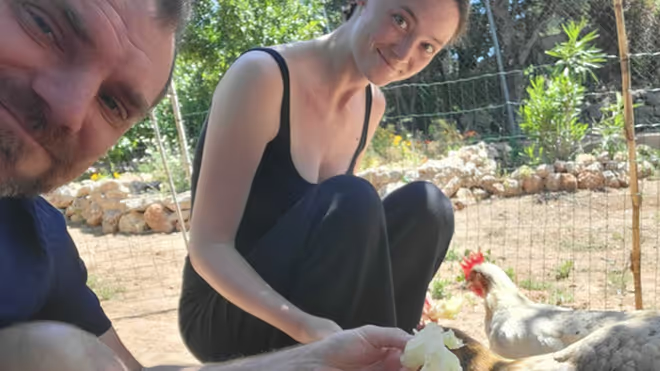
Caro and I have completed 20 house sits across 12 countries, driven 19,000km in Australia and 24,000km in our 1998 VW T4, and saved over $26,500 in accommodation costs over three years of house sitting. If you're navigating something like this right now, DM us @housesittersguide, we answer everyone.
Frequently Asked Questions
Should a sitter ever make the decision to euthanise a pet?
No. This decision belongs to the homeowner. A sitter's role is to observe, communicate clearly, involve a vet, and support the homeowner in making an informed decision, not to make that call independently, even with the best intentions.
What if I can't reach the homeowner and a vet says the pet needs to be euthanised immediately?
Try every available emergency contact first. If genuinely nobody can be reached and a vet, after reviewing everything you can share, states clearly that euthanasia is the only humane option given the animal's condition, follow that professional recommendation and ask the vet to document it. Contact the homeowner as soon as possible afterward to explain exactly what happened.
Should I get a euthanasia decision in writing from the homeowner?
Yes. Even if the decision was made clearly and emotionally on a call, ask for written confirmation before acting on it. This protects everyone, including the homeowner, and ensures there's no ambiguity about what was actually decided.
Is a sitter responsible if a pet needs to be euthanised due to age or illness?
No, provided the situation wasn't caused by genuine negligence on the sitter's part. Age and illness are not the sitter's fault, and this shouldn't be carried as personal blame. A situation caused by actual negligence is a different, more serious matter involving real accountability.


Responses
What are your thoughts on this post?