

Home > Blog > Driving a Host's Pet in Your Own Car
Quick Facts
| Quick Facts | |
|---|---|
| Is this common? | No. Across our 20 sits it has never been a requirement, only ever something we chose to do once |
| The core distinction | Whether it is required or voluntary matters more than the driving itself |
| Our experience | Once, entirely voluntary, a short beach trip with a Labrador in Belgium |
| If it is required | Get it in writing, and agree who covers fuel, cleaning, and any accident or breakdown costs |
| Legal note | Many countries have rules on restraining pets in a moving vehicle. Check the local law wherever you are sitting |
Whether a homeowner should compensate a house sitter for driving their pet in a personal vehicle depends almost entirely on one thing: was it something you agreed to as a condition of the sit, or something you chose to do because it made sense at the time. In our own experience across 20 sits, it has never actually been required of us, which tells you something about how rare a genuine requirement to drive a pet actually is. But it does come up occasionally, and when it does, there is a real question worth thinking through that goes beyond gas money: who is responsible if something goes wrong with the car while you are doing it.
If you are interested in getting into house sitting, our book Travel More for Less puts the whole process in one place: clear, step by step guidance from your first questions to your first confirmed sit, and the reviews that open the door to the next one.
We have done this exactly once, on a sit in Belgium, and it was never presented to us as a requirement. It is worth being clear upfront: this is not something that comes up often. Across 20 sits and 12 countries, we have never once been told that driving a pet somewhere was part of the deal. But rare does not mean it never happens, and when it does, sitters deserve a clear way to think about it, including the parts of the conversation that usually get skipped, like what happens if the car breaks down or is involved in an accident while doing something the homeowner specifically asked for.
Our Own Experience: Belgium, a VW Golf, and a Labrador
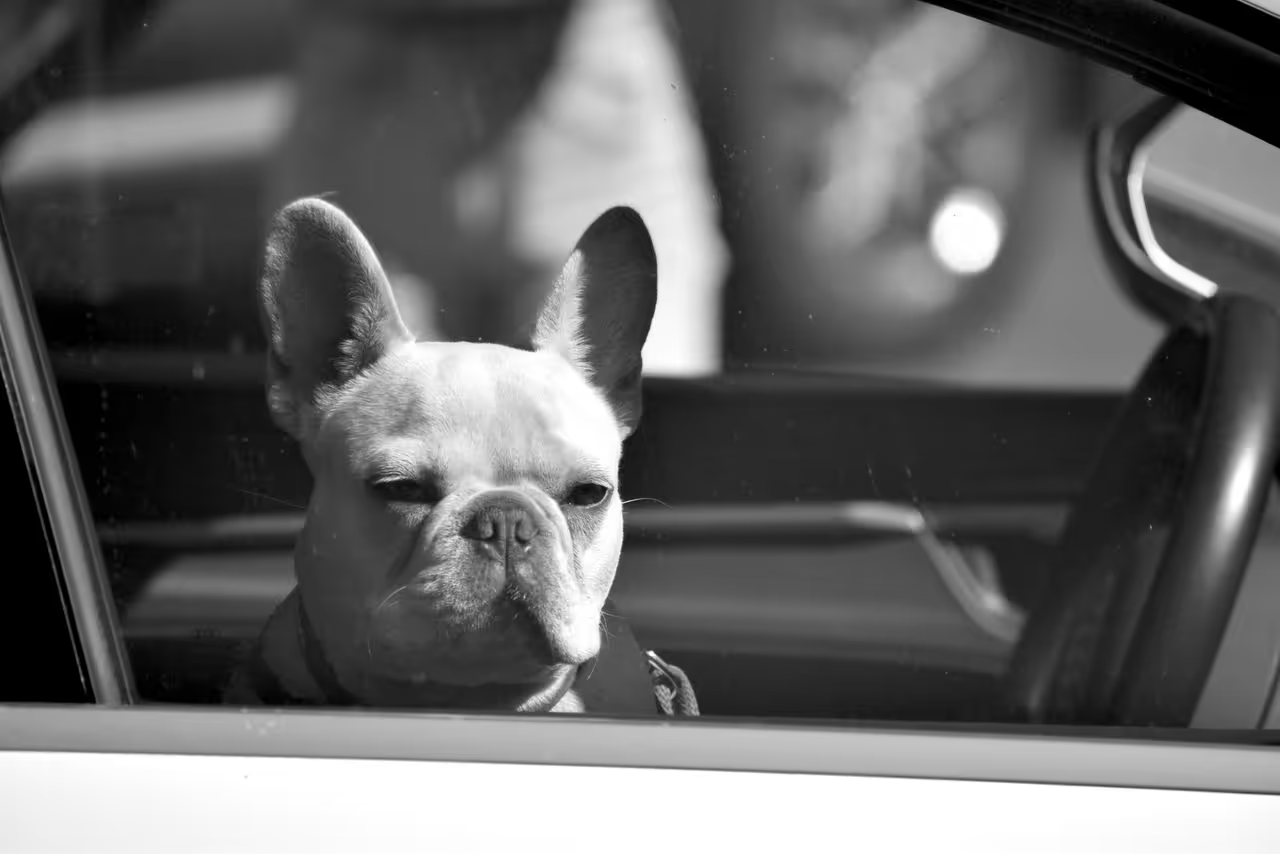
On our sit in Belgium, we were driving our VW Golf at the time, not the T4. The homeowner mentioned that the beach was a short drive away, less than five minutes, and that their Labrador loved going there. It was framed entirely as optional: if we wanted to visit the beach ourselves, which we did because we wanted to see the area anyway, we were welcome to bring the dog. Nobody told us the dog needed to go to the beach every day, or that transport was part of the job. We put him in the boot of the car for the short drive, and that was it.
That framing matters more than almost anything else in this whole discussion. We were never told we had to do it. We were told it was an option if we happened to be going that way, which we were. If the same homeowner had instead said the dog needed a car trip to the beach daily regardless of our own plans, our answer to whether compensation was fair would have been completely different.
We now generally look for sits where we do not need to think about this at all. In the T4 campervan specifically, there is nowhere secure to attach a dog harness or restraint, which means any pet riding in the van would be loose in the back. That is not something we are comfortable with, both because it is genuinely risky for the animal and because it may not be legal depending on where we are. It is one of the quieter reasons we lean toward sits with walking routes from the front door rather than sits that assume a car is part of the pet care routine.
If It Is Actually Required, Get It in Writing
If a homeowner does make driving a genuine requirement of the sit rather than an option, our view is straightforward: this belongs in writing, agreed by both people before the sit begins, not worked out informally after something has already gone wrong. Our house sitting agreement template exists partly for situations exactly like this, where a sit has an unusual requirement that a standard welcome guide would not normally cover.
The reason this matters more here than for most unusual requests is what happens if something actually goes wrong. If you are driving a homeowner's pet somewhere because they specifically asked you to, and the car breaks down, or you are involved in an accident, who is responsible for the cost of that?
Our view is that if the driving was the homeowner's request rather than your own choice, the responsibility for anything that goes wrong while carrying out that request should sit with them, not with you. You would not have been on the road at that time, for that reason, if they had not asked you to be. That is a meaningfully different situation to using your own car for your own outing and happening to bring the dog along.
This is exactly the kind of thing that is genuinely hard to sort out after the fact and genuinely easy to sort out beforehand. A short written note, even a message thread, stating that the homeowner has asked for the pet to be driven somewhere, and that they agree to cover fuel, any car cleaning required, and any costs arising from an accident or breakdown that happens while carrying out that specific request, protects both people. It also forces the homeowner to actually think about what they are asking for, rather than assuming it is a minor, costless favour.
When It Is Genuinely Fine
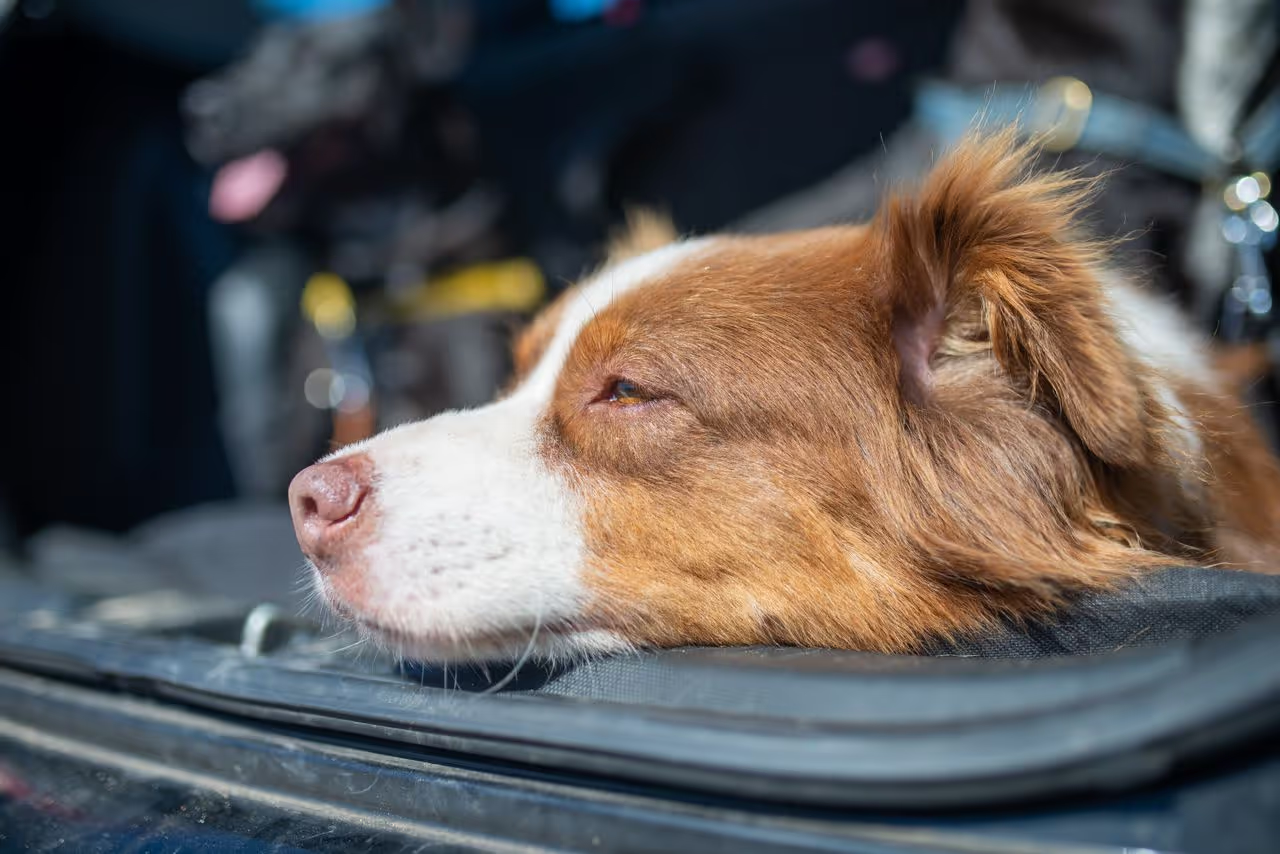
Not every version of this is a problem. Our Belgium sit is the clearest example of that: something we chose to do, on our own terms, in a car we were already taking to the beach regardless. Plenty of sitters enjoy taking a pet along on an outing they were already planning. That is a different situation entirely from being told, as a condition of the sit, that regular transport is expected.
The line we would draw is the same one we apply to most disagreements between sitters and homeowners: was this something disclosed and agreed to before you confirmed the sit, or is it something that emerged as an expectation afterward. Our guide on what house sitters can and cannot change during a sit covers this same underlying principle from a different angle, and it applies just as well here.
If a listing genuinely states upfront that a car is needed to transport a pet somewhere regularly, that is disclosed, and you can decide with full information whether to accept the sit on those terms. This is exactly the kind of detail worth raising directly on the video call, alongside who covers fuel, cleaning, and any accident risk, before you confirm anything.
The Legal Side Most Sitters Do Not Think About
A number of countries have legal requirements around restraining pets in a moving vehicle, and some carry real financial penalties for non-compliance.
Disclaimer: Vehicle and pet restraint laws vary significantly by country, state, and jurisdiction, and they change over time. We are deliberately not stating specific rules or fines here, because they differ from place to place and can be updated. Check the current requirements for wherever you are sitting before driving a pet, and check with your own vehicle insurer about whether you are covered for transporting someone else's animal, and for any accident that happens while doing so at a homeowner's request.
We do not attempt to summarise the specific rules here because they genuinely differ by country and even by region within a country, and outdated information here could do more harm than good. What we would say is this: before you put a host's pet in your car for the first time, take five minutes to check the current rules where you are, both for the animal's safety and your own legal exposure.
This is also worth raising with your own vehicle insurer directly, since standard personal car insurance may not automatically cover an accident that happens while transporting someone else's pet at their request. An unrestrained animal in a vehicle is also a real safety risk in a sudden stop, independent of whatever the local law happens to say.
What to Actually Do If This Comes Up
If a listing states upfront that driving is required, raise it directly on the video call, before you confirm anything. Fuel is the minimum. If you are expected to use a hire car for the sit, ask specifically about professional cleaning reimbursement. And ask, plainly, what happens if the car has a problem while you are doing something they asked you to do. A homeowner who has genuinely thought this through will not be offended by the question.
If you feel pressured into accepting driving requirements you were not told about upfront, treat that pressure itself as information. In our experience, a homeowner who expects more of a sitter than was originally agreed is often signalling a wider imbalance in how they see the arrangement, not just an isolated request about a car.
Our guide on dealing with homeowners who ask for more than a fair exchange covers this pattern in more depth, and it is worth reading if driving pets is only one of several things that feel off about a listing.
If the requirement was never mentioned anywhere, not in the listing, not on the video call, not in any message, and it only surfaces once you have arrived, we would treat that as a genuine misrepresentation worth reporting to the platform. Our guide on resolving disputes with a homeowner walks through how that process actually works.
Conclusion
In our experience, driving a homeowner's pet in your own car is genuinely rare, and it has never once been a requirement across our 20 sits. When it does come up voluntarily, as it did for us in Belgium, it can be a completely pleasant part of a sit.
What changes everything is when it becomes a requirement rather than a choice. At that point it deserves the same honest, written conversation about fairness that any unusual request would get, including the question nobody likes to raise but should: who is responsible if something actually goes wrong with the car while you are doing what they asked.
Caro and I have completed 20 house sits across 12 countries, driven 19,000km in Australia and 24,000km in our 1998 VW T4, and saved over $26,500 in accommodation costs over three years of house sitting. If you have had your own experience with this, good or bad, DM us @housesittersguide, we answer everyone, and we would genuinely like to hear how other sitters have handled it.

Frequently Asked Questions
Should a homeowner pay for gas if I drive their pet somewhere?
If driving the pet is a requirement of the sit rather than something you choose to do, yes, fuel should be covered at minimum, and this is worth agreeing before you confirm the sit rather than after. If it is voluntary and something you are doing because it suits your own plans anyway, most sitters do not expect compensation for it.
Who is responsible if the car breaks down or is in an accident while driving a homeowner's pet?
If the driving was the homeowner's request rather than something you chose to do, our view is that responsibility for costs arising from that specific trip should sit with the homeowner, since you would not have been driving at that time for that reason otherwise. This is exactly the kind of thing worth putting in writing before the sit begins, since it is far easier to agree calmly beforehand than to work out after something has already happened.
What if the homeowner never mentioned driving would be required?
Treat it as a genuine misrepresentation of the listing. Raise it directly with the homeowner first, and if it is not resolved reasonably, report it to the platform. A requirement that was never disclosed before you confirmed the sit is not something you are obligated to simply accept once you have arrived.
Is it legal to drive a pet loose in a car without a restraint?
This depends entirely on the country and sometimes the region within it, and the rules do change over time, so we are not going to state specific figures here. Check the current legal requirements for wherever you are sitting before putting a pet in a vehicle, and separately check with your own insurer about coverage for transporting an animal that is not yours.
Does my personal car insurance cover an accident involving a homeowner's pet?
Not necessarily, and this is worth confirming directly with your own insurer rather than assuming. Standard personal policies are not always written with this scenario in mind, particularly if the driving was done at someone else's explicit request rather than for your own purposes.


Responses
What are your thoughts on this post?