

Home > Blog > Do Pets Get Annoyed at Their Owners for Leaving?
Quick Facts
| Quick Facts | |
|---|---|
| Can pets feel true resentment? | Almost certainly not, according to behavioral scientists, resentment requires a sense of fairness and grudge-holding memory that dogs and cats don't appear to have |
| What they do feel | Real, measurable stress and grief-like responses during separation, and genuine emotional reactions at reunion |
| The surprising reunion finding | Dogs greet owners more intensely after longer separations, and one study found dogs shed actual tears specifically at reunion with their owner, not with other familiar people |
| What looks like "annoyance" | Usually overstimulation, confusion, or simple distraction, not a grudge |
| Cats vs dogs | Dogs tend to show big, obvious reunion behavior. Cats show it too, just on their own timeline and in subtler ways |
| Our own read | Pets love a house sitter the way grandkids love visiting grandparents, intensely, briefly, without it threatening the bond with their actual family |
Pets almost certainly don't feel resentment toward an owner for leaving, at least not in the human sense of holding a grudge over something felt to be unfair. That requires a kind of moral judgment and long-term grudge memory that behavioral scientists don't think dogs or cats actually have. But they do feel real things: measurable stress during separation, and genuine, sometimes startling emotional responses at reunion. What looks like coldness or annoyance when an owner comes home is almost always something else entirely, overstimulation, confusion, or just a very good chew toy showing up at the wrong moment.
If you are interested in getting into house sitting, our book Travel More for Less puts the whole process in one place: clear, step by step guidance from your first questions to your first confirmed sit, and the reviews that open the door to the next one.
What Actually Happens When an Owner Comes Home
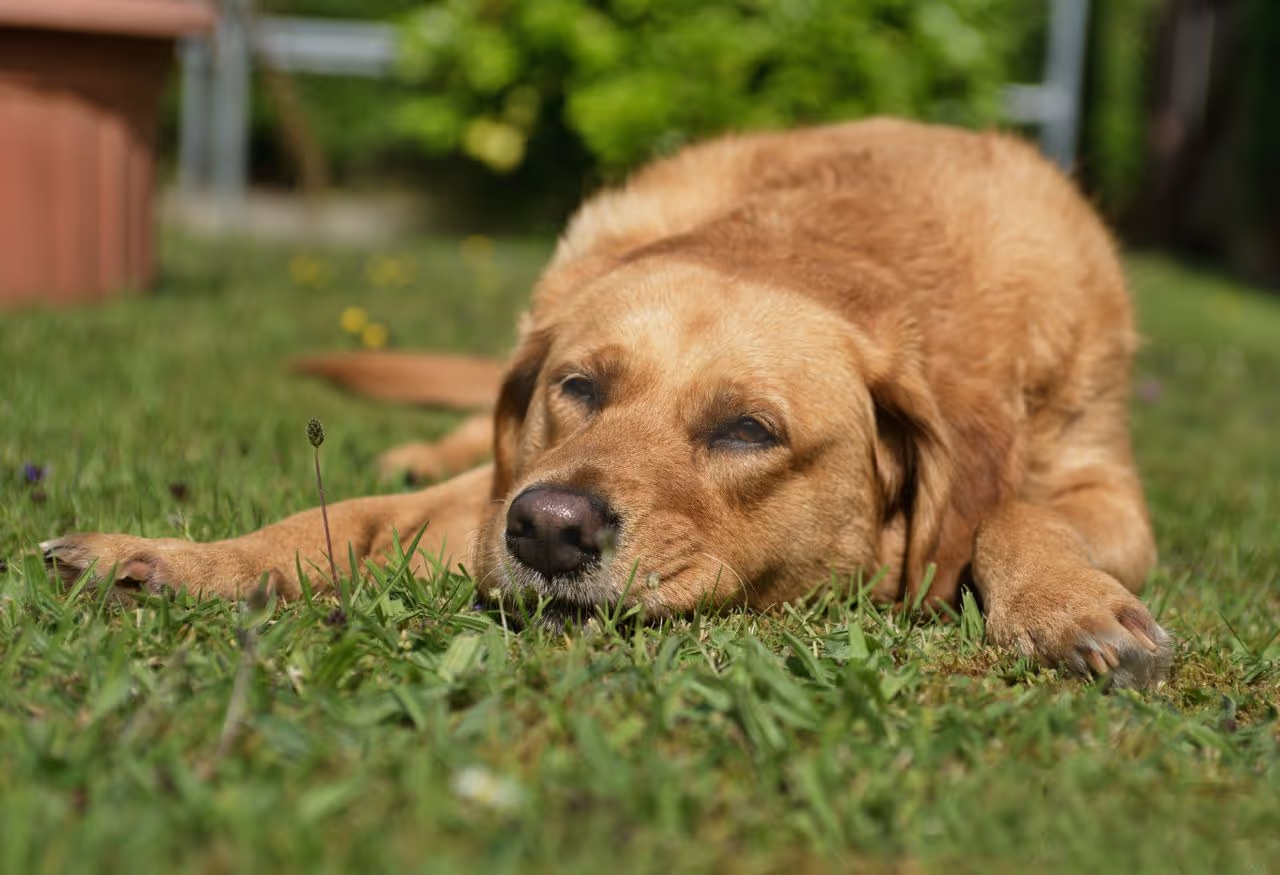
In Athens, we looked after a French Bulldog who was thrilled the moment the homeowners walked back through the door. As we packed up to leave, the dog seemed genuinely confused about what was happening, standing at the door watching us go, leaning further and further to keep us in view as it slowly closed. We came back through the same city a few weeks later to visit, and it felt like we'd never left. The dog was every bit as excited to see us as it had been to see its actual owners.
In Manosque, the dog would get up in the night just to check where her owners were, even though they were away on the other side of the world. On the day they actually returned, she didn't register it for hours, we think their scent hadn't fully registered yet, or she simply wasn't expecting them. Then, the moment she caught the right whiff of them the next morning, she bolted straight for them. What surprised us more: when we packed up to leave later, both the dog and the cat came out to see us off. The dog actually jumped into the back of our campervan and sat there. We like to think she was ready to come with us.
Neither of those is resentment. Both are something closer to overwhelming, slightly disorganized joy, joy that doesn't distinguish neatly between "the people who fed me for two weeks" and "the people I've loved my whole life." Pets don't seem to experience love as a fixed, limited resource the way people sometimes worry they will. Our guide to what house sitters actually do day to day covers the fuller texture of these relationships beyond just the goodbye moment.
Do Pets Actually Feel Resentment? What the Research Says
We didn't want to answer this purely from our own experience, since it's exactly the kind of question where actual behavioral research adds something anecdote can't.
| Finding | What It Suggests |
|---|---|
| Behavioral scientist Stanley Coren's assessment: dogs can feel primary emotions like love, anger, and sadness, but likely cannot process complex emotions like resentment, guilt, or shame | Resentment requires judging something as unfair and consciously holding onto that judgment. Dogs' memory is associative, not the kind of long-term episodic memory grudge-holding would require |
| A study found 66% of dogs showed grief-like behavior when separated from an owner, including reduced appetite, more vocalization, and less playfulness | Dogs do experience something real during separation, closer to missing someone than punishing them for leaving |
| Dogs were found to greet owners more intensely after longer periods of separation, even though their behavior during the separation itself didn't change with duration | The emotional impact of the separation doesn't show up until reunion, which may explain why some dogs seem oddly delayed or overwhelmed when an owner first gets home |
| A Japanese study found dogs shed actual tears specifically when reunited with their owner after a prolonged separation, but not when reunited with other familiar people | Reunion with an owner appears to trigger something measurably different from an ordinary friendly greeting |
| Cats lack the submissive greeting rituals dogs use, and instead greet through tail-up posture and head rubbing, on their own timeline | This matches what many owners interpret as aloofness. It's more likely a different communication style than a lack of feeling |
The honest summary: what looks like a pet being annoyed at its owner is very rarely actual resentment. It's much more often overstimulation, delayed recognition, or a cat expressing affection in a register that doesn't read as excitement to a human watching for tail-wagging and jumping. If a pet's stress responses during separation genuinely concern you as a sitter, our guide to strange pet behaviors during a house sit covers when something crosses from normal adjustment into something worth escalating.
When It Actually Looks Like Annoyance
We've had one experience that genuinely looked like something closer to what people mean by "annoyed," and it's worth being honest about it rather than pretending every reunion is heartwarming.
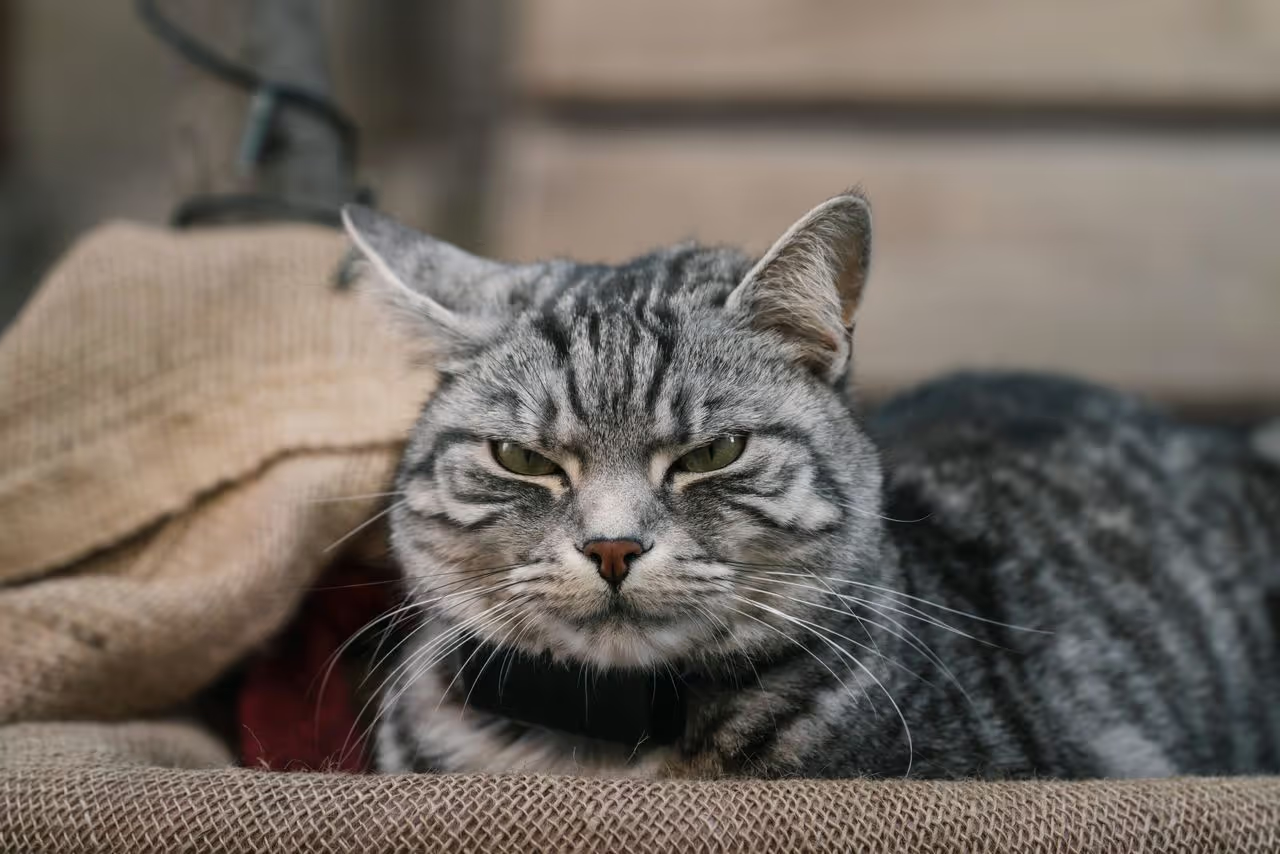
At one sit, despite what felt like a real, strong connection with a particular dog over the course of our stay, the moment the owner returned, the dog seemed almost indifferent to us and considerably more interested in a new chew toy we'd bought him. We were both genuinely surprised. In hindsight, this reads less like the dog snubbing us and more like straightforward distraction, a new toy is a new toy, and dogs live very much in the present.
The clearest case of something that looked like reluctance toward the returning owner happened in Tavira. Even though the homeowner was back and staying in the main house, her dogs kept wandering over to the separate flat we were staying in, lying down beside us, until she had to come over herself and physically walk them back. We found it funny at the time, though by that point our relationship with her had grown strained over an earlier disagreement about the dogs' training, and the situation added an odd tension that had nothing to do with the dogs themselves.
If anything, that's the real lesson: what looks like a pet snubbing its owner is very rarely about the pet's feelings toward the owner. It's usually about routine, comfort, or simple preference in the moment, not a verdict on who's loved more. Our guide to what to ask a homeowner before you house sit covers how to surface a pet's known quirks and routines before you're the one trying to interpret them cold.
The Grandparent Effect
Here's how we've come to think about the bond a sitter builds with someone else's pet, and why it's so intense without threatening the pet's actual relationship with its owners.
We treat every animal we look after as if it were our own, no holding back, full attention, real affection, from day one. Because of that, we tend to get an enormous amount back. Give a dog love and you'll generally get it back tenfold. Cats, in our experience, are a little more measured about it, more like threefold, they show it, just at their own pace and on their own terms. Even our current Portugal chickens have distinct enough personalities that we can tell them apart purely by behavior within days.
We think of ourselves as something like the grandparents in this arrangement. Not around often, but when we are, the affection runs high on both sides, spoiling included. That intensity doesn't come at the actual owners' expense. Over the long run, it's the owners who provide the food, the protection, the entire structure of the pet's life. A pet might not be thrilled to watch a sitter leave, the same way a kid isn't thrilled when grandma heads home, but that's not the same as being unhappy to have their actual family back. Both things are true at once: genuinely sad to see us go, genuinely glad to be back with their pack. Our full list of benefits of house sitting for nomads covers this emotional side of the lifestyle alongside the financial one.
Dogs and Cats Show This Differently
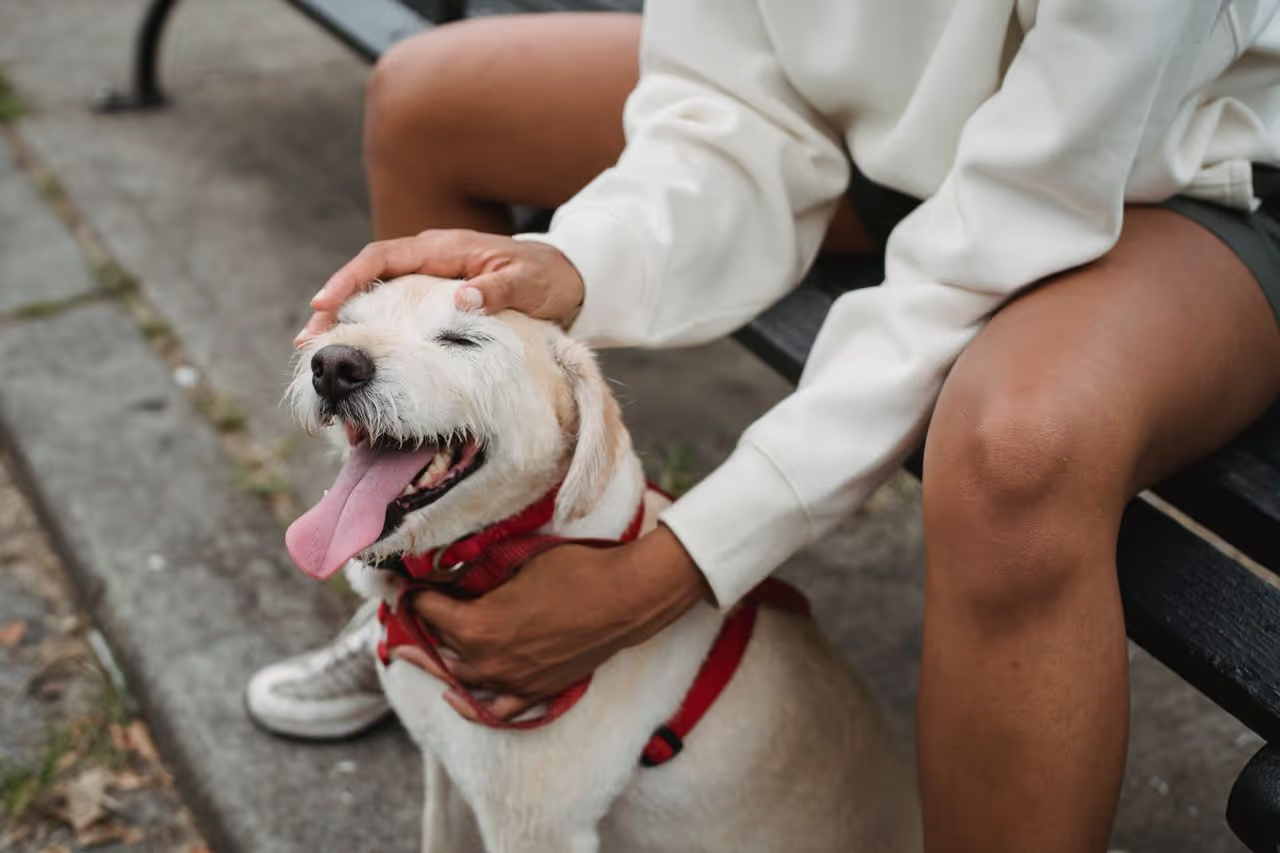
Dogs tend to be loud about reunion: tails, jumping, licking, the whole obvious performance. Cats are almost never that demonstrative, which is often mistaken for indifference or even mild annoyance.
In our experience, a cat's version of "I missed you" tends to show up gradually rather than all at once, a slow approach, a head rub, choosing to sit nearby rather than launching into your lap the second you walk in. If you're expecting a dog's enthusiasm from a cat, it's easy to misread quiet as coldness. It usually isn't. Sits involving multiple cats make this even more noticeable, since each one tends to have its own distinct reunion style once the owners are back.
What This Means If You're Choosing a Sit
None of this should change what you look for in a listing, but it's worth setting realistic expectations before you apply. Our guide to getting your first sit without prior experience covers how to read a listing honestly, including what a homeowner's description of their pet's personality can and can't tell you in advance. If a pet has known separation-related behavior, whether that's anxiety-driven or purely attention-seeking, our separation anxiety dog guide covers what to actually expect and how to manage it well, both during the sit and at the handover itself.
If you're travelling as a couple, worth knowing that a pet's attachment can form differently to each of you individually. Our guide to house sitting solo versus as a couple touches on how that dynamic plays out beyond just the pets.
The Bottom Line
Pets almost certainly don't sit around resenting an owner for leaving. What they do feel, missing someone, genuine stress during separation, real joy at reunion, is arguably more interesting than resentment would be anyway. What looks like annoyance is nearly always something more mundane: overstimulation, a new toy, a cat's naturally quieter style of affection, or simply routine and comfort rather than any verdict on who's loved more. As sitters, we get to experience an intense, condensed version of that love ourselves, not a replacement for what the pet feels for its actual family, just a genuine, real thing that exists alongside it.
Have you had a reunion moment that surprised you, either as a sitter watching an owner come home, or as an owner coming back to a pet who seemed a little too obsessed with the sitter? We'd like to hear about it, drop it in the comments below.
Caro and I have completed 20 house sits across 12 countries, driven 19,000km in Australia and 24,000km in our 1998 VW T4, and saved over $26,500 in accommodation costs over three years of house sitting through TrustedHouseSitters. If you have a story or a question about pet behavior during a sit, DM us @housesittersguide, we answer everyone.

Frequently Asked Questions
Do dogs get mad at their owners for leaving them?
Almost certainly not in the way "mad" implies. Behavioral scientists generally agree dogs can feel primary emotions like sadness or anxiety during separation, but likely can't process complex emotions like resentment, which requires a sense of fairness and long-term grudge-holding memory dogs don't appear to have.
Why does my cat seem to ignore me when I get home from a trip?
This is very rarely indifference. Cats simply don't have the same demonstrative greeting rituals dogs do, no tail-wagging, no jumping. Affection tends to show up more gradually: a head rub, choosing to sit near you, approaching on their own timeline rather than all at once.
Can a house sitter's bond with a pet threaten the pet's relationship with its owner?
No. A short, intense bond with a sitter doesn't compete with the ongoing relationship a pet has with the people who feed, protect, and structure its entire life. Both can be genuinely true at once, real affection for a sitter and real joy at an owner's return.
Is it normal for a pet to seem more excited about a toy than its returning owner?
Yes, and it's not a sign of anything concerning. Pets, especially dogs, live very much in the present. A new toy in the moment can simply outcompete everything else briefly, it's distraction, not a judgment about who they love more.


Responses
What are your thoughts on this post?