

Home > Blog > When You Disagree With a Homeowner's Pet Care
Quick Facts
| Quick Facts | |
|---|---|
| Default position | Follow the homeowner's instructions. They know their pet best. |
| When to adjust quietly | When the instruction creates a genuine safety risk to you or the animal |
| When to raise it with the homeowner | When something is actively harmful, distressing, or dangerous for the pet |
| When to involve the platform | Abuse, violence, or conditions that no reasonable person would consider acceptable |
| The most common disagreement | Food quality and diet choices |
| The most important principle | A house sit is temporary. The pet's routine existed before you and will continue after you. |
The homeowner knows their pet better than you do. They have lived with this animal for years. They have taken it to the vet, learned its habits, adjusted its routine through trial and error, and made decisions about its care that reflect their budget, their lifestyle, and the specific advice they have received from professionals who know the animal's history. In almost every case, the right thing to do as a sitter is to follow their instructions exactly, even if you would do things differently with your own pet.
That is the starting position. This article is about the exceptions: the moments where the instruction does not feel right, where the care seems inadequate, where something about the arrangement puts you or the animal at risk. These moments are rare. But they happen, and knowing how to think about them before they arrive is more useful than figuring it out in real time at 2am with a resource-guarding dog on your bed.
Caro and I have completed 20 house sits across 12 countries. In the overwhelming majority of them, we followed every instruction exactly as given and had no reason to question anything.
If you are interested in getting into house sitting, our book Travel More for Less puts the whole process in one place: clear, step by step guidance from your first questions to your first confirmed sit, and the reviews that open the door to the next one.

Why the Default Should Always Be to Follow the Instructions
Before getting into the exceptions, this point needs to be made clearly because it frames everything that follows.
A house sit is temporary. Two weeks, a month, even six months. The pet's routine existed before you arrived and will continue after you leave. Changing things based on your personal preferences, no matter how well-intentioned, can create stress for the animal and problems for the homeowner who has to re-establish the original routine when they return.
If the cat is fed a brand you would not choose, you feed that brand. If the dog's walk schedule is not what you would set, you follow that schedule. If the pet sleeps in a spot you find odd, you leave it there. These are not your decisions to make. They are decisions the homeowner made, often with veterinary input, and a sitter who overrides them based on a few days of observation is not being helpful. They are being presumptuous.
This is the principle we follow on every single sit. Our article on what house sitters can and can't change covers the boundaries in detail. The short version: if it involves the pet's established routine, follow it. If it involves the home, leave it as you found it.
When the Instruction Creates a Safety Risk
This is different from disagreeing with a preference. This is about situations where following the homeowner's instruction would put you or the animal in genuine danger.
At our Tavera sit in Portugal, the homeowner told us the dog was welcome to sleep in the bedroom. On the surface, that is a perfectly normal instruction. Many homeowners have their dogs in the bedroom and many sitters are comfortable with it.
The problem was that this dog had serious resource guarding behaviour that was not disclosed before we arrived. When the dog was in the bedroom with us, it guarded the bed. Not in a gentle, "this is my spot" way. In a way that made it actively dangerous to have the dog in the room while we were sleeping. We were at genuine risk of being bitten.
From day one, we removed the dog from the bedroom and closed the door. We did not ask for permission first because it was a safety decision that needed to happen immediately. The dog was also extremely sound-sensitive at night, so we played a gentle background tone throughout the night to give it something consistent to focus on, which settled it significantly.
We told the homeowner what we had done and why. We also spoke with a trainer the homeowner connected us with, who confirmed that having the dog in the bed was actively reinforcing the resource guarding behaviour. The trainer's advice aligned with what we had already done: the dog should not be sleeping in the same bed as anyone.
The homeowner listened, but when she returned, she took the dog back into the bedroom. That is her decision. It is her pet and her home. What mattered to us was that during the sit, while we were responsible for our own safety and the dog's wellbeing, we made the adjustment that the situation required.
The principle: if an instruction creates a genuine safety risk, adjust it, communicate what you did and why, and document the change. Your safety is not negotiable, and a homeowner who understands the situation will respect the decision. Our when not to apologise article covers situations where something goes differently from the homeowner's wishes and the sitter should not feel responsible for it.

The Food Question
This is the most common area where sitters silently disagree with a homeowner's choices, and it is also the area where the answer is most clearly: leave it alone.
Every sitter has opinions about pet food. Some homeowners feed premium raw diets. Others feed supermarket kibble. Some cook for their pets. The quality, the brand, the ingredients, these vary enormously across homeowners, countries, and budgets.
Unless the food is actively making the animal sick, which you would know from visible symptoms like vomiting, diarrhoea, or lethargy, it is not your place to change it. A two-week sit is not long enough for a diet change to benefit the animal, and switching food suddenly can actually cause digestive problems that would not have existed if you had left things alone.
If you genuinely believe the food is poor quality and you want to mention it, do so gently, once, as a suggestion rather than a correction. Something like "I noticed [pet name] seemed to have some digestive sensitivity, have you considered trying [alternative]?" is very different from "the food you're feeding is bad for your dog." The first is a helpful observation. The second is a judgment on their care.
Most of the time, the better approach is simply to say nothing. The homeowner's budget, their vet's advice, the pet's history with different foods, these are factors you likely do not have full visibility into. Feed what you are told to feed, in the amounts you are told, at the times you are told.
Crating and Confinement
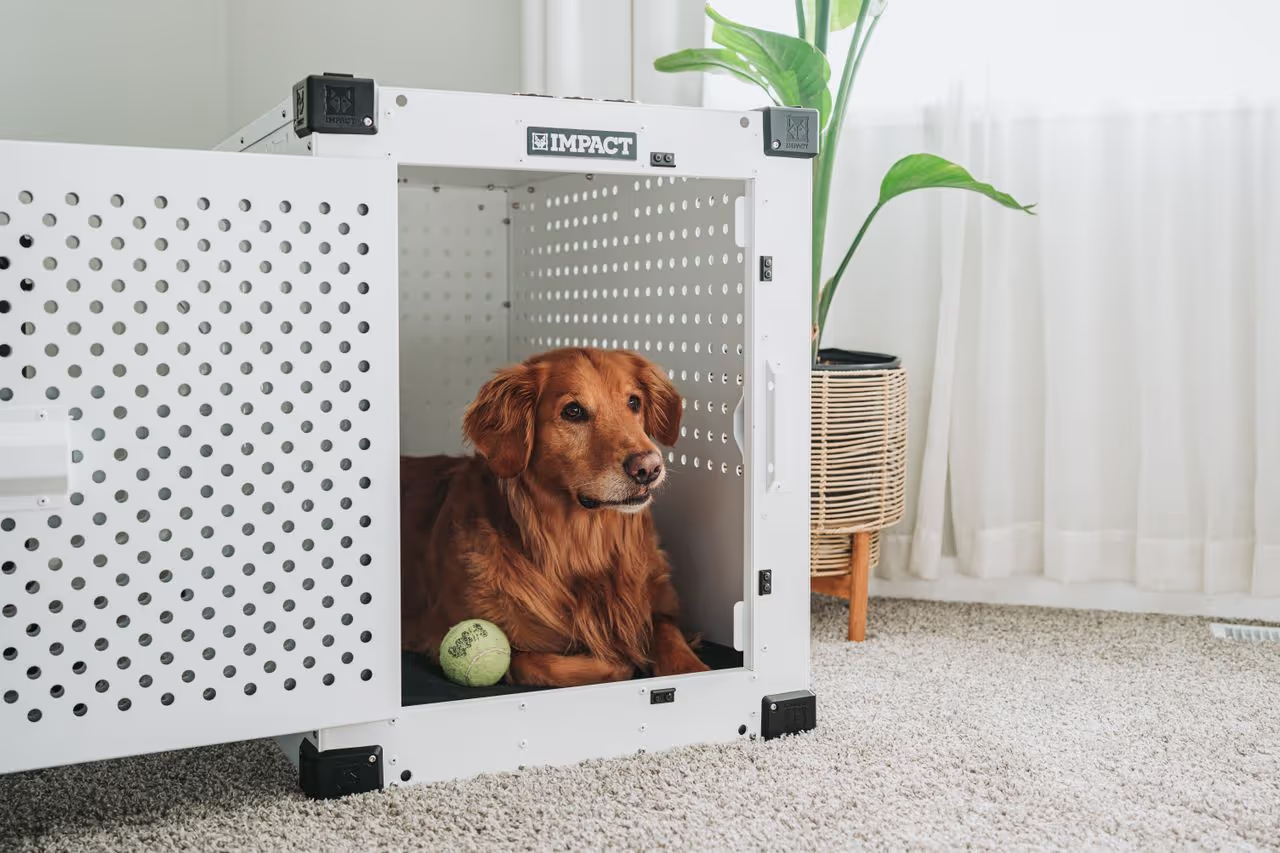
Crating is standard practice in many parts of the world, particularly in the US. In other parts of Europe, it is less common and some sitters find it uncomfortable to see a dog confined to a crate for periods of the day or night.
I have encountered crating during in Nederlands where the dog went into its crate at dinnertime and overnight. The crate was closed. My initial reaction was that it seemed restrictive. But the dog was visibly comfortable with the arrangement. It would carry its blanket into the crate voluntarily because it knew that was where it was supposed to be. The crate was its space, not its prison.
Personally, I think a nice cushioned bed is a better option for most dogs. But that is my preference, not a fact, and the homeowner's pet was happy, healthy, and comfortable with the routine that was in place. Changing it would have achieved nothing except disrupting a system that was working.
The rule of thumb with crating: if the dog enters the crate willingly, seems comfortable inside it, and the crate is appropriately sized and clean, this is not something to fight about. It is a care method you may not prefer but that the homeowner has established and the dog has accepted. Follow it.
If the crate is too small, if the dog is clearly distressed inside it, if the confinement hours are excessive, that is a different conversation and one worth having with the homeowner. The distinction is between a care method you personally dislike and a situation that is genuinely harmful to the animal.

When to Actually Speak Up
There is a clear line, and it is not about preferences or opinions. It is about harm.
If you see evidence that a pet is being physically abused, hit, kicked, handled violently by anyone, that is not a grey area. That is something to address immediately, both with the homeowner and with the platform.
If you arrive at a sit and find conditions that are genuinely harmful to the animal, mould that could affect the pet's respiratory health, lack of access to clean water, confinement in spaces that are unsanitary or too small, raise it.
If a pet's behaviour suggests it is in pain, distress, or suffering from a condition the homeowner may not be aware of, mention it. Sometimes homeowners genuinely do not know. A quiet observation, shared kindly, can be the thing that prompts them to take the animal to the vet or reconsider an approach they had not questioned. Our pet emergency guide covers what to do when a medical situation arises.
The approach matters as much as the substance. A kind, factual observation from someone who clearly cares about the pet lands very differently from a lecture about what the homeowner is doing wrong. "I noticed [pet name] seemed uncomfortable when [specific thing happened], would it be worth checking with the vet?" is a sentence that opens a conversation. "You shouldn't be doing that to your dog" is a sentence that closes one.
The Gentle Suggestion
Sometimes the best outcome is not changing anything during the sit, but planting a seed that the homeowner thinks about after you leave.
The resource guarding situation in Tavera is a good example. We adjusted the sleeping arrangement during the sit for our own safety. We passed on the trainer's recommendation. The homeowner chose not to follow it. But the information was shared, the trainer's input was on record, and if the behaviour continues or escalates, the homeowner has the context she needs to make a different decision in the future. We did what we could. The rest is hers.
This is often how influence works in house sitting. You are not the pet's owner. You are a temporary carer who happens to have observed something. Sharing what you noticed, kindly and without judgment, is the most you can do. What the homeowner does with that information is up to them.
What This Means Practically
| Situation | What to do |
|---|---|
| Food brand you disagree with | Feed it as instructed. It is not your decision for a temporary sit. |
| Walking schedule you would change | Follow it. The pet is used to it. |
| Dog sleeps somewhere you find odd | Leave it. The pet is comfortable. |
| Crate routine that makes you uncomfortable but the dog accepts willingly | Follow it. The dog is fine. |
| Instruction that creates a genuine safety risk | Adjust it, inform the homeowner, document the change. |
| Pet showing signs of pain or distress the homeowner may not know about | Mention it gently, suggest a vet check. |
| Conditions that are genuinely harmful (mould, filth, no water, excessive confinement) | Raise it with the homeowner and platform immediately. |
| Physical abuse or violence toward the pet | Report it to the platform. Do not tolerate it. |
Conclusion
The overwhelming majority of house sits involve care instructions that are perfectly reasonable, well-established, and suited to the pet. Follow them. The homeowner knows their animal better than someone who arrived two days ago, regardless of how strongly that someone feels about organic kibble or crate-free sleeping.
The rare situations where the instructions are genuinely problematic, where safety is at risk, where the animal is visibly suffering, where the conditions are harmful, require a different response. Adjust what needs to be adjusted for immediate safety. Communicate what you changed and why. Share observations gently. Report anything that crosses the line into abuse.
Everything in between, the preferences, the opinions, the "I would do it differently" feelings, is exactly that: feelings. They do not override the homeowner's years of experience with their own pet. A good sitter follows the routine, cares for the animal within the framework provided, and leaves the home exactly as they found it. A great sitter does all of that and, where it genuinely matters, finds a way to share something useful without making the homeowner feel judged.
Caro and I have completed 20 house sits across 12 countries, driven 19,000km in Australia and 24,000km in our 1998 VW T4, and saved over $26,500 in accommodation costs over three years of house sitting. If you have questions about handling a difficult care situation during a sit, send us a message on Instagram, we read every DM.

Frequently Asked Questions
Should I follow the homeowner's pet care instructions even if I disagree?
In almost every case, yes. The homeowner knows their pet far better than a sitter who arrived a day or two ago. A house sit is temporary and changing the routine based on your preferences can create stress for the animal and problems for the homeowner when they return. The only exceptions are situations that create a genuine safety risk or involve harm to the animal.
What if the homeowner's instruction puts me in danger?
Adjust it immediately for your own safety, then inform the homeowner what you changed and why. At our Tavera sit, the homeowner's dog had undisclosed resource guarding behaviour that made sharing a bedroom genuinely dangerous. We removed the dog from the room on day one and explained the decision. Your safety is not negotiable, and most homeowners will understand when the reasoning is clear.
Should I change the pet's food if I think it is low quality?
No. A two-week sit is not long enough for a diet change to benefit the animal, and switching food suddenly can cause digestive problems. Feed what you are told to feed, in the amounts and at the times instructed. If you genuinely believe the food is causing visible health issues, mention it as a gentle observation rather than a correction.
Is crating a dog something I should refuse to do as a sitter?
If the dog enters the crate willingly, seems comfortable inside it, and the crate is appropriately sized and clean, follow the homeowner's routine. Crating is a care method that many dogs are comfortable with, even if it is not something you would personally choose. If the dog is visibly distressed, the crate is too small, or the confinement hours are excessive, that is worth raising with the homeowner.
When should I report a homeowner to the platform?
When something crosses from a care preference into genuine harm. Physical abuse, violence toward the animal, conditions that are unsanitary or dangerous, or situations where the animal is suffering and the homeowner is unwilling to address it. Contact platform support, document what you have observed, and prioritise the animal's immediate safety.
What if I notice something the homeowner might not know about?
Share it gently, once, as an observation rather than a judgment. "I noticed the dog seemed uncomfortable when [specific thing happened]" opens a conversation. The homeowner may not be aware of the issue, and a kind, factual observation from someone who cares about the pet can be the thing that prompts them to act. What they do with the information after that is their decision.





Responses
What are your thoughts on this post?