

Home > Blog > Co-Working vs Home Office for House Sitters
Quick Facts
| Where Caro and Konrad work | Always from the sit — every new home is a fresh, motivating space |
| Monthly spend including everything | Around €500-600 between two people |
| THS Premium annual cost | $259 — less than two months of a basic coworking membership |
| Athens friends coworking cost | Approximately €1,500-1,800 for one month including van parking, food, gym, coworking |
| Internet backup | 400GB data plan across Europe — always connected when the home wifi fails |
| Pet alone time | 6+ hours is realistic for most cats and settled dogs — listings claiming under 2 hours should be avoided |
| The honest answer | Depends on how you self-motivate. If you work well alone, the sit is the better choice financially and practically. |
The house sit is already a coworking space. It is a new home, a new neighbourhood, a new view from a different window every few weeks. That novelty is motivating in the same way a paid coworking space claims to be — except it is included in a membership that costs less per year than a single month of hot-desking. The question is whether you can work productively in a domestic environment. If you can, the maths are simple.
In Athens, we had a ten-day sit looking after a dog and cats. We had a proper table to work from, a balcony, a kitchen, a shower, a bedroom. We worked online for the entire stay. Our total cost for the ten days was a share of the annual TrustedHouseSitters membership we had already paid.
Our friends were parked nearby in their van. They were paying for secure parking, working all day at a coworking space, buying takeaway food because van cooking in a city is difficult, and using a gym for the shower. They did this for a month and a half. Writing it out now: coworking alone was probably over a thousand euros, then parking, food, gym. The total was likely €1,500 to €1,800 for the month.
When one of them got sick, he went to the coworking space anyway because staying in the van all day was not a viable option. If he had been in a house sit, he would have rested, recovered, and gone back to work.
A separate couple we met while traveling had a similar situation. Their plan after returning to Switzerland was to work and live in their campervan for six months. We told them about TrustedHouseSitters. They now have two sits completed and are completely converted. They find sits near where they need to be, tell homeowners upfront about their remote work schedule, and homeowners accept it because they are honest and clear. They went from planning to live in a van for six months to living in Swiss homes for the cost of a THS membership.
If you are interested in getting into house sitting, our book Travel More for Less puts the whole process in one place: clear, step by step guidance from your first questions to your first confirmed sit, and the reviews that open the door to the next one.

The Honest Case for Working From the Sit
Every new sit is a new space. A new table, a new view, a new energy. That novelty is one of the most underrated aspects of the house sitting model for remote workers. The thing that coworking spaces sell. A change of environment, a different atmosphere, a reason to show up somewhere. The sit provides automatically, at no additional cost, in a new location every few weeks.
In Portugal we each have our spot. I work at the table near the entry of the house. A comfortable nook. Caro works by the chimney, where I moved a desk so she has a view from the window and better wifi signal. The internet here is temperamental. Some days it is fast, others it slows down significantly the moment a VPN connects. For this we have our phones with 400GB of European data. Always a reliable backup when the home wifi is insufficient. A Starlink Mini or a 5G connection are the other options for sitters whose work truly cannot tolerate a slow connection. Our remote work routine guide covers the full working day structure.
One boundary we protect: no work devices in the bedroom. The bedroom is for rest. The workspace is separate. This creates a real psychological division between work time and rest time that prevents the bleed that makes working from home feel relentless. Our slow morning routine guide covers how the morning before work begins preserves that separation.
When a Coworking Space Makes Sense
The case for coworking is primarily social, not practical. Coworking spaces exist because some people truly work better when surrounded by others. The ambient energy of people typing and thinking, the peer accountability of being visible, the light social contact of smiling at someone over coffee. These are real and they matter to certain working styles.
If you are someone who stares at a phone for forty minutes when working alone but stays focused in public, the coworking space solves a real problem. If you need external accountability to start and sustain work, the investment is justified.
But the coworking space does not solve loneliness. My sister moved into a coworking space recently while her home was being built. She found a spot away from everyone and continued to feel isolated. She solved it by going to markets, joining a gym, meeting people. Not by being in the coworking building. You can sit in a room full of people, put your headphones on, and be completely alone. You can be in a house sit with a cat and be entirely satisfied. The social battery question is really a question about how willing you are to make the approach. And that willingness does not depend on which building you are in. Our building a social life guide covers practical approaches to meeting people during sits.
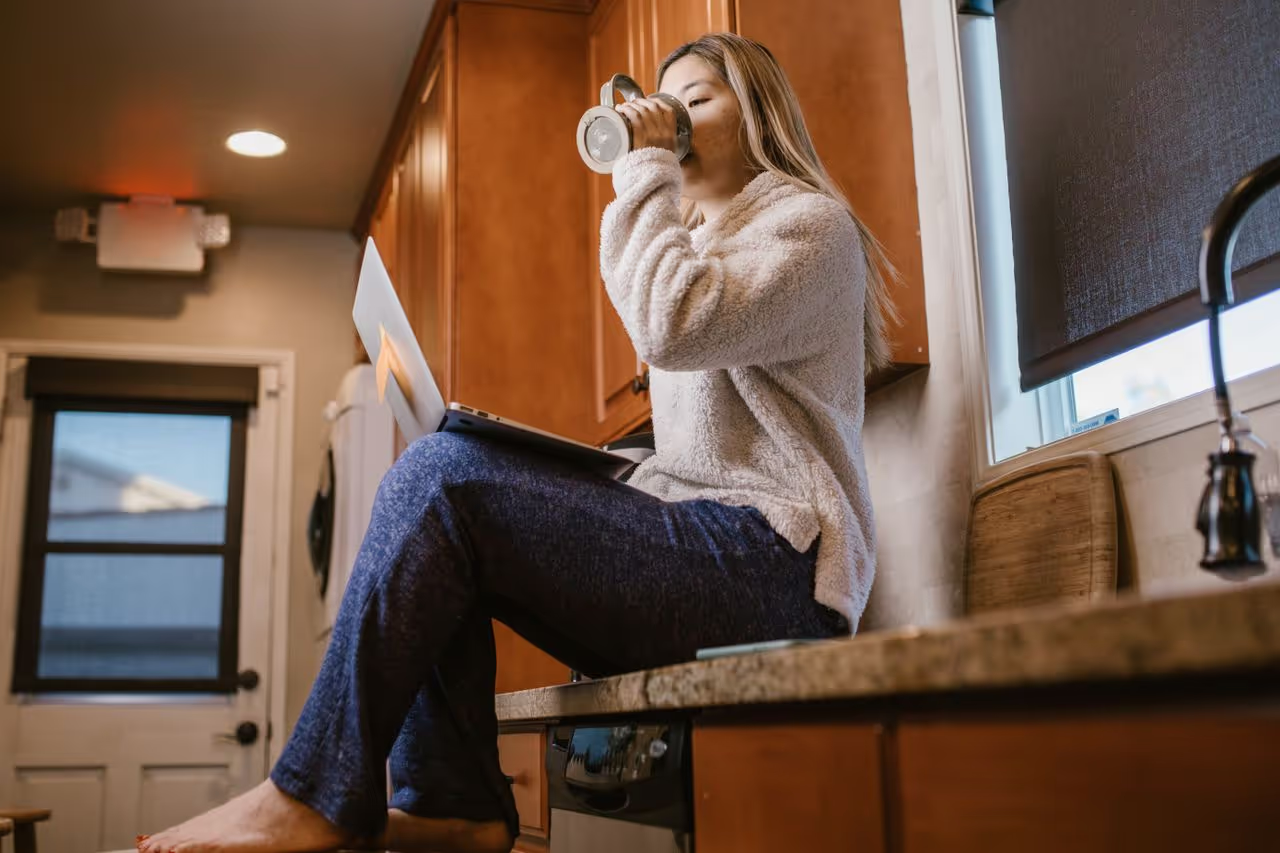
The Pet Factor: Read Listings Carefully
The pet factor changes the coworking calculation significantly. When a listing states the pet cannot be left alone for more than two hours, I move on. People who own these pets go to work every day. They leave for eight hours. The pet is fine. A listing that demands a sitter be present almost continuously is wishful thinking that does not reflect how these animals actually live.
After twenty sits, the practical reality is that most cats and settled adult dogs handle six or more hours alone without difficulty. If you are considering a sit as a remote working arrangement and the pet truly cannot be left for a standard working stretch, that information should be in your decision to take the sit or not. Not a surprise you discover on day two.
When the Swiss couple applies for sits now, they include their remote work schedule in the application message. They are honest and specific: they will be working during the day, the pet will have company in the evenings and mornings. Homeowners accept this because the honesty builds trust. The sits they get are appropriate for remote workers. This is the correct approach. Declare it, find sits that fit, do not try to manage an incompatible situation quietly. Our building trust guide and application guide cover how to include this information correctly.
The Financial Comparison
The TrustedHouseSitters Premium plan costs $259 per year. That is the most expensive plan on any of the major house sitting platforms. A basic coworking membership in most European cities starts at €150 per month. A quality space is closer to €500-600.
At the lower end, six months of coworking costs roughly what three years of THS Premium membership costs. The sit provides not just the workspace but the accommodation, the kitchen, the wifi, and in many cases a better working environment than a coworking space. A garden, a terrace, a quiet room that does not have a DJ at the "digital nomad hub" on a Thursday afternoon.
Caro and I spend approximately €500-600 per month between the two of us for everything. Food, fuel, phone plans, the occasional outing. No accommodation cost, no coworking cost. That figure is the full lifestyle cost. Our house sitting cost guide covers the complete financial picture.
The guilt about not using the "free" home office while a paid coworking space exists is worth examining in the other direction too. You are already saving on rent. The coworking spend, if it truly improves your work quality and wellbeing, is a fraction of what that rent would cost. But only if you actually need it.

The Practical Decision
The decision is personal and changes with the sit. A few questions that clarify it:
What type of work am I doing today? Deep, focused, solitary work is almost always better from the sit. Work that involves back-to-back calls, creative collaboration, or external energy to stay on task may benefit from a different environment.
How is my social battery? If you have been alone in the house for four days and are starting to feel the ceiling close in, a coffee shop or coworking space is a valid and proportionate response. Not a failure or an extravagance.
Can the pet be left? If yes, the option is open. If no, make the sit work. There will be good sits with independent animals and there will be sits where you barely leave the house. Vet this before you accept.
What is the internet situation? If the home wifi is unreliable and your work requires a stable connection, have a backup ready. Your phone's data plan or a portable router. Before deciding that a coworking space is the only solution.
Join TrustedHouseSitters with 25% off. DM us @housesittersguide on Instagram. We answer everyone.
Decision Guide
| Question | Stay at the sit | Consider coworking |
|---|---|---|
| Type of work | Deep, focused, independent work | Calls, collaboration, work needing external accountability |
| Social battery | Sufficiently charged | Running low after several days alone |
| Pet situation | Pet is independent, can be left 6+ hours | Pet truly cannot be left — vet this before accepting the sit |
| Internet | Reliable or reliable backup available | No backup and work requires stable connection |
| Budget | Working within the sit's built-in savings | Willing to spend €15-30/day for genuine productivity or wellbeing benefit |
| Work style | Self-motivated, works well alone | Needs ambient peer energy to stay focused |

Frequently Asked Questions
Is it worth paying for a coworking space when you have free accommodation at a house sit?
Only if you truly work better outside the home. The financial case for working from the sit is strong. THS Premium costs $259 per year, which is less than two months of a basic coworking membership. The Athens comparison is instructive: a sit costs the annual membership fee; a coworking month in the same city cost our friends €1,500 including associated expenses. If you are self-motivated and the sit has a decent workspace, staying in is the better financial and practical choice. If you need external accountability or social energy to work effectively, the coworking cost is justified.
How do you handle poor internet at a house sit when you work remotely?
Have a backup before you arrive. A phone data plan with substantial European or regional data provides a reliable fallback when home wifi is slow or unreliable. Starlink Mini is increasingly viable for sitters on longer sits. A 5G mobile hotspot is another option. Do not rely entirely on the home wifi. Ask about the connection quality during the pre-sit video call and have your own solution ready if the answer is uncertain.
How long can pets realistically be left alone if you go to a coworking space?
Most settled adult cats and dogs handle six or more hours without difficulty. Listings that claim a pet cannot be left for more than two hours should be avoided by remote workers. They reflect homeowner anxiety more than the animal's actual needs. People who own these pets go to work every day. If you are planning to work outside the home regularly, be explicit about this in your application. Homeowners who accept remote workers will understand the arrangement. Those who need constant presence will self-select out.
How do you tell a homeowner you will be working during the sit?
Say it plainly in the first message. Caro and I include it in every application: we work remotely and will be working from the home during the day, the pets will have company during mornings, evenings, and breaks. Homeowners who are comfortable with this accept. Those who are not decline early, saving everyone time. Transparency at the application stage prevents a difficult conversation mid-sit. A couple we know in Switzerland have had two successful sits using exactly this approach.


Responses
What are your thoughts on this post?