

Home > Blog > How to Convince Your Family That House Sitting Is a Real Lifestyle
Quick Facts
| Do you need approval? | No. Go, be visibly happy, and let evidence convince them. |
| The money question | It is not unpaid: accommodation is free in exchange for care. |
| Best single tactic | Do a local sit and invite a sceptical family member. |
| Did the grandmother come round? | Yes. She never did a sit, she just saw Caro happy. |
| If disapproval is heavy | Call it a holiday and go anyway. |
| The bottom line | Most families come round with time and visible evidence. |
The short answer: you do not need to convince anyone of anything. You need to go, be happy, and share it. Family members who see you thriving — truly, visibly thriving — will come around. The ones who never do are usually the ones who wish they had done it themselves.
My family is not a normal family in the conventional sense. Travel has always been part of it. My mother has been house sitting for years. When I told them about the campervan and the house sits, their response was excitement. They already understood what it was.
Caro's family was different.
Caro is the one in her family who changes the dynamic. The first to finish university. The first to travel to Australia. The first to leave a stable job in Bochum to drive across Europe in a VW T4 with someone she met at a hostel in Iceland. None of her family understood it. How could she give up a perfect life? At times they were disappointed. There was a grandmother who I remember vividly. The expression on her face when she heard the plan. Not anger. Disappointment. The specific kind that cuts deep because it comes from love, not cruelty.
That grandmother is now one of our biggest supporters. This article is about what happened in between, and what we have learned about bringing the people you love along on a journey they did not choose for themselves.
Use our 25% discount when joining THS. Read our is house sitting worth it guide and our save $10,000 guide for the financial case.
Why Family Members React the Way They Do
The disapproval is almost never about house sitting specifically. It is about the unknown. Parents and grandparents who have spent decades building stability within a system they understand look at a choice to step outside that system and see risk rather than opportunity. The unknown turns someone else's dream into what feels to them like a nightmare.
This is not a character flaw. It is love, expressed through the only framework they have available. Most people judge what they would not choose rather than acknowledging it is simply not the choice they would make for themselves. The concern about safety, about money, about the future. These are real concerns, even when the conclusions drawn from them are wrong.
The hardest part for Caro was that stepping outside her established comfort zone also meant stepping outside the role her family had built for her. She was the achiever. University, good job, stable life in a good city. The house sitting plan looked like abandonment of all of that. What it actually was. The beginning of a far more interesting and meaningful chapter which was not yet visible.
The answer was not argument. The answer was time.
The "Why Would You Do It for Free?" Question
This comes up constantly. Every sitter gets it. Here is the answer that actually lands.
It is technically not unpaid. You are receiving accommodation. Real accommodation in real places you want to visit. In exchange for pet and home care. The exchange has monetary value that would otherwise come out of your savings. After three years of house sitting, the question I find myself asking is the opposite: why would you pay for accommodation when house sitting exists?
Caro and I now have years of Premium THS access effectively at no cost because of referral credits. We live in places most people only dream about as tourists. We experience countries as locals, slowly, without burning through a budget. We get to work on our own projects because our biggest expenses. Accommodation and the pressure to rush. Have been eliminated. Our slow travel and house sitting article covers what this produces in practice.
The money argument matters less than you think when people can see the results. Caro's friends, many of whom were initially unconvinced, regularly tell her now that they are envious of the life she leads. The financial conversation ended when the visual evidence of what the lifestyle produces became undeniable.

What Actually Changes Minds
Argument changes very few minds. Evidence changes most of them.
The most powerful thing Caro and I have done to bring people around is simply continued doing it, being visibly happy, sharing the stories, and letting the evidence accumulate. Caro's family went from disappointment to having our travels as a focal point of family conversation. A new country every week, a new adventure, a new animal. We keep the life exciting and we keep them in it.
The practical mechanics of this:
Call regularly. Share the excitement, not just the logistics. When we arrived in Portugal and discovered how warm and curious the people are. A cashier asking Caro what she was making for dinner. These are the stories that shift the image from "irresponsible vagabond" to "person having experiences most people never access."
Share photos without being prompted. A photo of the four chickens in the Portugal morning, the views from the Leysin sit, the dogs in Greece on a beach. These images communicate something that a thousand words of reassurance cannot.
Keep reassuring when they ask the practical questions. Healthcare, savings, the future. Have real answers. Our savings have grown. The referral income from THS extends our access. Caro's teaching resource website went from 100 to 2,000 visitors in a month. These are not vague claims. They are visible results that demonstrate the lifestyle is building something, not dissolving it.
The Grandmother Moment
I felt the grandmother's disappointment partly as my own failure. I was, in her eyes, the reason Caro was leaving. It took time for me to stop internalising that.
What shifted it was not any single conversation. It was watching her watch Caro over months. The confidence that comes from managing sits across twelve countries. The capability that comes from solving problems in unfamiliar places with no support structure. The happiness that is truly visible when someone is doing exactly what suits them.
Parents and grandparents want the best for the people they love. Their fear of your choice is not opposition. It is care, expressed through the limits of their experience. When they start seeing that the choice is producing the outcome they actually want for you. A good, meaningful, growing life. The opposition finds nowhere left to stand.
The grandmother turned a cheek. Then she became a supporter. She has never done a house sit. She does not have to understand it. She just needed to see that Caro was happy.
Invite Them In
The most direct approach available: do a sit near home first, or somewhere they can visit, and bring them to see it.
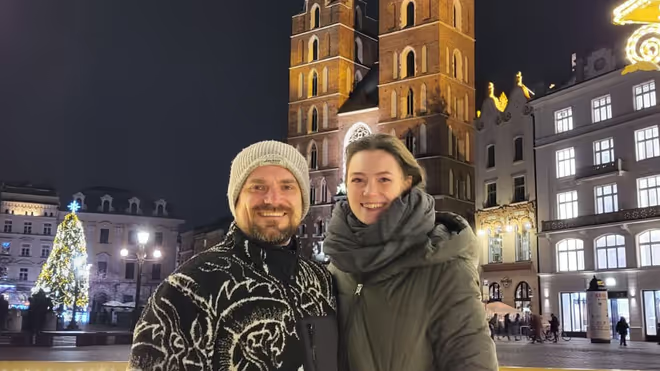
My mother has done plenty of house sits herself. When Caro and I left, she already had context. For families without that context, the sit itself is the explanation that works better than any conversation. Caro's father is coming to visit us in Portugal during the six-month sit. Once people experience it. A nice home, a pleasant animal, a comfortable routine in a beautiful place. They almost universally think: this is something I would want too. It can be truly addictive.
If you are doing a local sit or something within reasonable distance, invite a sceptical family member. Check the homeowner's policy on visitors in the pre-sit video call first, and confirm what is permitted in the welcome guide. One afternoon showing a parent around the property and introducing them to the animal in your care does more for family acceptance than months of explanation over the phone.
If the Disapproval Feels Too Heavy
My practical honest advice for anyone who feels truly frozen by family disapproval: call it a holiday.
There is nothing misleading about this. A house sit is a holiday. A house sit somewhere new, with a pet, in a home you would be happy to spend two weeks in. That is a holiday. You do not owe your family your full itinerary or accommodation details for every trip you take. Book a sit, go, and let the experience speak for itself when you return.
If you want to be more transparent but fear the pushback, do a local sit first. Something nearby where the family can visit and see exactly what it involves. The abstraction of house sitting is what worries most family members. The reality. A clean home, a friendly cat, a nice garden. Tends to resolve the concern on contact.
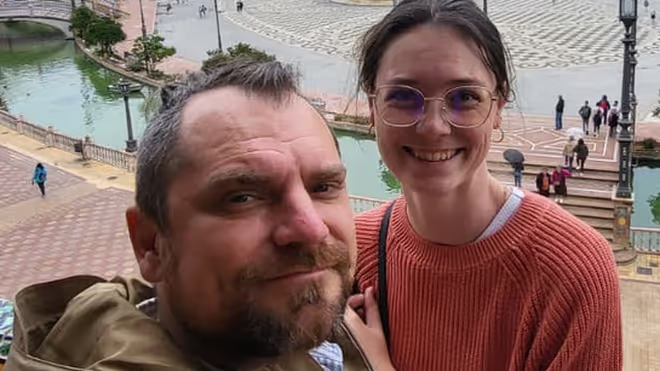
And understand this: there will always be the option to go back. Caro and I can return to Bochum if we choose to. The option has always been there. It is the knowledge that you can return that makes the departure possible without it feeling like an irreversible abandonment. Say this to the family members who worry. Not as a plan, but as evidence that this is a choice, not a collapse.
You Will Not Be the Same Person Who Left
The single most important thing that happens to someone who steps outside their established comfort zone and travels this way is that they become someone different. More capable. More self-aware. More certain of their own values and what they actually want from a life.
Your family will notice this. The person who comes back. Even for a visit, even after a short sit. Is visibly changed in the ways that matter. More confident. More grounded in a particular way. Better at managing unfamiliar situations. Families who see this change want it for their children and grandchildren. They will not always name it correctly or attribute it to the right cause. But they will feel it.
The discomfort you agree to in choosing an unconventional path is not wasted. It shapes you into someone your family will eventually be proud of. Even if they do not understand, even now, exactly how you got there.
A good exercise if you are building up to making the leap: write down the best possible version of what could happen. Specific sits, specific countries, specific animals. The relationship that grows from a year of shared travel with someone you love. The work you finally have time to do. Write it in detail. The worst outcome is that you fall short of it. The best is that you blow it entirely out of the water. Both of those outcomes are better than staying put to avoid upsetting people who, in most cases, will eventually come around anyway.
Join TrustedHouseSitters with 25% off. Read our building trust as a new sitter guide for getting started, and our house sitting careers guide for the longer-term financial picture.
DM us @housesittersguide on Instagram. We answer everyone.
The Conversation Cheat Sheet
For those who want a direct answer to the most common questions, here is what actually works:
| What they say | What to say back |
|---|---|
| "Why would you do it for free?" | "It is not free — I exchange pet and home care for accommodation. I save on rent every month and have done more than most people do in years." |
| "Isn't it dangerous?" | "The platforms have review systems and ID verification. I always do a video call with the homeowner first. It is similar to how Airbnb works, with an added layer of vetting." |
| "When are you settling down?" | "I am settled — just not in one place. And the option to come back is always there if I want it." |
| "What about the future?" | "My savings are growing. My biggest expense — accommodation — is covered by the sits. I am building more financial stability this way than I was paying rent." |
| "Wouldn't you rather stay in a hotel?" | "I am staying in homes that cost thousands per week as a house sitter, for free. Hotels cannot compete with that." |
| "What if something goes wrong?" | "There are platform support systems and a community of experienced sitters. And I can always come home. The option never disappears." |
Frequently Asked Questions
How do I explain house sitting to family members who have never heard of it?
Start simple: it is a mutual exchange where you look after someone's home and pets while they travel, in return for free accommodation. Frame it as a holiday model, not a lifestyle manifesto. For practically-minded family, the financial angle is compelling. Accommodation is the biggest travel cost, and house sitting eliminates it. For family members who worry about safety, emphasise the platform's review systems and the pre-sit video call vetting process.
What if my family never comes around to accepting the lifestyle?
Accept that you do not need their approval to live well. The most useful insight from experienced sitters is that some people will never understand. And that is fine. The goal is to live a fulfilling life, not to win an argument. Most family members come around with time and visible evidence of a happy, functional life. The ones who do not are usually expressing worry rather than opposition.
Should I do a local house sit to show my family what it involves?
Yes. This is the most effective single thing you can do. A two-hour visit where a sceptical parent meets the animal in your care, sees the home, and understands the practical reality resolves more concern than months of explanation over the phone. Confirm the homeowner's visitor policy in the video call before inviting anyone. Read our pre-sit video call guide for what to ask.


Responses
What are your thoughts on this post?