

Home > Blog > Can You Take a Day Trip During a House Sit?
Quick Facts
| Short answer | Yes — with the right preparation and the right pets |
| Our rule of thumb (dogs) | Up to 6 hours away with morning walk, feed, and water topped up |
| Our rule of thumb (outdoor cats) | Up to 8 hours — they are that independent |
| Minimum we accept in a listing | 4 hours — anything less and we consider other sits |
| THS listing feature | Homeowners now set a "pet can be left alone for X hours" field in listings |
| The key question | How long does the pet stay home alone when the owner goes to work? |
| Easiest sit for day trips | Two independent outdoor cats — it is truly like a holiday within a holiday |
Yes, and you should: exploring is part of the exchange. Our guidelines are up to 6 hours away from a dog after a walk and feed, and up to 8 hours for outdoor cats. We skip any listing that allows under 4 hours.
House sitting is not employment. You are not hired staff with shift hours and no life outside the property. You are exchanging genuine, attentive care of someone's home and animals for free accommodation, and that exchange absolutely includes the freedom to experience the place you are sitting in.
The question is not whether you can take a day trip. You can. The question is how to do it thoughtfully, how to read the animals before you go, and how to choose sits that make this possible in the first place.
What House Sitting Actually Is
The THS community debated this recently, prompted by a homeowner who told a sitter that her dog could not be left alone at all and that the sitter "should not consider this as a holiday." The community response was near-unanimous: that is not house sitting. That is unpaid labour, and the sitter was right to walk away.
House sitting works as an exchange because both parties get something. The homeowner gets reliable, caring, in-home pet care that would otherwise cost a significant daily rate. The sitter gets free accommodation in places they want to explore. The moment the homeowner starts treating the sitter as on-call staff with no independent life, the exchange has broken down on their side of it.
Homeowners who expect sitters to have no more than two hours away from the pets per day should be looking at paid help, not the house sitting platforms. If you want a worker, pay for one.
Our Experience: Lullin, France
The longest day trips we have taken as sitters were during a month-long sit in Lullin, France, looking after two outdoor cats named Piton and Muscaton. The routine was simple: wake up, feed the cats, head out for up to eight hours, come back, feed the cats again, spend the evening at home.
We were not gone every day. A month-long sit gives you time to build a real rhythm: some days at home, some days exploring, some days halfway between the two. Because we were there for a full month, the cats always had someone around regularly. The day trips were occasional, planned, and built around the animals' schedule rather than ours.
Outdoor cats are in a category of their own for this reason. They are so independent that your primary job is to make sure their food is full and to give them attention when they want it. They do not have separation anxiety. They do not pace. They are truly fine on their own. Two independent outdoor cats might be the closest house sitting gets to a holiday with added animal companionship.
The Dog Situation
Dogs require more planning, and more honesty about the individual animal you are looking after.
Our standard routine before leaving a dog: morning walk, feed, full water bowl, and a snack or chew to keep them occupied. On returning: walk, feed, check in on their state. This mirrors what most working dog owners do every day. The animal is used to being alone for the length of a working day.
That is actually the most useful number to find before a day trip: how long does this dog stay home alone when the owner goes to work? If the owner commutes to an office and works eight-hour days, the dog is already comfortable with that stretch. You are not leaving them with something new. You are replicating what is already normal for them.
The situation changes with dogs that have separation anxiety. We are currently looking after a dog who, on paper, seems very easy. Over ten days, we noticed that she paces at night, stares into the distance for long periods, and when we left for the shops for about an hour, we came back to yelping. She is otherwise silent and calm. That pattern tells us she needs more presence than average, and we adjust. We spend less time away, do shorter outings, and spread exploration across more days rather than in single long trips.
The point is to look at the actual animal, not the listing. The listing describes the homeowner's routine. The animal may have its own thing going on.
Our Time Guidelines
These are starting points, not fixed rules:
Dogs: up to 6 hours, after a walk and feed. If the dog shows signs of anxiety or the listing explicitly asks for more presence, we work within that.
Outdoor cats: up to 8 hours. They are fine. Feed them, make sure the water is fresh, and go.
Indoor cats: similar to outdoor cats for a day trip, though they may need more regular litter box checks on return if it is a longer absence. Most adult indoor cats are comfortable for 8-10 hours.
Farm animals: different entirely. Animals on feeding schedules (chickens, goats, horses) require you to be back by specific times regardless of what you are doing. Build any day trips around those windows, not the other way around.
Our personal minimum when choosing a sit: 4 hours. If a listing says the pet cannot be left alone for more than 4 hours, that is still workable for us. Four hours is plenty to see a lot of things if you plan the trip well. Listings showing 2 hours or less we skip. That is not an exchange that makes sense for the way we travel.
Taking Dogs on Day Trips
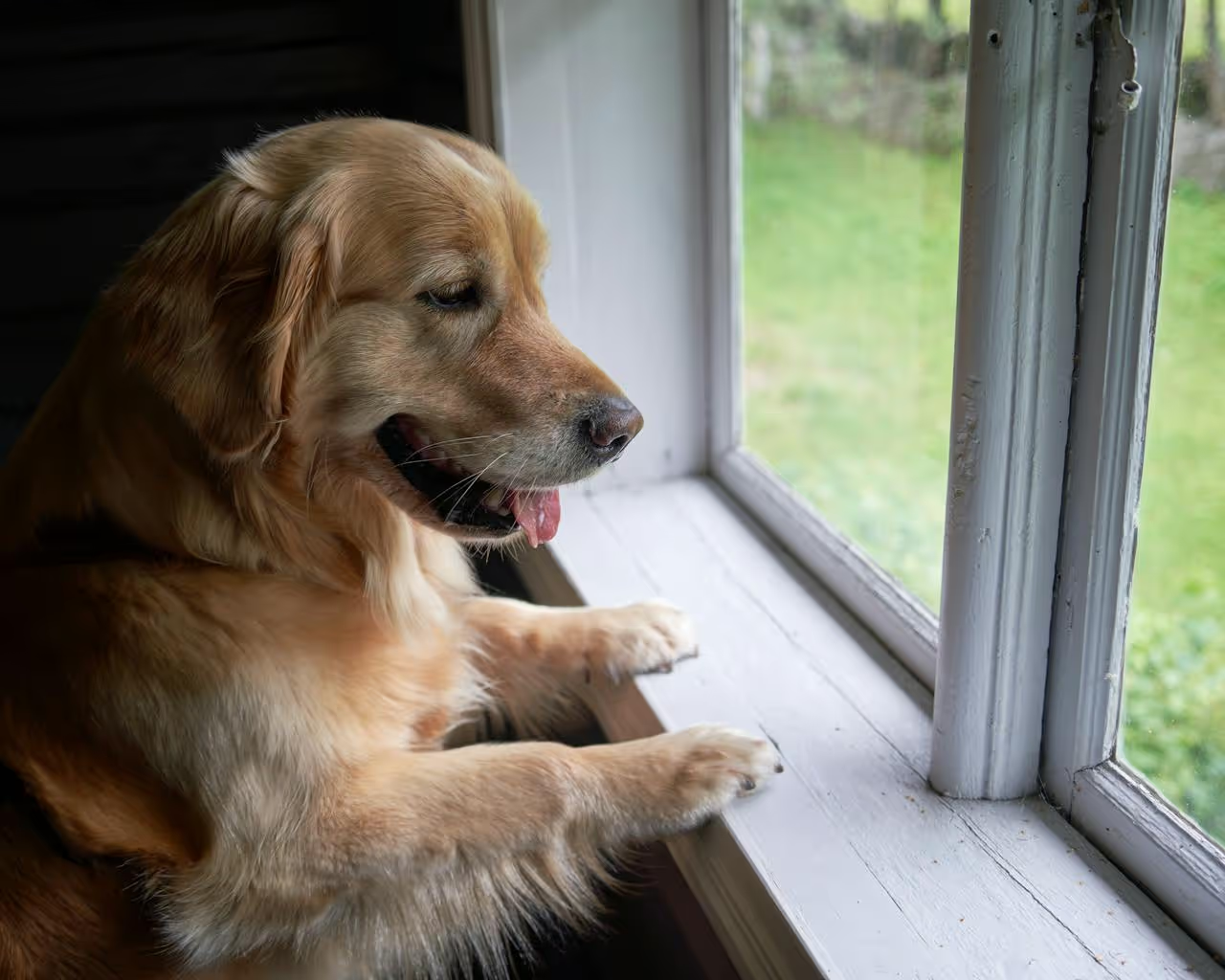
We travel in a VW T4 campervan and generally do not take dogs in the van on day trips. The space is too open. Dogs slide around in the back, and even driving carefully that is not comfortable for the animal. When we had a VW Golf, it was easier because dogs could be contained safely in the boot.
What we do instead: if we are going somewhere walkable, we take the dog with us. In Manosque, France, we were meant to walk the dog for around 20 minutes every few days. We ended up taking her out for 30 to 50 minutes daily, and on some of those walks we explored the town together. The dog loved it, we got to see the place properly, and it counted as both pet care and a day out.
If a town or area is within walking distance and dog-friendly, bringing the dog is often the best option. You get to explore, the dog gets exercise and stimulation, and there is no anxiety because they are with you. Check in advance whether the destination is dog-friendly: cafés with outdoor seating, markets, parks and waterfront areas usually work well.
Reading the Listing Before You Commit
The listing tells you a lot about whether day trips are realistic. Look at these before applying:
The "pet can be left alone" field on THS. This is now a required part of new listings. It tells you the homeowner's own estimate of what the pet handles. Take it as a guide, not a guarantee (animals vary) but anything below 4 hours changes the calculus.
The daily routine requirements. We have seen listings asking for three separate dog walks totalling six hours per day. That is a full-time commitment with no room for anything else. In our view, many homeowners set unrealistically high standards on paper because they want to look like attentive pet owners. In practice, they might do one or two walks. The advice we would give homeowners: tell us the minimum you actually do. We will do more. Giving us a 20-minute walk requirement and having us deliver daily 40-minute walks is better for everyone than listing a 2-hour walk requirement that scares off good sitters.
The number and type of animals. One independent cat is the easiest combination for day trips. Two independent outdoor cats, even easier. Three dogs with different exercise needs is a different situation. Count the demands before you commit.
The Separation Anxiety Question
If you apply for a sit without knowing the pet's history with separation, ask. One direct question in the pre-sit video call saves a lot of difficulty later: "How does she do when you leave for work? Does she settle quickly or does she need a while to adjust?"
A homeowner who works full-time and leaves a dog for 8-hour days has an animal used to alone time. A homeowner who works from home and has not left the dog alone for more than 20 minutes in three years has a different animal entirely, and probably does not fully realise it.
The answer to this question tells you more about the realistic conditions of the sit than anything else in the listing.
Conclusion
Day trips during a house sit are not just possible, they are part of what makes house sitting worthwhile. You are in a new place. You should explore it. The key is doing it with the animal's needs as the organising framework: feed before you go, walk the dog first, know how long they are used to being alone, and come back when you said you would.
Choose sits with animals that suit the kind of freedom you want. Two independent outdoor cats in the south of France is the formula. One dog with separation anxiety you did not know about until day three is a different situation, and it asks for a different response.
Read the listings carefully, ask the right question in the video call, and trust your observations once you arrive. The animals will show you what they need. Your job is to notice, and plan around it.
If you are thinking about getting started in house sitting or want to find sits that suit a more exploratory travel style, our guides below will help. And if you are joining TrustedHouseSitters for the first time, use our 25% discount link.
DM us @housesittersguide on Instagram if you want advice on reading a specific listing before you apply. We answer everyone.

Frequently Asked Questions
Is it okay to leave pets alone during a house sit?
Yes, within reason and depending on the animal. Most adult dogs are comfortable alone for 6 hours after a walk and feed. Most cats are fine for 8-10 hours. The best guide is finding out how long the pet stays home alone when the owner goes to work. That is the animal's established normal. Our dog sitting guide covers reading animal behaviour and daily care in more detail.
How long can I leave a dog alone during a house sit?
Up to 6 hours is our guideline, after a morning walk and feed. This mirrors a typical working owner's day and is generally what the dog is already used to. For dogs with separation anxiety or specific needs, less is better. Always observe the animal in the first few days before planning longer trips away.
Can I bring the dog with me on a day trip?
Sometimes yes, and it can be the best option. If the destination is walkable and dog-friendly, taking the dog turns a day out into enrichment for the animal as well. Check that the area (cafés, markets, outdoor spaces) is suitable before going. If you are driving, make sure the vehicle can safely contain the dog. Our car use guide is relevant if the homeowner's car is also available to you.
What if a homeowner's listing says I cannot leave the pet for more than 2 hours?
We would not apply for that sit. Two hours is not enough time for meaningful exploration and amounts to unpaid full-time work. If you feel the same, apply to sits that list 4 hours or more. Homeowners who expect constant presence should be seeking paid professional help, not house sitters. Our guide to evaluating house sitting listings covers what to look for before committing.


Responses
What are your thoughts on this post?