

Home > Blog > House Sitting Across the US
Quick Facts
| Best platform for US sits | TrustedHouseSitters — approximately 6,000 US listings |
| Regional platform | House Sitters America — ~110 listings, 15% off with HSG15 |
| Global add-ons | MindMyHouse (~100 US listings) and House Carers (~55) |
| Paid alternative | Rover, Care.com, HouseSitters.com, Wag — daily rates, income rather than exchange |
| Average hotel cost saved | $150 to $400 per night depending on city |
| Can you chain sits? | Yes, with planning, back-to-back sits across the US are achievable |
Yes: TrustedHouseSitters carries roughly 6,000 active US listings, about 95% of the exchange market, and Rover pays $50 to $120 a night for the gap weeks. Chaining 20 sit nights a month saves $3,000 to $8,000 in accommodation. Plan by region and apply 6 to 10 weeks ahead.
Can you travel affordably across the US using house sitting? Yes. By combining free exchange sits from platforms like TrustedHouseSitters with paid pet care work on Rover or Care.com, it is possible to significantly reduce or eliminate accommodation costs while travelling the country. The exchange model works best in major cities and popular destinations where listings are concentrated. The paid model works anywhere with pet owners.
The US House Sitting Market: What the Numbers Look Like
The US has the largest house sitting market in the world in terms of raw listing volume. TrustedHouseSitters alone carries approximately 6,000 active US listings at any given time, spread across cities, suburbs, and rural areas in every state. That is more US listings than THS has in all of Europe combined.
This matters for chaining sits because density determines feasibility. In Europe, a sitter might wait weeks between sits in a specific country. In the US, the volume is high enough that determined sitters can build a route from region to region with sits at each stop, provided they plan several weeks ahead and apply actively.
| Platform | US listings | Annual sitter fee | Model |
|---|---|---|---|
| TrustedHouseSitters | ~6,000 | $129–$259 (25% off with our link) | Exchange |
| House Sitters America | ~110 | $49/yr (15% off with HSG15) | Exchange |
| MindMyHouse | ~100 | $29/yr | Exchange |
| House Carers | ~55 | ~$50/yr | Exchange |
| Nomador | ~68 | €34–€189/yr | Exchange |
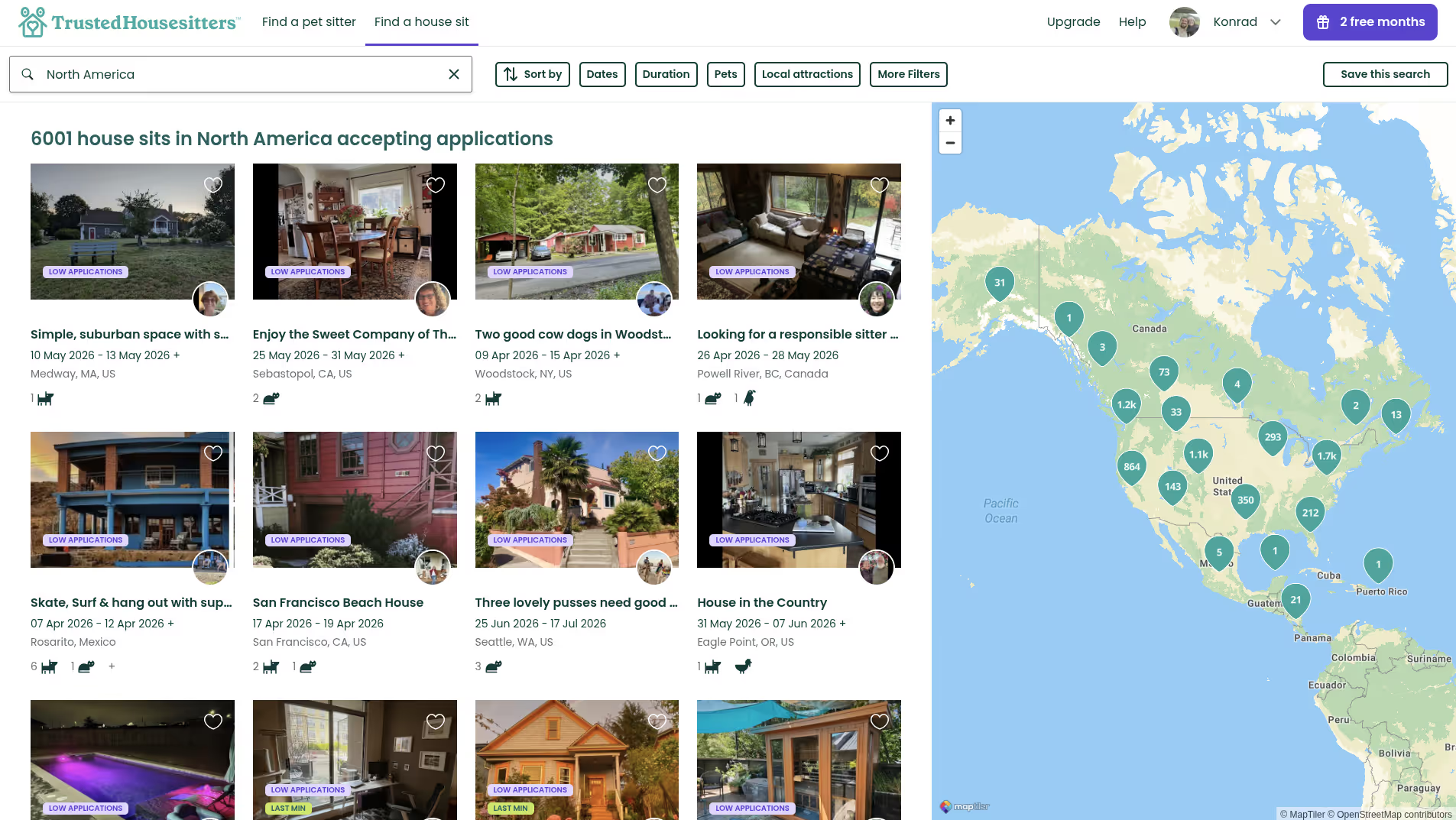
TrustedHouseSitters dominates. The other exchange platforms combined add around 333 additional US listings across House Sitters America (110), MindMyHouse (100), House Carers (55), and Nomador (68). THS has 1,702% more US listings than all of those platforms combined. It accounts for 95% of all US exchange sit listings across every platform covered in this article.
To put that another way: the four other exchange platforms together could not fill a single month of back-to-back sits in a major US city. TrustedHouseSitters has enough listings to build a multi-city route across the country.
Our recommendation: Start with TrustedHouseSitters. At around $97 per year after our 25% discount, it costs roughly twice the price of House Sitters America's $49 annual fee. But at 6,000 listings versus 110, you are getting approximately 54 times more listings for twice the price. The value comparison is not close. No other exchange platform in the US offers anything near this coverage.
Browse before you pay. TrustedHouseSitters, House Sitters America, MindMyHouse, and most other platforms allow you to browse listings for free without creating an account. Spend 20 minutes searching your target cities or regions on each platform before committing to a membership. You will quickly see that THS is carrying the overwhelming majority of available sits. Sign up when you find a specific sit you want to apply for, not before. Your membership starts working the moment you submit your first application.
| TrustedHouseSitters | House Sitters America | Rover (paid) | |
|---|---|---|---|
| US volume | ~6,000 active sits | ~110 active sits | Millions of users |
| Model | Free exchange | Free exchange | Paid ($50–$120/night) |
| 2026 fee | $129 Standard + booking fees / $259 Premium (no booking fees) | $49 flat annual fee (15% off with HSG15) | 20% commission per job |
| Best for | Chaining a route | Finding a hidden gem | Earning money between sits |
The Two Models: Exchange vs Paid
Before planning a US house sitting trip it helps to understand the two distinct models operating in the same market.
The exchange model works exactly as it does everywhere else. You care for the home and animals, the homeowner provides free accommodation. No money changes hands. The sits available on TrustedHouseSitters, House Sitters America, MindMyHouse, and House Carers all operate on this basis. Accommodation costs go to zero on the days you have a confirmed sit.
The paid model is significantly more developed in the US than in most other countries. On platforms like Rover, Care.com, HouseSitters.com, and Wag, pet owners pay sitters directly for overnight stays, dog walking, drop-in visits, and house sitting. Rates vary by city and service but overnight house sitting on Rover typically runs $50 to $120 per night in most US markets, higher in expensive cities.
The two models are not mutually exclusive. A sitter travelling across the US might line up exchange sits as the backbone of their route and fill gaps with paid work, earning income between free accommodation stops. This hybrid approach is how many long-term US house sitters operate.
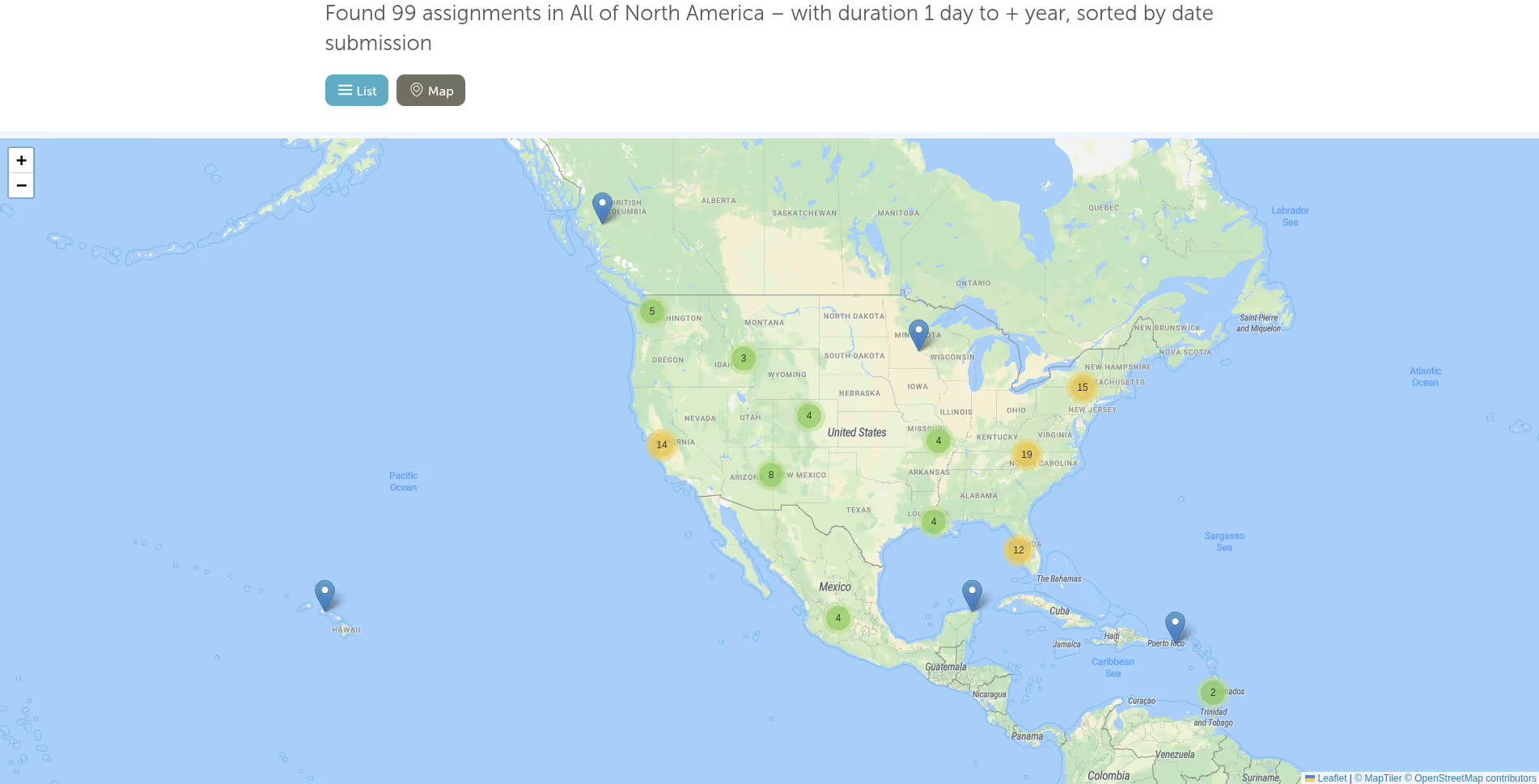
The Paid Platforms: What Each Offers
Rover is the largest paid pet care marketplace in the US with millions of registered sitters. Overnight house sitting rates are set by the sitter and vary by location. Rover takes a commission (typically around 25%) from each booking. For sitters, Rover provides insurance coverage for bookings made through the platform, a 24/7 vet helpline, and a dispute resolution process. Building a Rover client base in a specific city takes time, but sitters who establish themselves in one location can earn consistent income before moving on.
Care.com covers a broader range of home and family care services including pet sitting and house sitting. The platform uses a subscription model where sitters pay to access contact information for clients. The client base skews toward families needing ongoing care rather than one-off sits, which makes it less suited to a travelling sitter but useful for anyone planning an extended stay in one city.
HouseSitters.com operates as both a paid and exchange platform. Homeowners can offer compensation or post free exchange sits, and sitters can filter by type. The listing count is smaller than THS or Rover, but it captures a segment of the market that wants flexibility on payment terms.
Wag focuses primarily on dog walking and drop-in visits rather than overnight house sitting. For a travelling sitter who wants to earn income between sits, Wag provides a way to pick up dog walking work in most major US cities without building a local client base from scratch. Income per job is lower than overnight sitting but the work is flexible and can be done around a house sitting schedule.
How to Chain Sits Across the US
Stringing together back-to-back sits across multiple US cities or regions requires the same planning logic as chaining sits in Europe, with some US-specific considerations.
Plan the route first, then find the sits. The US is large and transport between cities is either expensive (flights) or time-consuming (driving, Amtrak). Before applying for sits, map out a route that makes geographic sense. Trying to jump from New York to Los Angeles to Chicago in a single trip is expensive in transit costs and produces a disjointed experience. A regional approach works better: Northeast corridor, Pacific Coast, Mountain West, South. Pick a region for a period and focus your applications there.
Apply 6 to 10 weeks ahead. Popular US destinations fill quickly. New York, Los Angeles, San Francisco, Miami, and Chicago all have strong THS listing counts, but the best sits in those cities attract many applicants. Applications sent 6 to 10 weeks before the start date have a significantly higher acceptance rate than last-minute ones.
Allow buffer time between sits. The gap between sits is not dead time. It is when you move. In the US, a Greyhound or Megabus between cities is cheap, rental cars give flexibility for rural sits, and Amtrak connects the major corridors. Build travel days into your calendar explicitly and do not confirm back-to-back sits in cities that require significant transit without factoring in that time and cost.
Use Rover or Wag to fill gaps. If there is a week between sits in a city where you have a Rover profile, you can earn while waiting for the next confirmed sit. This requires some advance setup. Rover profiles take a few weeks to gain traction, and sitters who set this up before arriving in each city can turn gap weeks into income rather than expenses.
Target sit-dense cities for the exchange model. Based on THS listing counts, the cities and regions with the highest concentration of US sits include New York, Los Angeles, San Francisco, Seattle, Denver, Austin, and the New England states. Rural sits exist but are sparser and require more planning around transport.
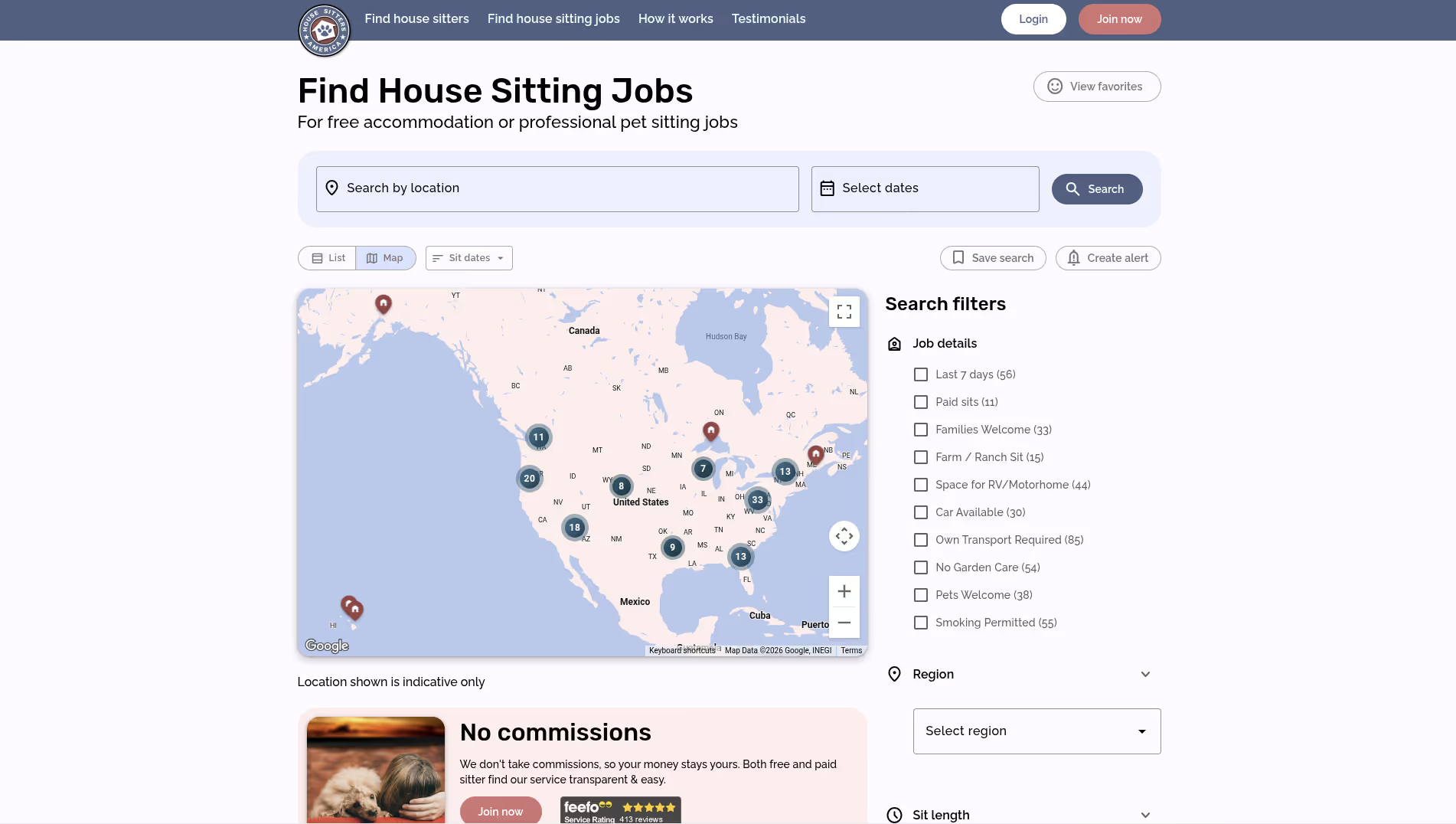
The Honest Numbers: What You Actually Save
The exchange model in the US eliminates accommodation costs entirely on the days you have a sit. What you still pay: transport between sits, food, and any personal expenses. What you save: hotel or rental costs, which in US cities run $150 to $400 per night at the budget to mid-range end.
A sitter who chains 20 nights of confirmed sits per month across US cities saves between $3,000 and $8,000 per month in accommodation alone. Even at a coverage rate of 50% of nights, the saving is substantial. The TrustedHouseSitters membership at around $97 after our 25% discount pays for itself in a single night of avoided hotel costs.
The realistic challenge in the US is not the listing volume but the gaps. Exchange sits rarely cover 100% of your nights in a given month, particularly in the early months before you have a strong review history. Supplementing with Rover income or budget accommodation between sits is the practical approach for most long-term US travellers.
Building Your Profile for US Sits
US homeowners on TrustedHouseSitters apply the same criteria as homeowners everywhere: a credible profile, evidence of animal experience, and personalised applications. Two things matter specifically for US sits.
Identity verification is worth completing before applying for US sits. THS offers a Background Badge for US-resident sitters through a third-party criminal background check. For international sitters applying to US sits, the standard verification badge carries the equivalent weight. Homeowners in the US are particularly attentive to verification given the cultural familiarity with background checks.
References matter early on. If you have no THS reviews yet, the reference section of your profile is what US homeowners fall back on. Three solid references from non-family members describing your reliability and care for animals will open doors that an empty reference section will not.
Conclusion
Using house sitting to travel across the US is achievable, particularly for remote workers or anyone with a flexible schedule. TrustedHouseSitters provides the listing volume to make a multi-city US route viable. The exchange sits eliminate accommodation costs. Paid platforms like Rover and Wag provide income and flexibility between confirmed sits.
The key is treating it as a system rather than hoping sits materialise. Plan the route, apply early, build a Rover presence in each city before you arrive, and use the 25% discount on TrustedHouseSitters to keep your platform costs low. The rest is coordination and timing.
DM us @housesittersguide on Instagram if you have questions about planning a US house sitting route. We answer everyone.

Frequently Asked Questions
How many house sitting listings are there in the US?
TrustedHouseSitters has approximately 6,000 active US listings, making it by far the largest source of US exchange sits. House Sitters America adds around 110, MindMyHouse around 100, House Carers around 55, and Nomador around 68. In total, the exchange platforms carry roughly 6,300 to 6,400 US listings. Paid platforms like Rover operate at a much larger scale but on a different model where homeowners pay sitters directly.
Can I make money house sitting in the US?
Not through the exchange model, which provides free accommodation rather than income. On paid platforms like Rover, Care.com, and HouseSitters.com, sitters charge daily rates for pet care and overnight stays. Overnight house sitting on Rover typically earns $50 to $120 per night depending on location. Many long-term US travellers combine both models: exchange sits for free accommodation and Rover bookings for income during gaps.
Is it possible to chain house sits across multiple US cities?
Yes, with planning. The US has enough listing volume on TrustedHouseSitters to build a multi-city route, particularly across major metropolitan areas. The key steps are planning your route geographically before applying, applying 6 to 10 weeks ahead of your target dates, building in transit time between sits, and supplementing with paid pet care work during gaps. A regional approach (focusing on one area of the country at a time) works better than jumping coast to coast.
Which US cities have the most house sitting listings?
The highest listing concentrations on TrustedHouseSitters are in New York, Los Angeles, San Francisco, Seattle, Denver, Austin, and the New England states. Rural sits exist but are sparser and require more advance planning around transport. For a sitter building a US route, planning around these sit-dense hubs and travelling between them produces a more achievable calendar than targeting rural areas from the start.
Do I need a US visa to house sit in the US?
International visitors can house sit in the US on a tourist visa or visa waiver, but be very careful about how you describe it at the border.
The exchange model involves no payment and is considered a private domestic arrangement, not paid work. Legally this does not trigger work visa requirements. However, US border agents are known to be strict about anything that sounds like a working arrangement, even an unpaid one. Sitters who say they are "here to house sit" or "doing an accommodation exchange" have been questioned or turned away.
The practical advice: do not volunteer that you are house sitting. If asked about your visit, say you are travelling and visiting friends. This is not dishonest. You are doing exactly that. The sit is a private domestic arrangement between you and the homeowner, and your purpose in the country is tourism and travel. That is the accurate description and the one least likely to cause problems at the border.
Research the current visa requirements for your specific nationality before travelling, as rules change. This FAQ reflects common sitter experience and not legal advice.


Responses
What are your thoughts on this post?