

Home > Blog > Building a Social Life While House Sitting
Quick Facts
| Where I have met the most people | Hostels, free walking tours, gyms, and markets |
| How Caro and I met | My hostel in Iceland, continued over Booking.com messages, now three years and living in Portugal |
| Best pre-arrival connection tool | Workaway, Reddit local threads, Facebook expat groups |
| Becoming a regular — does it work | Yes — smile, ask genuine questions, accept that the first time is always awkward |
| Easiest country to meet people | Australia — strangers say hello on the street, shop clerks ask about your evening |
| Hardest | Germany and Iceland — two years in an apartment building, met neighbours a handful of times |
| The house sitting social advantage | The lifestyle gives you an unusual story that opens conversations everywhere |
Social life while house sitting comes from settings, not effort. Free walking tours, gyms, markets and becoming a coffee shop regular do most of the work, with Workaway and local Facebook groups filling gaps. Expect breadth over depth: Australia meets you halfway, while Germany takes longer.
I have lived in nine countries, traveled through many more, stayed in hostels across Europe and beyond, ran a hostel business in Iceland, done free walking tours in Munich, and cycled through Berlin during Oktoberfest next to three American strangers who became that evening's friends over beers. Meeting people while moving is something I have been doing for a long time.
If you are interested in getting into house sitting, our book Travel More for Less puts the whole process in one place: clear, step by step guidance from your first questions to your first confirmed sit, and the reviews that open the door to the next one.
Our loneliness and solo sitting article covers the internal experience.
This one is practical. How to actually fill the social calendar when you are moving every few weeks. Use our 25% discount when joining.
Why Moving People Are Easier to Connect With
There is something specific that happens to people when they are traveling. They are more open. The normal social filters. The ones that make people cautious at home, where every new relationship carries the weight of permanence. Relax. Travelers are already outside their comfort zone. They already said yes to something unfamiliar. That baseline openness makes the first conversation easier.
The hostel environment makes this visible in its most concentrated form. A bar crawl in Reykjavik or a hostel common room in Zurich is a room full of people who are all, by definition, somewhere they do not usually live, doing something they do not usually do. Conversation is not forced. It starts because two people both ordered the same thing, or because someone asked about a patch on a backpack, or because you sat down next to someone and said hello.
This is the first practical thing to know: the settings matter as much as the effort. The right environment makes social connection the default rather than the exception. Identify those environments in any new location and spend time there.
The Settings That Actually Work
Hostels. Still one of the best social infrastructure systems ever created for solo travelers. If you are between sits or traveling to a sit location, a night or two in a hostel is worth considering purely for the social access. The bar crawl, the common room, the shared kitchen. These create natural conversation opportunities in a way that a private apartment never will.
Free walking tours. This is the single most underrated social strategy in travel. Every major city has them. They are designed around movement and shared discovery, which means conversation flows more naturally than in a static setting. You already have something in common: you are both curious about this place and willing to spend two hours on foot learning about it. After the Munich bike tour, I struck up a conversation with three American women during a rest stop. We caught up for beers during Oktoberfest the same evening. The shared activity did the introduction for us.
Gyms. Consistent, easy, and the conversation starter is built in. You are both doing the same thing and you both know it. Give someone a compliment on their form or ask about a piece of equipment and you are already talking. Go at the same time every day and you will be a recognisable face within a week.
Markets and local shops. Ask the farmer about the produce. Ask the baker what is good this week. These are some of the most genuine conversations available in a new place because the person you are talking to has deep knowledge of something specific and most tourists do not bother to ask. Local knowledge flows in both directions. Once they know you are new, the recommendations arrive naturally.
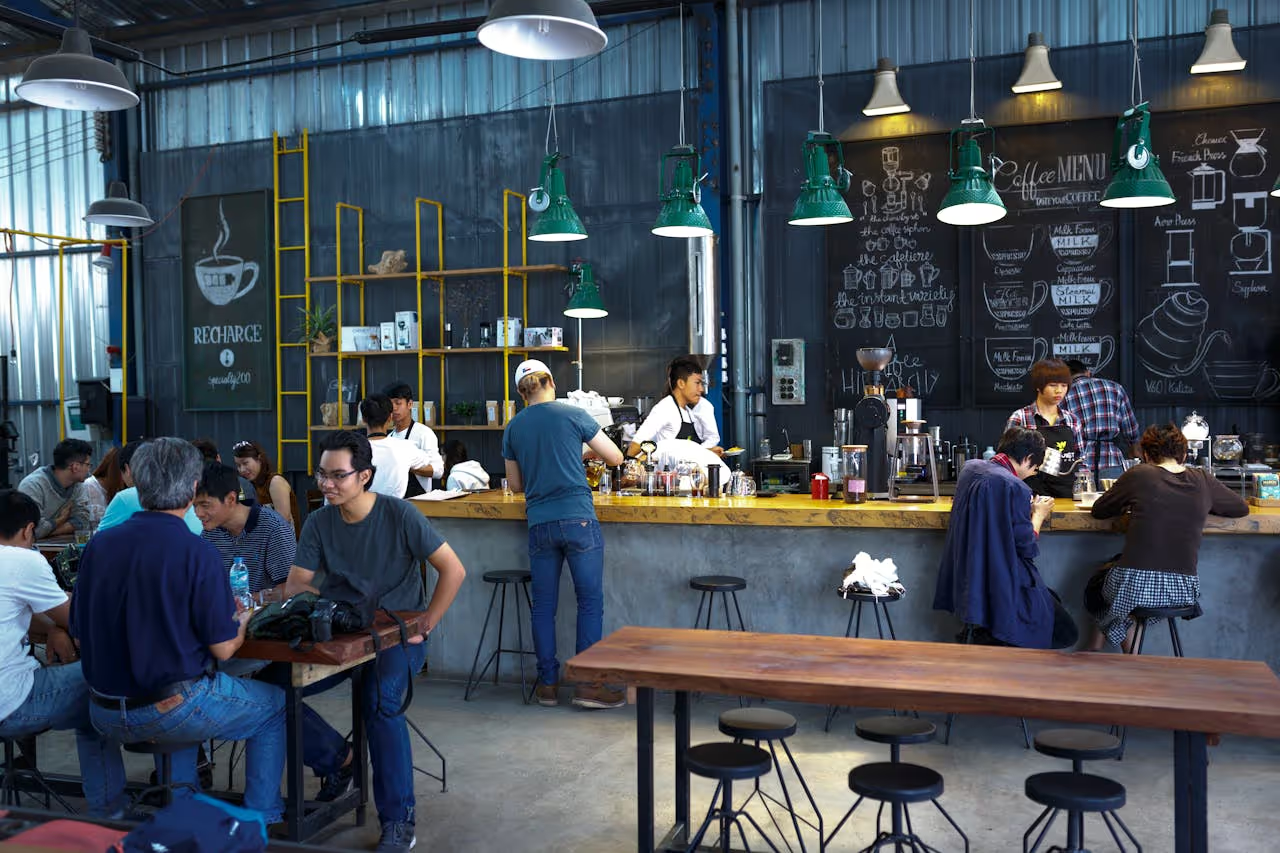
Coffee shops. Become a regular. Go at the same time. Smile truly, greet the person behind the bar, and build from there. Ask them what is worth seeing. Ask if they know of anything interesting happening locally. I have had baristas become the social catalyst for entire weeks in a new city. Once someone local likes you and wants you to have a good experience, they will introduce you to things and people you could not have found on your own.
How Caro and I Met
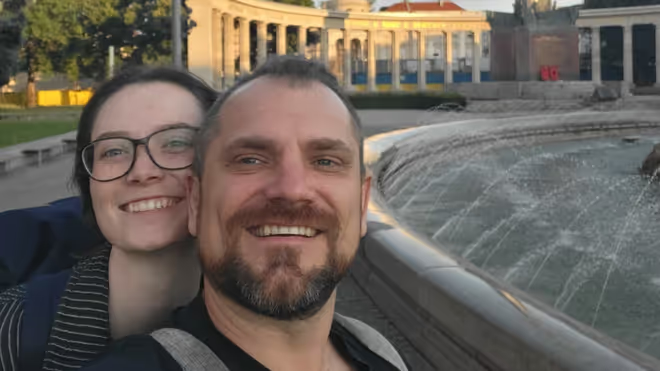
We met at the hostel I was running in Iceland. A conversation started, continued over Booking.com messages after she left, and three years later we are house sitting together in Portugal. That is what the nomadic relationship timeline looks like when it works. Not a compressed rush toward commitment but a genuine connection that continued across distance because it was worth continuing.
The key variables for making a relationship work while traveling are not complicated but they are non-negotiable. Find someone who wants to travel or is truly open to the world. A relationship between someone who wants to keep moving and someone who wants to stay in one place will eventually generate resentment regardless of how much affection exists at the start. The conflict is structural, not personal.
Work out the logistics together. House sitting has been an enormous practical facilitator for Caro and me. It allows us to take more trips together than we could afford if we were paying for accommodation, which means the travel is shared rather than one person's sacrifice. Neither of us had to give up the thing we wanted most. We built something that accommodates both.
Communicate. Most relationships end not because of incompatibility but because of communication that stopped working. This is true everywhere but it is amplified on the road where logistics create daily complexity and small things compound quickly if they are not addressed.
Our solo vs couple house sitting article covers the practical comparison if you are deciding whether to sit alone or with someone.
Digital Tools: Which Ones Are Worth Using
Workaway. One of the most underused tools in the nomadic social toolkit. Workaway is a platform that connects volunteers with hosts around the world in exchange for accommodation and food. The social dimension is significant. Volunteer projects attract people with a similar mindset, the environments are designed around collaboration, and you often live and work alongside other volunteers. It combines travel, purpose, and community in a way that most other platforms do not. It also ties naturally into house sitting. You can alternate between sits and Workaway placements, using each to cover the ground the other does not.
Reddit local threads and Facebook groups. Almost every city of any size has a dedicated expat group, digital nomad thread, or local events page on Reddit and Facebook. Post that you are new, ask what is worth doing this week, and see who responds. People who participate in these groups are by definition already open to connecting with newcomers.
Instagram. Particularly effective because the travel-adjacent community on Instagram is actively looking for connection. If someone in your current location is posting about being in the same place, message them. Tell them you are new and it would be good to meet someone local or similarly placed. The worst outcome is no response. The best is a genuine friendship built around shared geography and shared interests.
Couchsurfing. Even if you are not using it for accommodation, the Couchsurfing community organises regular meetups in major cities specifically designed for travellers and locals to mix. These are low-pressure, low-stakes environments where everyone is already open to meeting strangers.
Dating apps. Tinder, Bumble, Hinge. The standard apps work while traveling with one adjustment: be upfront in the bio about being nomadic. Transparency about the lifestyle filters out mismatches early and usually leads to better conversations with people who are truly curious about how you live.

The First Move: The Practical Reduction
The research describes the first move as the primary barrier for most people. That is accurate. Here is the honest reduction:
The fear of the first move is a prediction that something bad will happen. The actual outcomes of a genuine, warm first move in a travel context are: the person responds warmly, or the person is politely non-committal, or the person is busy. None of these outcomes are damaging. The worst realistic outcome is mild awkwardness that lasts thirty seconds.
The second practical point is this: you are on a house sit. In two weeks you are somewhere else. The social consequence of making a fool of yourself is close to zero. You will not see these people again in the normal course of life. The social risk that keeps people from making the first move in their home city. The possibility of an awkward long-term coexistence, Does not exist. Use that.
Go in with a big smile. Ask genuine questions. Be actually curious rather than performing curiosity. People know the difference and respond to actual interest in a way they do not respond to performance. In Australia, shop clerks ask how your evening is going and mean it. That energy is returned in kind everywhere because it is warm and it is real. When Caro and I arrived at a Tasmanian checkout and the clerk asked about her plans for the evening, Caro walked out saying she had just made a friend. That is what genuine warmth produces.
The House Sitting Conversation Opener
One specific advantage house sitters have that other travelers do not: the lifestyle itself is an unusual and truly interesting story.
Tell someone you are house sitting in their city. Looking after a cat and four chickens in a Portuguese village, or a pair of Labradors in Tuscany, or a nervous dog in a Linz mansion. And you will have their full attention. Most people have never heard of house sitting. The concept of trading pet care for free accommodation in interesting places is novel enough that it opens conversations that hotel guests or Airbnb visitors cannot access.
We have stayed in contact with homeowners from sits we completed years ago. When we travel near a previous sit, we send a message and ask if they want to catch up. Several have said yes. These connections would not exist without house sitting. Read our building trust guide for how that relationship with homeowners develops over time.
Australia and Germany: The Contrast
The easiest country I have found for social connection is Australia. There is something generational about it. People raised to respect and acknowledge one another produce a culture where strangers say hello while passing on the street and shop clerks ask genuine questions about your evening.
Germany is the opposite. I lived in an apartment building in Germany for nearly two years. Caro and I gave chocolates to every neighbour when we moved in. A deliberate gesture of warmth. We met the other residents a handful of times across the entire two years. A couple from downstairs stopped us a year after we moved in to thank us for the chocolates. Then we never saw them again.
Iceland is similar. The culture is private and self-contained in a way that takes real time and genuine relationship-building to penetrate.
This is not a criticism. It is useful information. In culturally warmer environments like Australia, Portugal, and much of southern Europe, the first move is low-cost because the social culture meets it halfway. In more reserved cultures, it takes longer and requires more patience. Adjust your expectations accordingly and do not interpret cultural reserve as personal rejection.
The Expat Network in Your Location
When Caro and I arrived in Portugal, there was a monthly community brochure listing events for expats and German speakers. Concerts, markets, social evenings. This kind of infrastructure exists in most places that have a settled expat population. Find it. Ask the bakery what is happening locally this week. Ask the local shop if there is a community board. The information exists. It is just not always on the tourist map.
Local community connection is the deepest form of social life available while traveling. Tourists pass through. Expats and long-term visitors build something. Even a month in one place is long enough to become a semi-regular at a market, attend one community event, and have a conversation that goes somewhere beyond the first layer.
Read our remote working during a house sit guide for how to structure the working week in a way that leaves genuine time for this.
Join TrustedHouseSitters with 25% off and DM us @housesittersguide on Instagram. We answer everyone.
Frequently Asked Questions
How do you meet people while house sitting in a new location?
Free walking tours, gyms, local markets, and coffee shops where you become a regular are the most consistently effective starting points. Each provides a natural conversation anchor. Shared activity, shared curiosity, shared space over time. Digital tools like Reddit local groups, Facebook expat pages, Instagram, and Workaway extend this into online communities that can generate real-world meetings. The lifestyle itself is an unusual story that opens doors with almost anyone who has not heard of house sitting before.
Can you start a serious relationship while traveling?
Yes. Caro and I are proof. We met at my hostel in Iceland and are now three years into traveling and house sitting together. The conditions that make it work: both people truly want to travel or are open to the world, the logistics are worked out together rather than one person adapting entirely, and communication is maintained even when the distance or the movement makes it inconvenient. Finding someone who shares the desire rather than tolerating it is the foundation.
What is the easiest way to meet people if you are introverted?
Find a community around a specific interest rather than a general social event. A shared interest eliminates the small talk barrier because the conversation has an obvious starting point. Local expat groups, hobby clubs, volunteer placements through Workaway, or even online communities with in-person meetups all provide this. The first move is still required but the context makes it significantly less daunting than approaching a stranger without any common ground.
Does the house sitting lifestyle make it harder to maintain friendships?
It makes depth harder and breadth easier. You will meet more people than you would in a fixed location. Maintaining deep, sustained friendships requires deliberate effort. Scheduled calls, consistent messages, the kind of investment that does not happen naturally when you are always somewhere new. The friendships that survive the nomadic lifestyle are the ones you actively maintain. The ones that do not are often the ones that were dependent on physical proximity.


Responses
What are your thoughts on this post?